
Product Intelligence
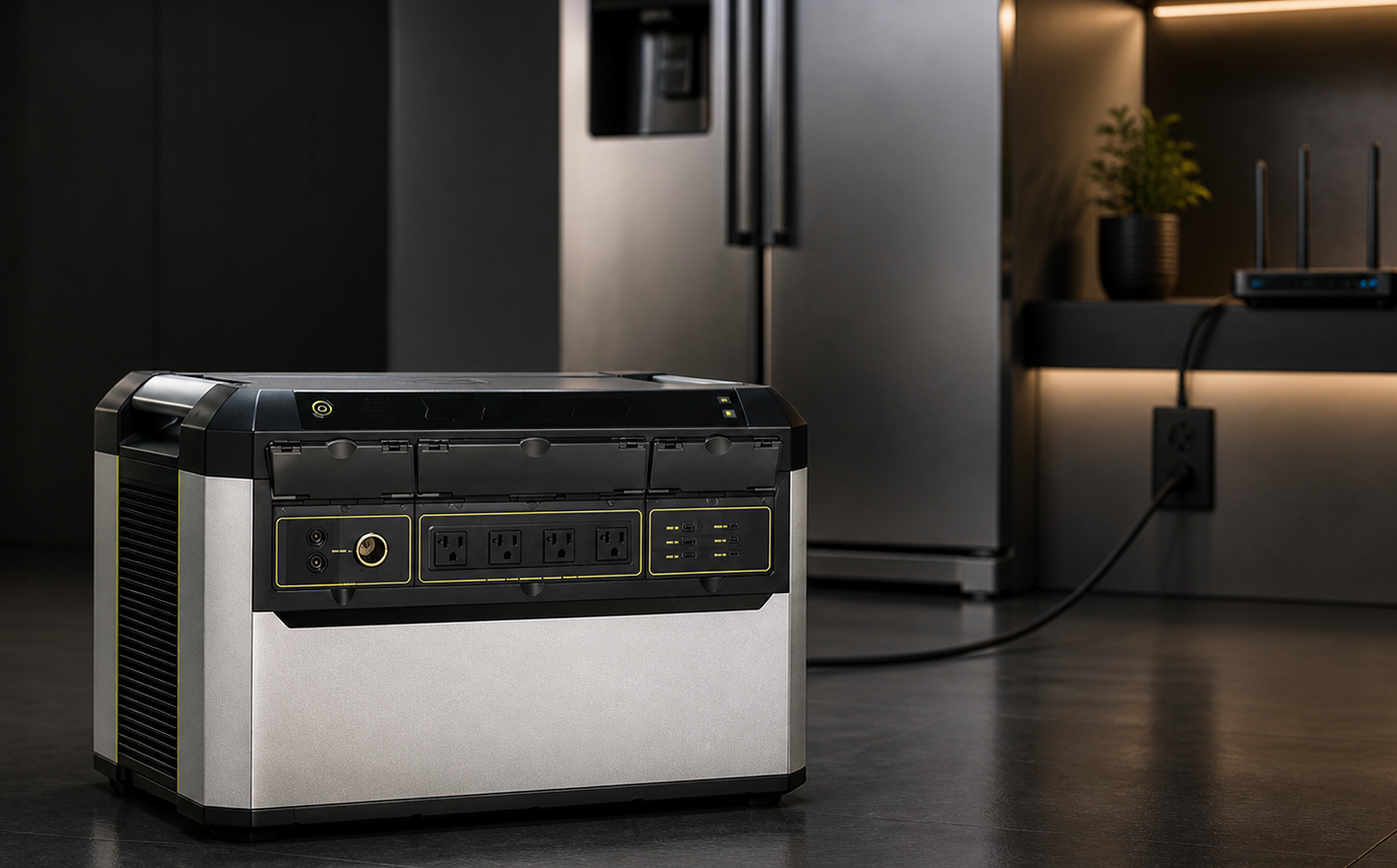
Premium Home Backup PickGoal Zero Yeti PRO 4000 Power Station: Powerful 4kWh Backup
Premium 3,994Wh LiFePO4 portable power station with 3,600W continuous AC output, 7,200W surge, 3,000W max solar input, and expandable home backup support.
Specifications
Key specs
Buyer Fit
Fit signals
Best for
Pros
- High capacity
- Strong AC output
- Large solar input
- LiFePO4 battery expandable
- 5-year warranty.
Cons
- Very heavy
- Expensive
- Not ideal for casual portability
- Outlet count needs manual verification.
Spec table
| Capacity | 3994 Wh |
|---|---|
| AC Output | 3600 W |
| Surge Output | 7200 W |
| Solar Input | 3000 W |
| Weight | 115.7 lb |
| Battery | LiFePO4 |
| Warranty | 5 years |
| Expandability | Chainable with up to 4 Tank PRO units; up to 20kWh stated on official page/B&H |
This article may contain affiliate links. If you buy through these links, PowerLabPro may earn a commission at no extra cost to you. As an Amazon Associate I earn from qualifying purchases.
Goal Zero Yeti PRO 4000 power station bottom line: this is a serious 4kWh-class backup system for buyers who want heavy home backup power, RV support, solar charging headroom, and expandable emergency capacity. It is not a casual camping battery, and it should not be treated like a lightweight weekend power bank.
The Yeti PRO 4000 gives you a verified 3,994Wh capacity, LiFePO4 battery chemistry, 3,600W continuous AC output, 7,200W surge output, and up to 3,000W max solar input. Strong for serious backup planning, too much for light emergency use.
PowerLabPro Verdict
The Goal Zero Yeti PRO 4000 is a strong fit for buyers who want premium backup power, high AC output, solar charging headroom, and expansion potential. It is not the right choice for light camping, apartment use, or buyers who mainly need to charge phones and laptops.
- Best for: home backup, RV power, off-grid use, high-output emergency power
- Skip it if: you need lightweight portability or a low-cost backup battery
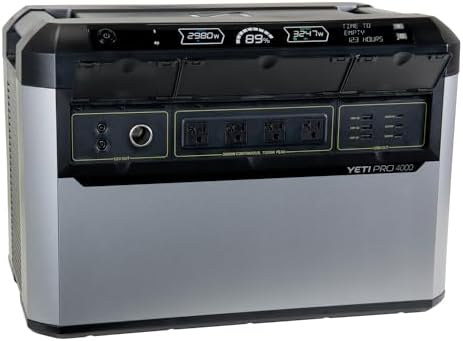
- The Yeti PRO 4000 features high-efficiency inverter technology designed for extended power delivery. With a 3600-watt co…
- Class-Leading Lifespan: Upgraded Lithium Iron Phosphate battery (LFP) technology provides an incredible 4000+ cycles, an…
- Exceptional Build Quality: The Yeti PRO 4000 is the largest portable power station on the market rated for outdoor use a…
Goal Zero Yeti PRO 4000 Power Station: Quick Specs
This is a large LiFePO4 portable power station built for home essentials, RV use, solar charging, and heavier outage scenarios.
| Product | Goal Zero Yeti PRO 4000 Portable Power Station |
|---|---|
| Battery Capacity | 3,994Wh |
| Battery Chemistry | LiFePO4 |
| AC Output | 3,600W continuous |
| Surge Output | 7,200W surge |
| Solar Input | Up to 3,000W max solar input |
| Weight | 115.7 lb; 125.7 lb with cart |
| Expansion | Supports Tank PRO expansion batteries |
| Warranty | 5 years |
| Amazon ASIN | B0CJCT1TC5 |
Source note: The main specifications were checked against the official manufacturer page for capacity, AC output, surge output, solar input, weight, expansion, and warranty. View Goal Zero’s official Yeti PRO 4000 specifications.
Who Should Buy the Goal Zero Yeti PRO 4000?
The Goal Zero Yeti PRO 4000 is best for buyers who already know they need more than a small portable power station. A compact 1,000Wh battery can work for phones, routers, and short outages. This product is for heavier backup plans.
Good fit
- Homeowners who want battery backup for essential outage loads
- RV owners who want a serious portable power source
- Off-grid cabin owners planning a solar charging setup
- Preparedness buyers who want expandable backup capacity
- Garage, workshop, or utility-room users who need high AC output
Bad fit
- Apartment buyers who only need small-device backup
- Campers who need something lightweight and easy to carry
- Buyers who want the lowest possible cost per watt-hour
- Anyone who does not want to plan appliance loads before buying
If you are not sure how much battery capacity you need, check PowerLabPro’s guide to what size power station you need before choosing a 4kWh-class model.
Home Backup Performance
For home backup, the Yeti PRO 4000’s biggest advantage is output headroom. A 3,600W continuous inverter gives it enough power capacity for many essential-load scenarios, especially when the buyer wants to keep a refrigerator, Wi-Fi router, lights, small electronics, and selected appliances running during an outage.
This does not mean it should be treated like a whole-home battery by default. Central air conditioning, electric ovens, hardwired systems, and high-draw appliances require more planning. The strongest buyer angle is essential-circuit backup: quiet battery backup, solar recharge potential, and a cleaner alternative to running a gas generator for every outage.
Solar and Charging
The Yeti PRO 4000 supports up to 3,000W max solar input. Large battery capacity only becomes more useful if the system can recharge at a reasonable pace, and a small solar input on a 4kWh battery can feel painfully slow. Goal Zero also lists fast AC charging capability, useful when topping off before a storm, grid outage, or travel day.
Do not buy this unit only for its solar input unless you are willing to pair it with enough compatible solar panel capacity. A 4kWh-class battery deserves a real charging plan.
Real Limits Before You Buy
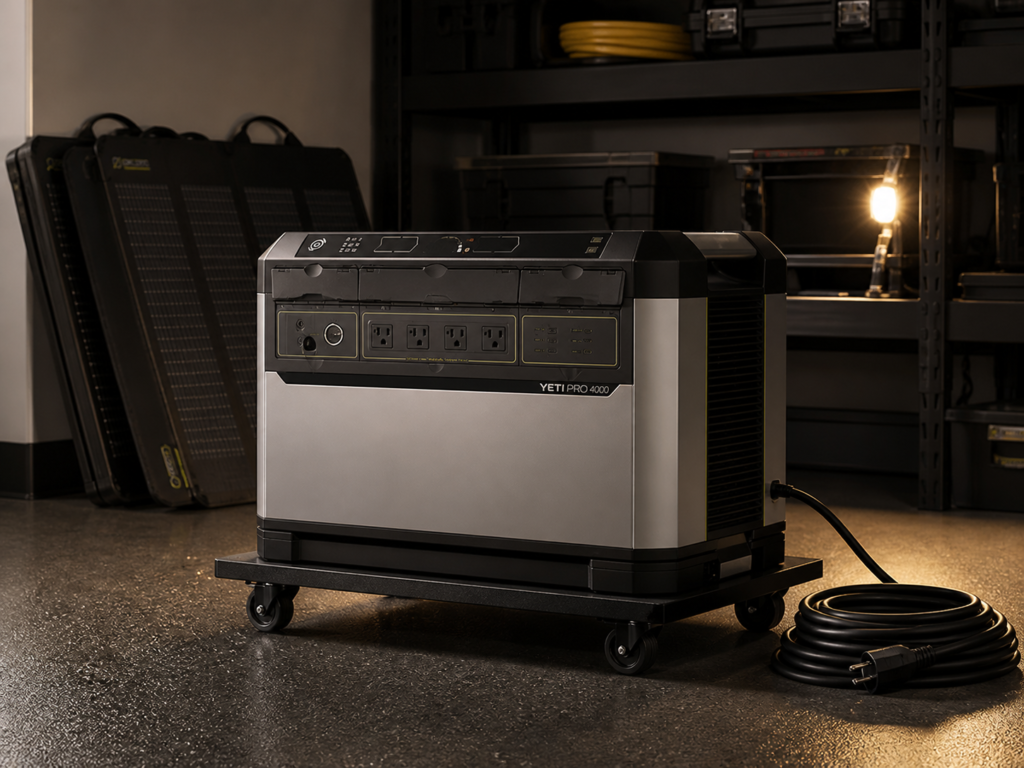
The Goal Zero Yeti PRO 4000 is powerful, but it is not the right answer for every buyer. The first limit is weight. At more than 115 lb before the cart, this is a moveable battery system, not a grab-and-go power station.
The second limit is cost. This product belongs in the premium home-backup category. A buyer who only needs basic emergency power for phones, lights, and internet should look at smaller power stations first.
The third limit is setup planning. Refrigerator runtime, router backup, appliance use, and solar recharge all depend on the wattage of the devices being powered and how long they run.
Goal Zero Yeti PRO 4000 Power Station Ecosystem
The Goal Zero Yeti PRO 4000 power station is built as a platform, not a one-time purchase. It supports Tank PRO expansion batteries, which is the main reason serious backup planners look at this model instead of a fixed-capacity competitor. Adding a Tank PRO unit increases total stored energy without replacing the base station, so a buyer can start with 3,994Wh and grow the system later if the outage plan changes.
Goal Zero also offers app monitoring for this power station, covering battery level, charging status, and connected load behavior. Treat the app as a convenience layer. The unit should remain fully operable through its physical display and controls if a phone is unavailable during an outage.
What to Verify Before Buying the Goal Zero Yeti PRO 4000 Power Station
| Check | Why it matters |
|---|---|
| Your essential-load wattage | 3,600W is the normal simultaneous AC-output ceiling for this power station. |
| Refrigerator or pump startup draw | Startup surge can exceed running wattage; verify against the 7,200W surge rating. |
| Solar panel compatibility | The 3,000W max solar input requires matching voltage and connector specifications. |
| Tank PRO expansion cost | Confirm current expansion battery pricing if future capacity growth is part of the plan. |
| Carry and storage space | At over 115 lb, plan a stable location and lifting approach in advance. |
| Warranty seller eligibility | Confirm the current 5-year warranty terms apply to your specific purchase channel. |
Pros and Cons
| Pros | Cons |
|---|---|
| Large 3,994Wh battery capacity | Very heavy for casual portable use |
| Strong 3,600W continuous AC output | Premium price category |
| 7,200W surge rating for startup loads | Requires planning to get full value from solar input |
| LiFePO4 battery chemistry | Not necessary for light backup needs |
| Up to 3,000W max solar input | Confirm exact AC outlet count against the current official listing before relying on it for a specific device mix |
| Expandable backup power platform | |
| 5-year warranty |
Goal Zero Yeti PRO 4000 Power Station vs Other Large Backup Systems
A smaller 1kWh or 2kWh power station can make more sense for light backup, short outages, camping, and apartment use. The Yeti PRO 4000 is for buyers who want more runtime, more inverter headroom, and the option to build toward a larger backup system. That makes it less flexible as a casual travel battery but stronger as a semi-permanent emergency power system.
Compared with a 120V/240V split-phase platform like the Anker SOLIX F3800 Plus or the Jackery Explorer 5000 Plus, the Goal Zero Yeti PRO 4000 power station is the more contained option: no 240V support, but a simpler single-voltage system that still covers most home-circuit and RV backup scenarios. Compared with a smaller fixed-capacity unit like the Jackery HomePower 3600 Plus, the Yeti PRO 4000 offers a genuine expansion path through Tank PRO batteries, which matters if your outage plan is likely to grow.
Final Verdict: Is the Goal Zero Yeti PRO 4000 Worth It?
Choose it if you want a premium 4kWh-class portable power station with strong AC output, expandable capacity, LiFePO4 chemistry, and enough solar input headroom for a serious backup setup. Skip it if you need something lightweight, cheap, or simple for small-device charging.
For the right home backup, RV, or off-grid buyer, the Yeti PRO 4000 is a powerful backup platform, but only worth the money when the capacity, output, and expansion system match your real load plan. Read the connected Goal Zero Yeti PRO 4000 review for deeper buyer analysis and alternatives.
FAQ
Is the Goal Zero Yeti PRO 4000 good for home backup?
Yes, the Goal Zero Yeti PRO 4000 power station can be a strong fit for essential home backup loads because it has 3,994Wh capacity and 3,600W continuous AC output. It should still be matched to specific appliances and runtime needs before purchase.
Can the Goal Zero Yeti PRO 4000 run a refrigerator?
It is designed for high-output backup use, and Goal Zero provides refrigerator runtime examples on its official product page. Actual runtime depends on the refrigerator’s wattage, compressor cycling, room temperature, and what else is connected.
Is the Goal Zero Yeti PRO 4000 portable?
It is portable in the sense that it can be moved with its cart, but it is not lightweight. The base unit is listed at more than 115 lb, so most buyers should treat it as a semi-portable backup system.
What is the verified Amazon ASIN for the Goal Zero Yeti PRO 4000?
The verified Amazon ASIN is B0CJCT1TC5.