
Review
Anker SOLIX F3800 Plus Review: 120V/240V Backup, Solar, and Real Limits
A high-output, expandable 3,840Wh backup platform for buyers with a measured selected-circuit, RV, or solar-recovery plan, but too heavy and complex for light backup.
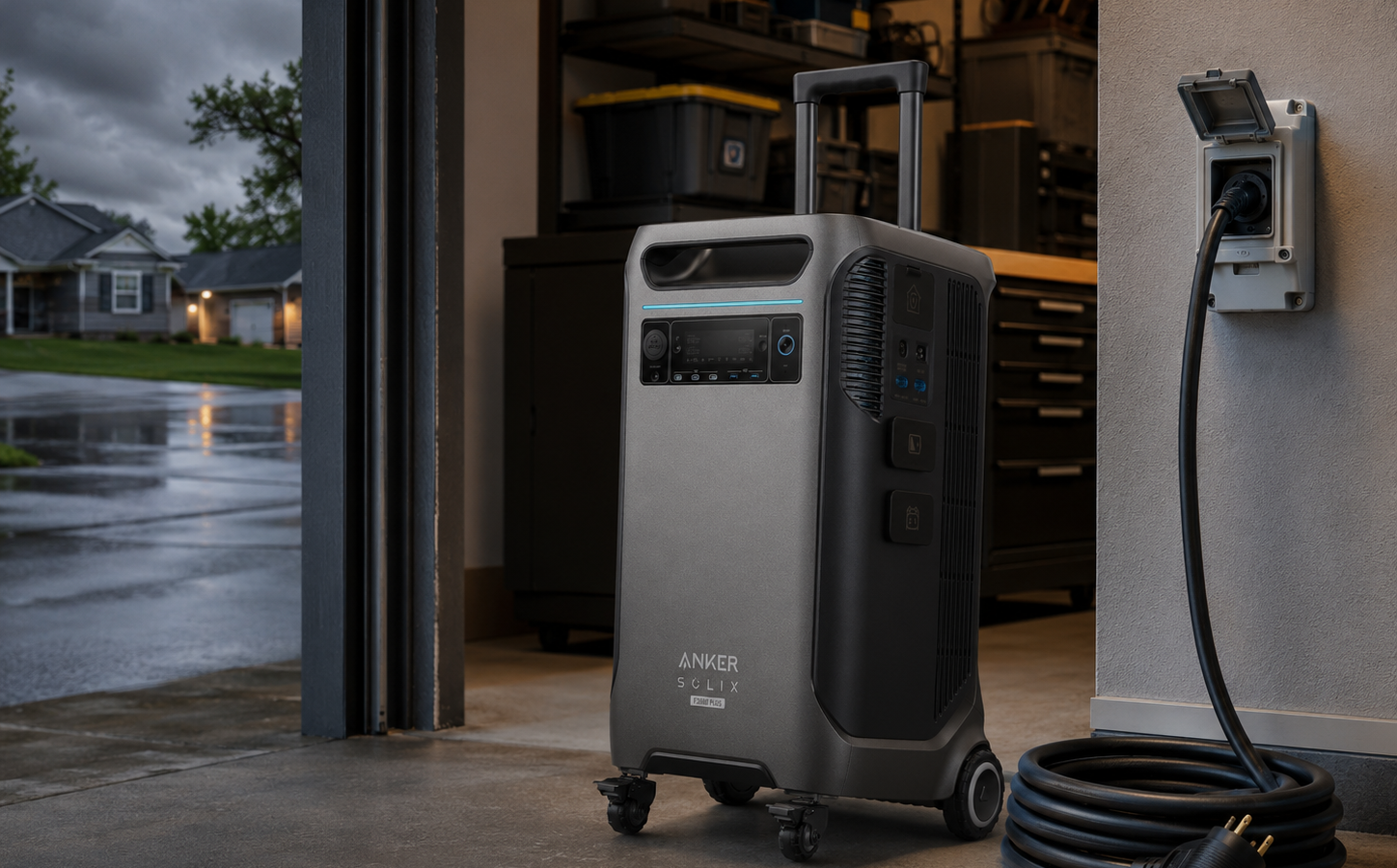
Linked Product Snapshot
Core specs
Buyer Fit
Pros and tradeoffs
Strengths
Pros
- 3,840Wh LFP base capacity
- 6,000W 120V/240V L14-30R output path
- Up to 3,200W total solar input
- Expandable with BP3800 batteries
- Five-year manufacturer warranty
Tradeoffs
Cons
- 136.7 lb base unit limits portability
- Standard 120V outlets are limited to 2,400W
- Solar, generator, bypass, and UPS behavior depend on configuration
- Overkill for small-device backup
- Expansion adds cost, weight, and space
This article may contain affiliate links. If you buy through these links, PowerLabPro may earn a commission at no extra cost to you. As an Amazon Associate I earn from qualifying purchases.
Anker SOLIX F3800 Plus review: this is a large, wheeled 3,840Wh backup platform for buyers who need more than phone, router, and laptop power. Its strongest case is a measured plan involving selected home circuits, a compatible RV connection, serious solar recovery, or staged capacity expansion. It is not a plug-and-forget whole-home substitute, and it is not a practical carry battery.
This Anker SOLIX F3800 Plus review separates the headline numbers from their practical limits. Anker lists 6,000W total AC output, a 120V/240V L14-30R path, up to 3,200W total solar input, and a 3,840Wh LFP battery. Those specifications can be useful, but they answer different questions about appliance compatibility, runtime, recovery, placement, and expansion.
This is a research-led buyer guide, not a hands-on lab test. It uses the current official Anker specifications, the verified U.S. retail identity, and PowerLabPro buyer-fit analysis. Read the connected Anker SOLIX F3800 Plus Product reference for the structured model facts, ASIN, and current affiliate destination.
Anker SOLIX F3800 Plus Review: Quick Verdict
The verdict in this Anker SOLIX F3800 Plus review is conditional. It is a strong option for a buyer with a real high-demand backup plan and a stable place to keep a 136.7 lb unit. It is less compelling when the planned loads are Wi-Fi, lights, phones, a laptop, and a small fan. In that smaller-use case, a lighter power station usually creates less cost, less handling risk, and less unused capability.
- Best for: selected home-circuit planning, compatible RV use, large solar arrays, controlled long-outage preparation, and buyers with a measured expansion need.
- Skip it for: light apartment backup, frequent lifting, an untested pump or HVAC plan, or the expectation that one portable battery will power an entire home normally.
- Main strength: a large 3,840Wh LFP base battery with a 6,000W 120V/240V L14-30R output path and up to 3,200W total solar input.
- Main trade-off: individual outlet limits, high weight, accessory-dependent setup choices, and the need to manage loads rather than rely on the biggest number in the spec sheet.

- 𝗘𝗻𝗹𝗮𝗿𝗴𝗲𝗱 𝗖𝗮𝗽𝗮𝗰𝗶𝘁𝘆 𝗳𝗿𝗼𝗺 𝟯.𝟴𝟰𝗸𝗪𝗵: F3800 Plus starts with 3.84kWh, enough power for your family for one day. If that’s not …
- 𝗣𝗼𝘄𝗲𝗿 𝗠𝗼𝗿𝗲 𝗔𝗽𝗽𝗹𝗶𝗮𝗻𝗰𝗲𝘀 𝗦𝗶𝗺𝘂𝗹𝘁𝗮𝗻𝗲𝗼𝘂𝘀𝗹𝘆: F3800 Plus offers a massive 6,000W output, 58% more than other portable power stat…
- 𝗗𝘂𝗮𝗹-𝗩𝗼𝗹𝘁𝗮𝗴𝗲 𝗳𝗼𝗿 𝗔𝗻𝘆 𝗔𝗽𝗽𝗹𝗶𝗮𝗻𝗰𝗲: With 120V / 240V dual-voltage support, you can run everything at home without limitation…
Table of Contents
Anker SOLIX F3800 Plus Review: Specifications That Matter
The numbers below are a planning starting point, not a runtime promise. A 3,840Wh battery describes stored energy. Output describes how much compatible equipment can run at one time. Charging input describes how quickly the battery may recover under the published conditions. A useful Anker SOLIX F3800 Plus review keeps those decisions separate.
| Specification | Current listed information | Buyer meaning |
|---|---|---|
| Battery capacity | 3,840Wh | Large stored energy for controlled loads, not a fixed number of outage hours. |
| Battery chemistry | LFP, 3,000+ cycles listed | Built for repeated use, while battery aging still depends on storage and operating conditions. |
| Total AC output | 6,000W maximum | Use the correct outlet path and total load plan, not only the headline rating. |
| L14-30R output | 120V/240V, 25A maximum, 6,000W maximum | A documented dual-voltage path for compatible equipment and correctly planned connections. |
| Standard 120V outlets | 120V, 20A maximum, 2,400W maximum | Ordinary household-style outlet use has a lower listed limit. |
| TT-30R RV outlet | 120V, 3,000W maximum | Useful only for a compatible RV plan with measured appliance demand. |
| Solar input | Two 11 to 165V inputs, 17A and 1,600W maximum each | Up to 3,200W total with a compatible array, not guaranteed daily solar harvest. |
| AC charging | 1,800W maximum | Anker lists an under-three-hour charge under stated conditions. |
| Expansion | Up to six BP3800 batteries | More stored energy with more floor space, weight, cost, and system complexity. |
| Weight | 136.7 lb | Wheels help on a planned route, but stairs and repeated loading remain material limits. |
| Warranty | Five years listed | Confirm current seller eligibility and purchase-channel terms before checkout. |
The official Anker SOLIX F3800 Plus product page is the controlling source for these electrical, charging, expansion, dimension, and warranty facts. The Amazon ASIN used here is B0DTSSCHG6. Confirm the live bundle, included accessories, and seller at checkout because those can change.
Searchers sometimes use “F3800” and “F3800 Plus” interchangeably. This Anker SOLIX F3800 Plus review covers the current F3800 Plus model identified by the associated Product record and ASIN. Do not transfer specifications from an older or differently configured F3800 listing without checking the model name, current manual, and actual outlet layout.
Who the Anker SOLIX F3800 Plus Fits
The best buyer in this Anker SOLIX F3800 Plus review has already written a load list and knows why a 1kWh or 2kWh station will fall short. That can mean selected refrigeration, communications, lights, work equipment, a compatible RV connection, or a specific higher-demand appliance that has been checked for plug type, running watts, and startup behavior.
- Selected-circuit planners: homeowners who know which circuits matter and will use compatible transfer equipment and qualified electrical help where required.
- Large-RV users: owners with a confirmed 120V or dual-voltage connection plan, a stable transport location, and a realistic battery budget.
- Solar-first users: buyers who can design an array that stays within the two published solar-input limits and has practical sun exposure.
- Expansion-minded owners: people who have a measured runtime goal that the base battery cannot cover, rather than a desire to buy the largest system available.
- Preparedness buyers: people who can store the unit charged, dry, ventilated, accessible, and ready with the required cables.
A smaller power station may remain the better buy even for a homeowner. A router, modem, phones, a laptop, LED lights, and a small fan use a modest amount of energy. The F3800 Plus earns its price and size only when the buyer will use its output path, larger battery reserve, recovery potential, or future expansion.
Start with the PowerLabPro power-station sizing guide. List the devices that must remain on, the loads that could run at the same time, their likely startup behavior, and the hours that matter. This is more useful than treating a large capacity number as an automatic home-backup answer.
Who Should Skip the Anker SOLIX F3800 Plus
This Anker SOLIX F3800 Plus review does not recommend buying more system than the problem needs. A 136.7 lb station creates real placement, storage, transport, and cable-management demands. Those demands are worthwhile only when the buyer genuinely needs the capacity and output class.
- Light-backup buyers: basic communications and lighting rarely justify a large rolling platform.
- Frequent-carry buyers: wheels help on flat ground but do not solve stairs, narrow doorways, vehicle lifting, or uneven terrain.
- Whole-home expectation buyers: a portable station is not a replacement for a designed electrical system, local-code compliance, or qualified installation.
- Unverified motor-load buyers: a pump, compressor, RV air conditioner, or HVAC device needs an actual compatibility and connection check.
- Buyers without a recharge plan: stored energy remains finite when there is no practical AC, solar, or documented generator-compatible recovery method.
Anker SOLIX F3800 Plus Review: Capacity and Runtime Reality
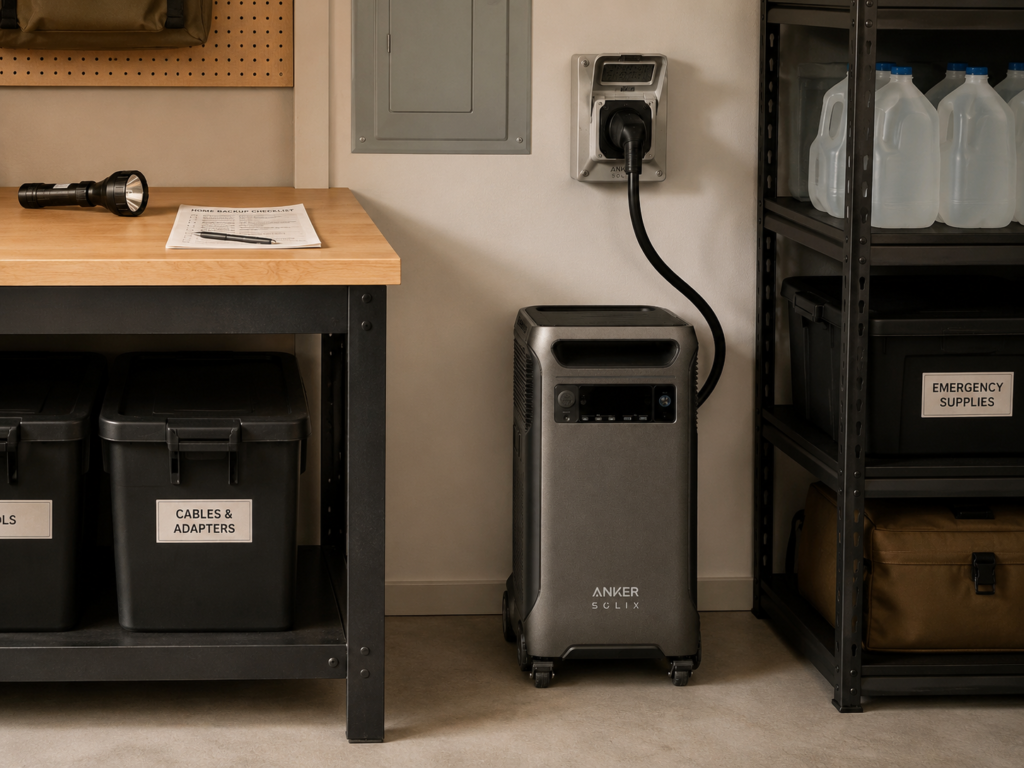
A central point in this Anker SOLIX F3800 Plus review is that 3,840Wh does not equal a universal runtime promise. The battery stores a large amount of energy, but each connected load changes the result. A refrigerator cycles. A pump can draw a short startup surge. A microwave, kettle, space heater, induction appliance, portable air conditioner, or cooking device can remove a meaningful portion of the battery reserve in a short time.
Capacity answers the question, “How much energy is stored?” Output answers, “Can this load run at this moment?” A device can fit within the output limit but still be a poor choice for a long outage because it consumes too much stored energy. Keeping a refrigerator, router, lights, and communication devices on may be sensible. Running heating, cooking, cooling, and entertainment loads as normal may not be.
For a practical plan, sort loads into priority tiers. First protect communications, lighting, food protection after compatibility testing, and necessary work equipment. Then decide whether a short-use convenience load is worth the energy it consumes. This order does not make the battery larger, but it makes the available reserve more useful during a real outage.
This Anker SOLIX F3800 Plus review recommends testing the actual appliances before relying on them. Record normal running watts where possible, note any motor or compressor startup behavior, and confirm that the selected plug and outlet path match. A controlled pre-outage test is safer and more useful than discovering a mismatch during a storm.
Anker SOLIX F3800 Plus Review: 120V, 240V, and Outlet Paths
The 6,000W figure in this Anker SOLIX F3800 Plus review needs careful interpretation. Anker lists the L14-30R at 120V/240V, 25A maximum, and 6,000W maximum. Its standard NEMA 5-20R outputs are listed at 120V, 20A maximum, and 2,400W maximum. The TT-30R is a separate 120V RV path listed at 3,000W maximum. Outlet type and connection method matter as much as the appliance label.
Do not connect an appliance because the largest product-page number seems high enough. Check the appliance voltage, plug, current requirement, cable, total simultaneous demand, and the specific outlet you will use. A standard household-style outlet path does not inherit the L14-30R maximum. A 30A RV outlet does not create a 240V supply. The correct electrical path is part of buyer fit.
For a home-circuit plan, a transfer switch, inlet box, and installation method are separate parts of the decision. The portable station can be one element in a properly designed selected-circuit system, but it does not make an improvised panel connection safe. Never backfeed a home electrical panel through a wall outlet, use damaged cables, or rely on improvised high-current adapters.
Use qualified electrical help whenever the plan involves permanent wiring, a home panel, a transfer switch, or a 240V circuit. This Anker SOLIX F3800 Plus review treats the station as a source of portable stored power, not a replacement for an electrical design, inspection, or device-specific safety instructions.
Anker SOLIX F3800 Plus Review: Solar, AC Charging, and Recovery
Solar recovery is one of the strongest reasons to consider this platform. This Anker SOLIX F3800 Plus review uses Anker’s published two-input specification: each solar input is listed at 11 to 165V, 17A maximum, and up to 1,600W, for up to 3,200W total. That can support a serious recovery plan, but the stated ceiling is not a promise of identical output every day.
Real solar production changes with panel voltage, array configuration, shade, sun angle, season, temperature, cable condition, and the battery’s state of charge. The 165V maximum is a safety boundary, not a target to exceed. Check each panel’s open-circuit voltage, current, connector, and the complete series or parallel layout before plugging anything into the station.
Anker lists 1,800W maximum AC charging and describes an under-three-hour charge time under stated conditions. That is useful readiness context, but actual time changes with the source, temperature, starting state of charge, and operating conditions. The unit also has a documented generator or Home Power Panel port for supported configurations. Treat those paths as configuration-specific, not permission to attach every generator or household system.
A strong recovery plan is tested before it is needed. Store the correct AC cable, solar leads, and any documented accessories with the station. Confirm panel placement, cable length, ventilation, and a dry operating location. The value in high solar input is not the headline alone. It is whether the owner can deploy a compatible array safely and consistently.
Anker SOLIX F3800 Plus Review: Expansion and Placement
The expansion decision in this Anker SOLIX F3800 Plus review should start with a measured runtime shortfall. Anker lists support for up to six 3,840Wh BP3800 expansion batteries and a supported system capacity up to 53.8kWh. More battery capacity can extend the same controlled load plan. It does not remove output limits, correct a wrong plug choice, or turn an unplanned high-watt lifestyle into practical outage power.
Expansion adds cost, storage space, cables, weight, charging needs, and more components to inspect before an outage. Start with the smallest configuration that genuinely covers the priority loads. Add battery capacity after a controlled test shows that the base unit cannot meet the required duration. This staged approach usually makes better use of a large backup budget.
Placement matters before expansion begins. At 136.7 lb, the base station is best treated as a planned-location unit. Use a dry, stable, ventilated surface, keep cable paths clear of exits, and measure vehicle compartments, garage thresholds, storage clearances, and ramps. Wheels help, but they do not make stair movement or repeated loading routine.
UPS-style backup claims also need restraint. Anker describes switching behavior that depends on the input condition. Test the exact router, computer, monitor, charger, or other device before relying on continuity. Medical, life-safety, security, server, and other critical equipment should follow its manufacturer’s dedicated backup requirements rather than a general portable-power claim.
Anker SOLIX F3800 Plus Review: Home, RV, and Outage Scenarios
For home use, this Anker SOLIX F3800 Plus review favors selected essentials over normal household behavior. A tested refrigerator or freezer, router, lights, phones, laptops, fans, and carefully chosen work equipment can form a realistic priority group. High-watt cooking, heating, and cooling appliances may be compatible in limited situations, but they need to be judged against both the outlet path and the remaining energy reserve.
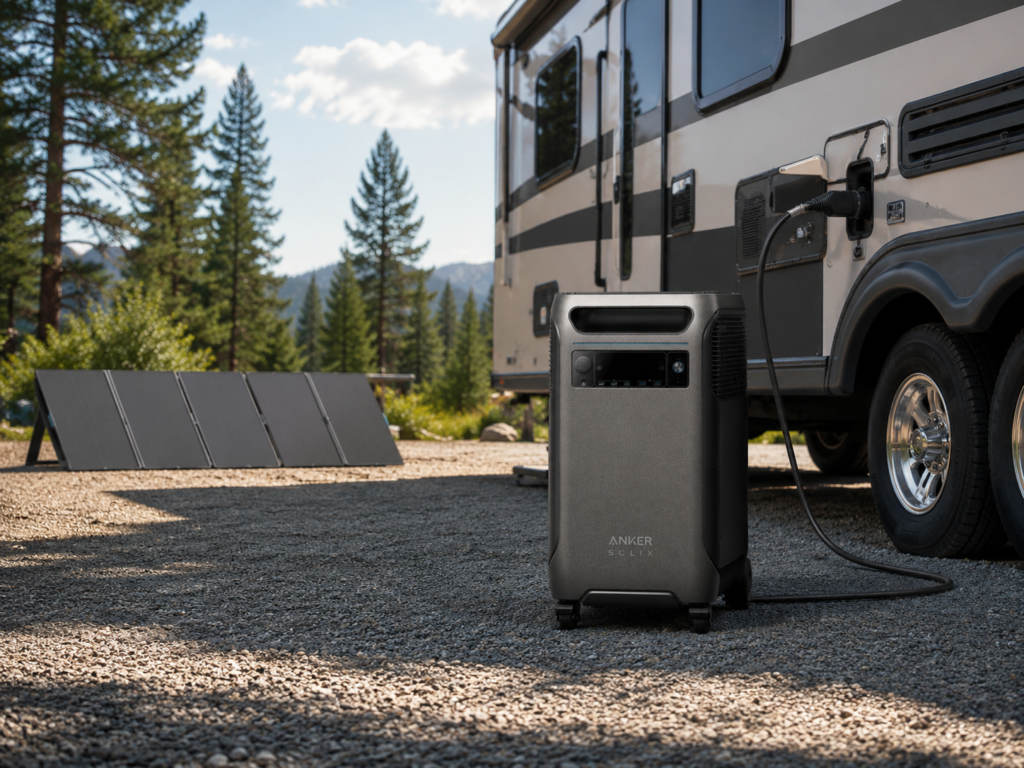
For RV use, the TT-30R path and larger battery reserve can be valuable for a compatible rig. Check the RV inlet, cord, appliance mix, charging system, grounding approach, and simultaneous loads. A large portable station can support an RV plan without becoming unlimited shore power. Air conditioning, heating, cooking, charging, and entertainment can quickly change the power budget.
For long outages, solar recovery and expansion may be more important than one-time capacity. A buyer should decide whether a compatible array can be deployed safely, whether a wall or generator-supported charging route is available, and how the unit will be protected from weather. A battery that cannot be recharged or moved safely may be less useful than a smaller system with a realistic recovery plan.
For general outage readiness, consult Ready.gov power-outage guidance alongside the station’s current manual. Battery power avoids engine exhaust, but it does not eliminate normal electrical, trip-hazard, placement, cable, and load-management responsibilities.
Anker SOLIX F3800 Plus Review: Alternatives
The best alternative in this Anker SOLIX F3800 Plus review depends on what does not fit. Buyers who need a different single-unit 120V/240V path and a strong solar ceiling should compare the EcoFlow DELTA Pro 3 versus Anker SOLIX F3800 Plus comparison. Buyers whose main question is a larger base battery and a different expansion system should read the Jackery 5000 Plus versus Anker F3800 Plus comparison.
- Choose EcoFlow DELTA Pro 3 when its single-unit 120V or 240V behavior, solar input approach, and EcoFlow ecosystem better match the actual plan.
- Choose Jackery Explorer 5000 Plus when a 5kWh-class base battery and that specific 120V/240V expansion ecosystem are more suitable.
- Choose a smaller station when the real need is communication, lighting, laptops, phones, and short essential-load coverage rather than high-output backup.
Do not choose an alternative only by capacity. Compare outlet path, voltage requirement, usable solar configuration, placement, expansion cost, current warranty eligibility, and the devices that must run at the same time. The right system is the smallest verified one that safely meets the real plan.
Anker SOLIX F3800 Plus Review: Pros and Cons
Pros
- Large 3,840Wh LFP base battery for controlled high-demand backup plans.
- 6,000W L14-30R output path with listed 120V/240V support.
- Up to 3,200W total solar input through two published solar inputs.
- Expansion path using compatible BP3800 batteries.
- Useful outlet mix for managed home, RV, and direct-device use.
- Five-year manufacturer warranty listed on the official product page.
Cons
- 136.7 lb base unit is difficult to move, especially on stairs.
- Standard 120V outlets have a lower 2,400W listed limit than the L14-30R path.
- Solar, generator, bypass, and UPS behavior depend on the exact configuration.
- Expansion raises cost, storage needs, cable management, and charging requirements.
- More capacity than small-device and light-backup buyers typically need.
Anker SOLIX F3800 Plus Review: What to Verify Before Buying
Before purchase, this Anker SOLIX F3800 Plus review recommends verifying the complete system rather than only the base station. A large battery is most useful when the selected appliance, outlet, cable, recovery plan, and placement all work together.
| Verify | Why it matters |
|---|---|
| Priority loads and required hours | They determine whether 3,840Wh is enough before expansion. |
| Outlet and plug type | Standard outlets, TT-30R, and L14-30R have different listed paths and limits. |
| Motor or compressor startup behavior | Running watts may not show the complete compatibility picture. |
| Solar panel voltage, current, connectors, and wiring | Each solar input has a published 11 to 165V, 17A, and 1,600W maximum boundary. |
| AC, generator, or Home Power Panel plan | Fast charging, input, and bypass behavior depend on the supported accessory and condition. |
| Expansion battery need and storage | Extra energy adds cost, floor space, weight, and management requirements. |
| UPS behavior for exact devices | Test the actual equipment instead of assuming universal sensitive-device compatibility. |
| Placement and moving route | 136.7 lb requires a stable surface, clear path, and realistic transport plan. |
| Current retail identity | Confirm ASIN B0DTSSCHG6, seller, included accessories, warranty eligibility, and return terms at checkout. |
Anker SOLIX F3800 Plus Review FAQ
Is the Anker SOLIX F3800 Plus good for home backup?
This Anker SOLIX F3800 Plus review finds it a strong fit for a planned selected-load system, not a default whole-home solution. Its value depends on the home connection method, priority circuits, appliance demand, transfer equipment, and safe installation path being verified before purchase.
Can the Anker SOLIX F3800 Plus run 240V loads?
Anker lists the L14-30R at 120V/240V, 25A maximum, and 6,000W maximum. Verify the appliance, plug, cable, total demand, transfer or inlet equipment, and installation conditions before relying on it for any 240V application.
How much solar input does the Anker SOLIX F3800 Plus support?
It supports up to 3,200W total solar input through two inputs, each listed at up to 1,600W. Actual charging depends on a compatible array, voltage and current limits, sunlight, shading, panel layout, cable condition, temperature, and battery state.
Is the Anker SOLIX F3800 Plus expandable?
Yes. Anker lists compatibility with up to six BP3800 batteries and a supported system capacity up to 53.8kWh. Expansion adds runtime but also adds system cost, physical footprint, stored weight, charging requirements, and setup complexity.
Is the Anker SOLIX F3800 Plus portable?
It is wheeled and movable on a planned flat route, but it weighs 136.7 lb. Treat it as a planned-placement backup system rather than a one-person carry product or a frequent-stair solution.
Anker SOLIX F3800 Plus Review: Final Decision
The final decision in this Anker SOLIX F3800 Plus review is straightforward: choose it when the real plan needs a large base battery, a documented 120V/240V output path, serious solar recovery potential, and an expansion option that can be justified by measured runtime. It can be a capable platform for selected home circuits, compatible RV use, and controlled long-outage preparation.
Skip it when the real requirement is a light communications kit, short phone-and-router backup, frequent carrying, an unplanned home-panel connection, or a high-watt appliance list that has never been tested. Capacity alone does not create a safe or useful backup plan. The right station is the smallest verified system that fits the outlet, load, runtime, recovery, and placement requirements you actually have.
This Anker SOLIX F3800 Plus review is most positive for disciplined buyers who will measure loads, verify connections, establish a recharge routine, and keep the unit ready before an outage. For that buyer, the F3800 Plus can be a serious portable backup foundation. For everyone else, a smaller product may deliver a better outcome with less cost and complexity.
Testing Notes
- Manufacturer documentation reviewed: Anker rates the F3800 Plus at 3,840Wh LFP capacity with a 6,000W 120V/240V L14-30R output path; the standard 120V outlets have a separate 2,400W limit.
- Manufacturer documentation reviewed: the two solar inputs support up to 3,200W combined under Anker’s stated voltage and current conditions; actual solar harvest depends on panel setup and conditions.
- Manufacturer documentation reviewed: the F3800 Plus supports expansion with compatible BP3800 batteries in supported configurations; confirm battery, transfer-switch, and installation compatibility before purchase.