
Comparison
Jackery 5000 Plus vs Anker F3800 Plus: Which Backup Platform Fits?
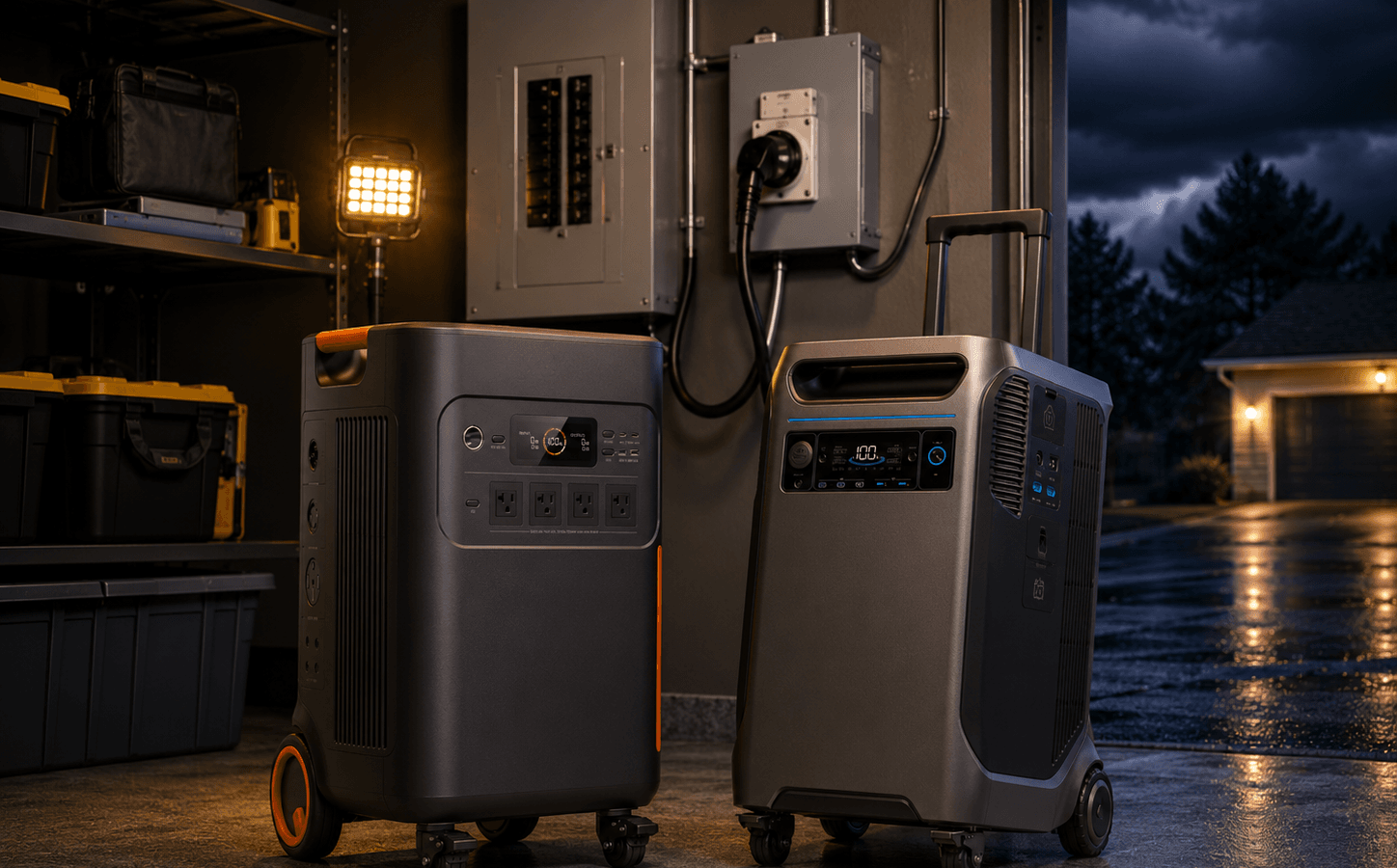
Product Matchup
Side-by-side summary
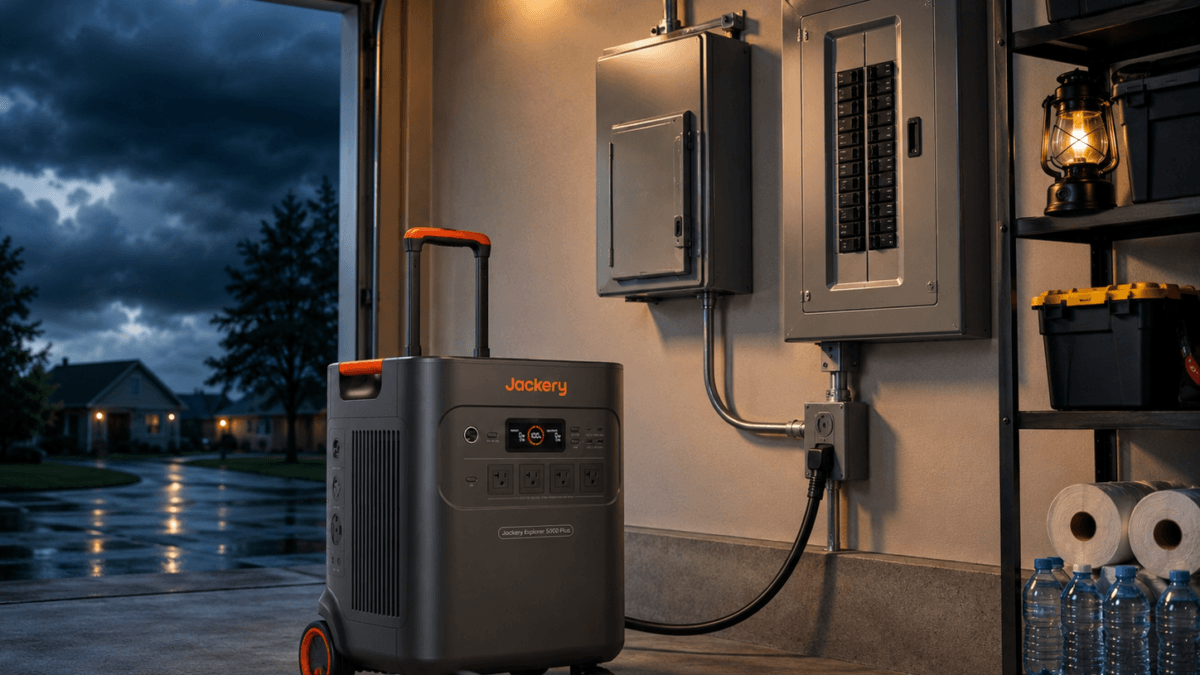
Product A
Overall Winner
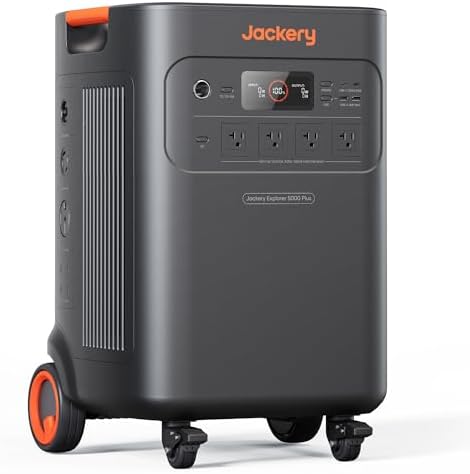
Jackery Explorer 5000 Plus
Large 5,040Wh LiFePO4 portable power station with 7,200W AC output, 14,400W surge, 120V/240V support, solar charging up to 4,000W, and expandable home-backup capacity.
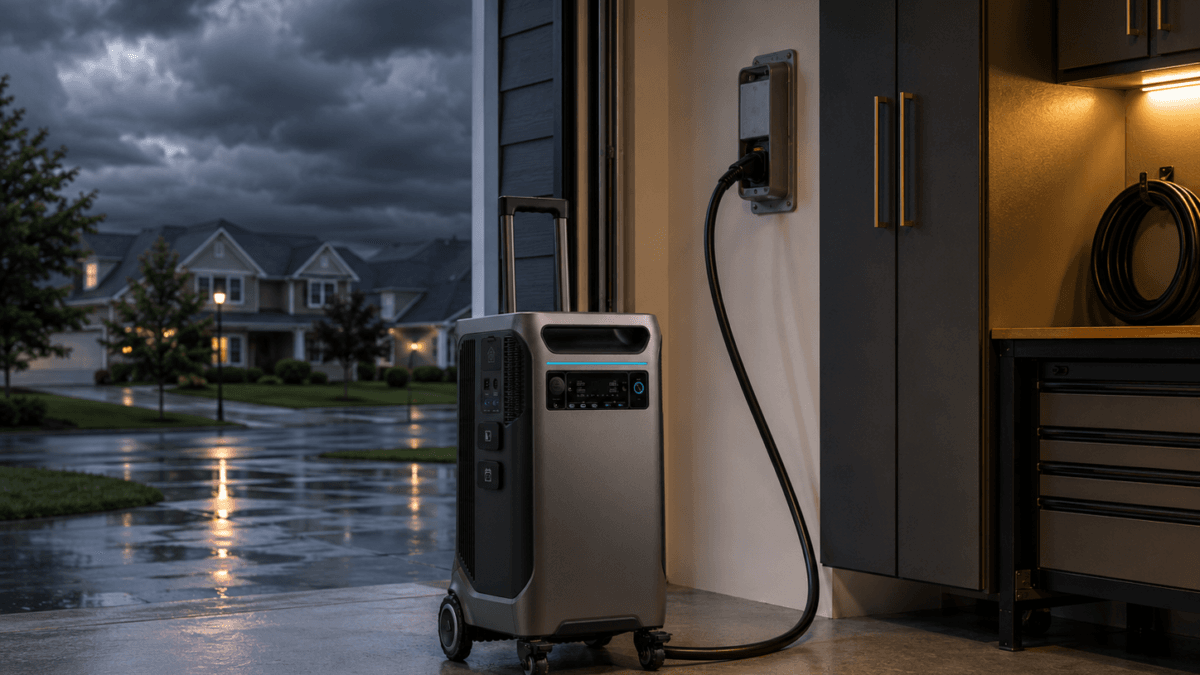
Product B
Anker SOLIX F3800 Plus Portable Power Station
Heavy-duty 3,840Wh LFP portable power station with 6,000W AC output, 120V/240V support, up to 3,200W solar input, and expandable backup capacity for home, RV, and outage planning.
Spec Comparison
Core numbers
| Spec | Jackery Explorer 5000 Plus | Anker SOLIX F3800 Plus Portable Power Station |
|---|---|---|
| Capacity | 5040 Wh | 3840 Wh |
| AC Output | 7200 W | 6000 W |
| Solar Input | 4000 W | 3200 W |
This article may contain affiliate links. If you buy through these links, PowerLabPro may earn a commission at no extra cost to you. As an Amazon Associate I earn from qualifying purchases.
Jackery 5000 Plus vs Anker F3800 Plus is a choice between two heavy, expandable backup platforms with different starting strengths. Choose the Jackery Explorer 5000 Plus when the priority is more battery capacity and higher published AC output from one base unit. Choose the Anker SOLIX F3800 Plus when the plan is built around its dual-input solar architecture, L14-30R path, RV outlet, and modular home-backup ecosystem. Buyers searching Anker F3800 Plus vs Jackery 5000 Plus are asking the same decision in reverse order.
The important distinction is not which product has the largest marketing number. It is which electrical path, battery reserve, charging method, and expansion plan match the loads you have actually measured. Neither unit is a universal whole-home solution, and neither is proportionate for a small router-and-laptop problem. Both require safe placement, a written load list, and verified compatibility with every appliance, cord, inlet, transfer device, solar array, and accessory in the proposed setup.
Quick verdict: In Jackery 5000 Plus vs Anker F3800 Plus, Jackery wins base battery capacity and base-unit output. Anker has the clearer published direct-solar framework and a compelling modular connection ecosystem. Portability is a practical tie because both weigh more than 134 lb. Value is also a tie without a current, like-for-like system price and accessory list. The overall winner depends on whether the buyer needs Jackery’s stronger starting unit or Anker’s solar-forward, configuration-dependent platform.
Research note: The Jackery 5000 Plus vs Anker F3800 Plus analysis is based on current manufacturer-listed specifications, official support information, verified PowerLabPro Product records, and buyer-fit reasoning. It does not claim hands-on testing or guaranteed runtime. Confirm the exact current listing, included accessories, expansion-battery compatibility, outlet limits, and installation requirements on the official Jackery Explorer 5000 Plus page and official Anker SOLIX F3800 Plus page before purchase.
Table of Contents

Jackery 5000 Plus vs Anker F3800 Plus: category winners
| Category | Winner | Why it matters |
|---|---|---|
| Overall starting platform | Jackery for higher base capacity and output; Anker for a solar-forward modular plan | The correct overall choice depends on the verified buyer scenario. |
| Battery | Jackery | 5,040Wh versus 3,840Wh before expansion. |
| Output | Jackery | Jackery publishes 7,200W total AC output from the base unit. Anker’s high-output claims must be read by outlet and configuration. |
| Solar recovery | Anker | Two published MPPT inputs, up to 1,600W each and 3,200W total. |
| Portability | Tie | Both weigh more than 134 lb and are rolling platforms, not routine carry products. |
| Value | Tie | Value depends on current system price, included accessories, and the equipment the buyer actually needs. |
This winner table keeps Jackery 5000 Plus vs Anker F3800 Plus buyer-specific. Jackery’s battery and output advantages are meaningful only when the load plan can use them. Anker’s solar and ecosystem strengths matter only when the buyer will install compatible arrays, use the relevant outlet path, or expand the platform. A category win is not a universal recommendation.
Core specifications and buyer implications
| Decision point | Jackery Explorer 5000 Plus | Anker SOLIX F3800 Plus |
|---|---|---|
| Base capacity | 5,040Wh | 3,840Wh |
| Battery chemistry | LiFePO4 | LiFePO4 |
| Published AC-output path | 7,200W total AC output with a 120V/240V high-output path | 6,000W total through the L14-30R path, with lower limits on ordinary 120V receptacles and configuration-specific conditions |
| Published surge | 14,400W | Verify the exact outlet and operating configuration rather than transferring a headline figure across every port |
| Solar architecture | High-PV input plus lower-voltage solar inputs, subject to compatible array design | Two 11V to 165V MPPT inputs, up to 1,600W each and 3,200W total |
| Expansion ceiling | Up to 60kWh in supported configurations | Up to 53.8kWh in supported dual-system configurations |
| Weight | About 134.5 lb | 136.7 lb |
| Buyer role | Higher-capacity, higher-output selected-load backup from one base unit | Solar-forward, RV-capable, modular backup with a defined accessory path |
For Jackery 5000 Plus vs Anker F3800 Plus, the table separates the numbers that are often blended together. Battery capacity describes stored energy. Continuous output describes how much load the inverter can support through the relevant outlet path. Surge describes temporary startup margin, not sustained power. Solar input describes a compatibility ceiling, not guaranteed daily harvest. Expansion describes a future system configuration, not the equipment included with the base station.
That distinction is essential in Jackery 5000 Plus vs Anker F3800 Plus. A buyer can have enough inverter output but insufficient battery for the desired duration. Another buyer can have enough stored energy but an incompatible connector or appliance startup demand. The useful comparison starts with the complete load and connection plan, not a single specification.
Battery capacity and realistic runtime planning
In Jackery 5000 Plus vs Anker F3800 Plus, Jackery has the clear base-capacity advantage at 5,040Wh, compared with 3,840Wh for Anker. The 1,200Wh difference can reduce the need for an immediate expansion battery and can extend a controlled essential-load plan. It is most useful for buyers who already know which devices must run, how long they operate, and how much reserve should remain for the next refrigerator cycle, overnight communications, or another priority load.
A capacity win in Jackery 5000 Plus vs Anker F3800 Plus does not create a runtime guarantee. Real AC runtime changes with inverter losses, device cycling, startup events, temperature, battery state, simultaneous loads, and the amount of energy the owner deliberately keeps in reserve. A refrigerator that cycles is different from a continuous heater. A pump or compressor may require startup headroom that a simple watt-hour calculation does not show.
For Jackery 5000 Plus vs Anker F3800 Plus, begin with watts multiplied by hours for each essential device, then add realistic conversion losses and a reserve margin. PowerLabPro’s portable power station sizing guide provides the correct next step. The goal is not to use every watt-hour. It is to preserve the loads that matter for the required outage window.
Within Jackery 5000 Plus vs Anker F3800 Plus, Anker’s smaller base battery can still fit a serious selected-load plan. It may be the better foundation when the owner expects frequent solar recovery, an RV role, or staged expansion. Jackery is stronger when the owner wants more reserve before adding components. Neither should be expanded until the base system has been evaluated under a realistic, safe load plan.
Output and outlet architecture
For Jackery 5000 Plus vs Anker F3800 Plus, the output comparison requires more care than placing 7,200W beside 6,000W. Jackery publishes 7,200W total AC output and a 14,400W surge figure for the Explorer 5000 Plus, with a documented 120V/240V high-output path. This gives Jackery the stronger base-unit output position for a buyer whose verified simultaneous load and connection method can use it.
In Jackery 5000 Plus vs Anker F3800 Plus, Anker’s technical specifications list 6,000W total through the 120V/240V L14-30R path, while its regular 120V receptacles have lower limits. The official product information also describes configuration conditions for certain generator, bypass, home-panel, and expansion scenarios. That means “6,000W” must not be presented as an unconditional promise for every receptacle or every setup.
In Jackery 5000 Plus vs Anker F3800 Plus, Jackery wins output because its published starting platform is more direct. Anker can still be the better system when its L14-30R, TT-30R, transfer equipment, or Home Power Panel path matches the buyer’s real use. The losing product in one output category may be the better platform once outlet type, voltage, solar recovery, and accessory compatibility are included.
For Jackery 5000 Plus vs Anker F3800 Plus, do not treat a high inverter number as permission to connect an appliance. Verify voltage, running demand, motor-start behavior, plug type, breaker or outlet limit, cable rating, transfer equipment, and all product-specific instructions. An adapter does not correct an incompatible electrical plan. Never backfeed a home panel through a wall outlet.
Charging and solar recovery
In Jackery 5000 Plus vs Anker F3800 Plus, Anker has the clearer published direct-solar framework. The F3800 Plus lists two 11V to 165V MPPT solar inputs, each rated up to 1,600W, for a 3,200W total ceiling. That can support a two-array design when panel voltage, current, connectors, wiring, and cold-weather open-circuit voltage remain within the published limits.
Jackery 5000 Plus vs Anker F3800 Plus also differs in solar architecture because Jackery uses a high-PV input and lower-voltage solar paths. The high-voltage route can be useful in a carefully designed system, but it requires compatible panels and correct series or parallel planning. The existence of a high-PV input does not make every solar panel or array suitable.
For solar recovery, Jackery 5000 Plus vs Anker F3800 Plus favors Anker on published clarity, not on guaranteed harvest. Actual energy recovery changes with sunlight, cloud cover, shading, panel angle, temperature, cable loss, battery state, and the hours available before the next load period. A 3,200W input ceiling does not mean the battery receives 3,200W throughout the day.
In Jackery 5000 Plus vs Anker F3800 Plus, AC and generator-assisted charging also require configuration-specific review. Buyers should identify how the battery will recover before the next night, not only how it will discharge during the first few hours. A large station without a reliable recharge path can become a one-cycle backup system during a long outage.
Expansion: maximum capacity versus practical need
In Jackery 5000 Plus vs Anker F3800 Plus, both platforms can grow far beyond their base batteries. Jackery states supported configurations can reach up to 60kWh. Anker states supported dual-system configurations can reach up to 53.8kWh. Those ceilings show ecosystem depth, but they do not tell a buyer how much capacity is appropriate.
For Jackery 5000 Plus vs Anker F3800 Plus, expansion should solve a measured energy shortfall. An extra battery adds stored energy, but it also adds weight, floor space, cable management, charging time, and another component that increases setup and maintenance demands. A smaller system with a disciplined load plan and reliable recovery can be more useful than a very large system assembled around optimistic assumptions.
Jackery’s larger 5,040Wh base makes it appealing to buyers who want to delay expansion. Anker’s BP3800 and home-backup ecosystem can be compelling for buyers who already expect a modular installation. In Jackery 5000 Plus vs Anker F3800 Plus, the higher maximum ceiling is less important than the capacity needed for the first night, the recharge energy available the next day, and the physical space available for the complete system.
Portability, storage, and deployment
In Jackery 5000 Plus vs Anker F3800 Plus, portability is a practical tie. Jackery lists about 134.5 lb, and Anker lists 136.7 lb. A difference of roughly two pounds does not change the buyer problem. Both are wheeled power stations that require a prepared route, stable storage, and careful planning around stairs, thresholds, vehicle loading, and emergency deployment.
For Jackery 5000 Plus vs Anker F3800 Plus, choose the location before buying. Store either unit in a dry, well-ventilated, accessible area away from heat, water, obstructed airflow, damaged wiring, and walking paths. The best storage point is often where the owner can use the system safely without improvising long cable runs after the power fails.
For Jackery 5000 Plus vs Anker F3800 Plus, neither deserves a portability win merely because it is nominally lighter. Wheels help on a suitable surface. They do not make either product easy to lift, carry up stairs, or secure in a moving vehicle. Buyers with frequent transport needs should consider whether a smaller station class or a split battery system would be safer and more manageable.
Home-backup fit
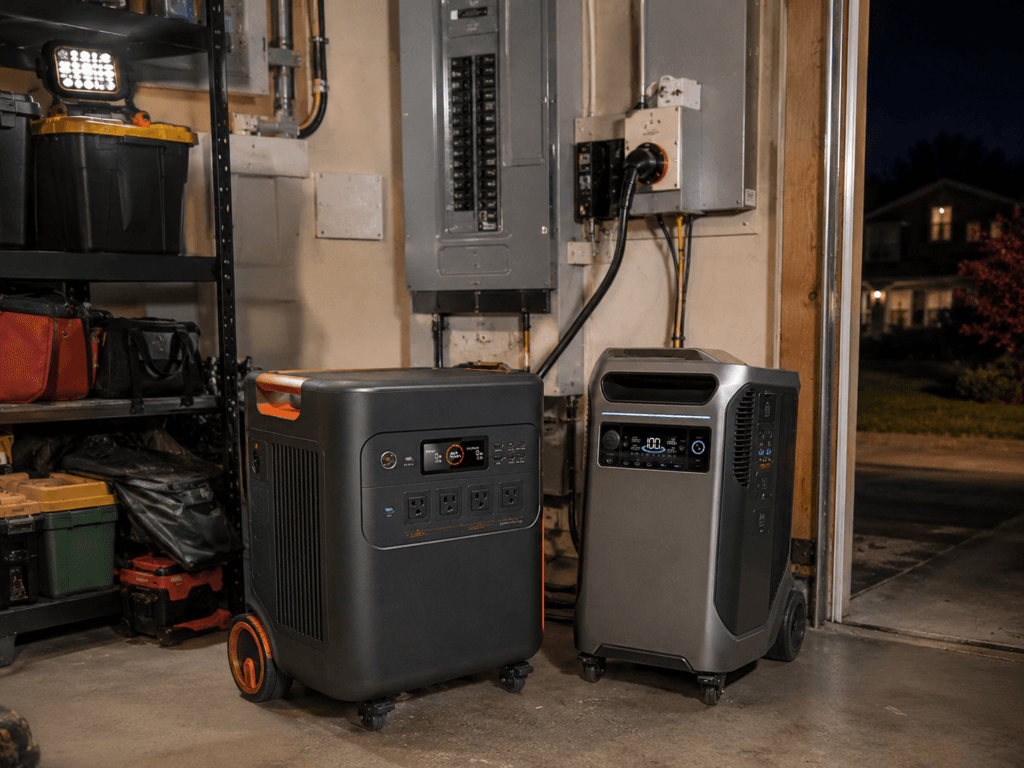
In Jackery 5000 Plus vs Anker F3800 Plus, Jackery is the more direct starting platform for selected-load home backup when the plan needs the larger base battery and higher published base-unit output. It can make sense for a defined combination of refrigeration, communications, lighting, selected work equipment, and other verified loads, provided the outlet and connection path are correct.
For Jackery 5000 Plus vs Anker F3800 Plus, Anker can be the better fit when the owner values its solar inputs, L14-30R path, generator-related options, expansion ecosystem, or Home Power Panel direction. Those features matter only when the exact configuration is planned. Buyers should identify whether they are using direct appliance connections, an approved inlet and transfer arrangement, or product-specific home-backup equipment.
Neither side of Jackery 5000 Plus vs Anker F3800 Plus should be described as automatic whole-home backup. Heating loads, electric cooking, central air conditioning, pumps, compressors, and other high-demand equipment can consume battery energy quickly or require special startup and connection analysis. A selected-load plan is safer and more predictable than assuming every household circuit can operate normally.
In Jackery 5000 Plus vs Anker F3800 Plus, any connection to home wiring requires compatible transfer equipment, an appropriate inlet or panel path, and qualified installation where required. For broader emergency planning, review Ready.gov power-outage guidance. Portable batteries supplement an outage plan; they do not replace fire safety, medical, code-governed, or professionally designed backup systems.
RV and off-grid fit
In Jackery 5000 Plus vs Anker F3800 Plus, Anker has a strong RV and off-grid case because the F3800 Plus includes a TT-30R path, an L14-30R path, two high-voltage solar inputs, and modular expansion options. It can suit an owner who wants the power station to serve as part of a broader travel or off-grid system rather than as a battery used only during home outages.
For Jackery 5000 Plus vs Anker F3800 Plus, Jackery is compelling for an RV owner who values the larger starting battery and higher published base-unit output. It may be the better match when the station will remain in a stable location, the load list is substantial but controlled, and the owner wants more energy reserve before adding batteries.
For either platform, verify the RV inlet, voltage, breaker rating, plug type, appliance load, panel storage, cable routing, and solar-array limits. Air conditioners, electric cooking appliances, and resistance heating can drain a large battery rapidly. The useful Jackery 5000 Plus vs Anker F3800 Plus question is how the system supports the daily energy budget and recovers before the next evening.
Choose Jackery Explorer 5000 Plus when these priorities matter
In Jackery 5000 Plus vs Anker F3800 Plus, choose Jackery when the buyer wants the strongest starting unit without depending on an immediate expansion battery. Its 5,040Wh base capacity and 7,200W published AC-output path give it a clear advantage for a verified high-output selected-load plan.
- Best for: buyers who need more stored energy and higher published output from one base unit.
- Not ideal for: small-device backup, frequent lifting, or buyers who have not defined the connection path.
- Main advantage: 5,040Wh and a stronger base-unit output position.
- Main drawback: heavy handling and a solar or home-connection plan that still requires exact compatibility work.
- Better alternative if: the buyer prioritizes Anker’s dual-input solar, TT-30R, L14-30R, or modular home-backup ecosystem.
For Jackery 5000 Plus vs Anker F3800 Plus, Jackery is the overall winner only for the buyer who can use its starting advantages. A household with a modest essential-load list may spend more, store more weight, and manage more output capacity than it needs. The product earns its place when the load calculation and connection plan are already clear.
Choose Anker SOLIX F3800 Plus when these priorities matter
In Jackery 5000 Plus vs Anker F3800 Plus, choose Anker when the plan is solar-forward, modular, and built around the F3800 Plus outlet and accessory ecosystem. The 3,840Wh base battery is smaller, but the two-input 3,200W solar ceiling, RV outlet, L14-30R path, and expansion options can make the complete system a better fit.
- Best for: buyers planning compatible solar recovery, RV use, or a staged home-backup ecosystem.
- Not ideal for: buyers who need the largest base battery and most direct high-output starting point.
- Main advantage: a clearly published dual-MPPT solar framework and flexible connection ecosystem.
- Main drawback: output claims and benefits depend more heavily on the exact outlet, accessory, and configuration.
- Better alternative if: the buyer wants more capacity and higher published output before adding batteries or accessories.
In Jackery 5000 Plus vs Anker F3800 Plus, Anker is not a weaker answer simply because Jackery wins base capacity and output. It is the better answer when its specific system design solves the actual buyer problem. Do not pay for the ecosystem if the station will only support a short list of ordinary 120V devices and will never use solar, expansion, RV, generator, or home-panel features.
Choose neither platform when a smaller system fits
In Jackery 5000 Plus vs Anker F3800 Plus, choose neither product when the real requirement is a router, modem, phones, laptops, lights, CPAP planning with an appropriate medical backup strategy, or a modest refrigerator plan that fits a smaller station. A 3.8kWh to 5kWh rolling platform can add cost, weight, storage demands, and connection complexity without improving the outcome.
For Jackery 5000 Plus vs Anker F3800 Plus, also choose neither when the buyer expects automatic whole-home operation, guaranteed multi-day runtime, or an unverified connection to home wiring. A standby generator, permanently installed home battery, professionally designed transfer system, or another backup method may be more appropriate for some loads and outage durations.
The strongest Jackery 5000 Plus vs Anker F3800 Plus decision is sometimes to step down in size. Buy the smallest system that safely supports the measured priority loads, leaves a useful reserve, and can be recharged through a realistic path.
Connected Product and Review paths
For Jackery 5000 Plus vs Anker F3800 Plus, use the connected records to verify model-specific details before buying. Read the Jackery Explorer 5000 Plus Product reference and Jackery Explorer 5000 Plus Review for the deeper Jackery decision. Read the Anker SOLIX F3800 Plus Product reference and Anker SOLIX F3800 Plus Review for Anker’s outlet, solar, expansion, and buyer-fit context.
In Jackery 5000 Plus vs Anker F3800 Plus, buyers considering another 4kWh-class platform can also review the EcoFlow DELTA Pro 3 vs Anker SOLIX F3800 Plus comparison. Internal links should narrow the decision, not push every reader toward the largest product.
Jackery 5000 Plus vs Anker F3800 Plus FAQ
Which one has more base battery capacity?
In Jackery 5000 Plus vs Anker F3800 Plus, Jackery starts at 5,040Wh, while Anker starts at 3,840Wh. Jackery therefore stores 1,200Wh more energy before expansion. Actual runtime still depends on the load, inverter losses, cycling behavior, temperature, and reserve target.
Which one has the stronger base-unit output?
For Jackery 5000 Plus vs Anker F3800 Plus, Jackery has the clearer base-unit output advantage with 7,200W total AC output. Anker’s technical specifications list 6,000W total through its L14-30R path, but regular 120V receptacles and some operating configurations have lower or conditional limits. Always verify the exact port and setup.
Which one is better for solar charging?
In Jackery 5000 Plus vs Anker F3800 Plus, Anker has the clearer direct-solar specification: two MPPT inputs from 11V to 165V, each up to 1,600W, for 3,200W total. Jackery’s high-PV and lower-voltage inputs can also support substantial solar, but the array must be designed for the published voltage and current limits.
Can either system connect to home circuits?
For Jackery 5000 Plus vs Anker F3800 Plus, either can be part of a selected-load home-backup plan when compatible product-specific equipment, an approved transfer or inlet path, a verified load plan, and qualified installation requirements are satisfied. Neither should be connected by backfeeding a wall outlet, and neither guarantees unrestricted whole-home operation.
Final verdict
The final Jackery 5000 Plus vs Anker F3800 Plus answer is buyer-specific. Choose Jackery Explorer 5000 Plus for the larger 5,040Wh base battery and the stronger published 7,200W base-unit output path. It is the more direct choice for a high-output selected-load plan that is already defined and does not depend on immediate expansion.
In Jackery 5000 Plus vs Anker F3800 Plus, choose Anker SOLIX F3800 Plus when the plan prioritizes its 3,200W dual-input solar framework, L14-30R and TT-30R paths, modular expansion, and home-backup accessories. Its high-output capability must be evaluated by the exact outlet and system configuration, not treated as one unconditional number.
For Jackery 5000 Plus vs Anker F3800 Plus, choose neither until the load list, outage duration, recharge plan, storage location, and electrical connection are verified. The right backup platform is the smallest safe system that meets the measured plan and can recover before the next critical load period.
Winners by Category
| Overall | Jackery Explorer 5000 Plus Power Station: Powerful 5,040Wh Backup |
|---|---|
| Value | Tie |
| Portability | Tie |
| Output | Jackery Explorer 5000 Plus Power Station: Powerful 5,040Wh Backup |
| Battery | Jackery Explorer 5000 Plus Power Station: Powerful 5,040Wh Backup |
Final Verdict
Choose Jackery Explorer 5000 Plus for the larger base battery and higher published base-unit output. Choose Anker SOLIX F3800 Plus for a solar-forward, modular setup when its documented outlet, expansion, and connection conditions match the plan. Choose neither when a smaller system safely covers the measured loads.