
Product Intelligence
Expandable 1kWh BackupOUPES Mega 1 Portable Power Station: Expandable 1kWh Backup
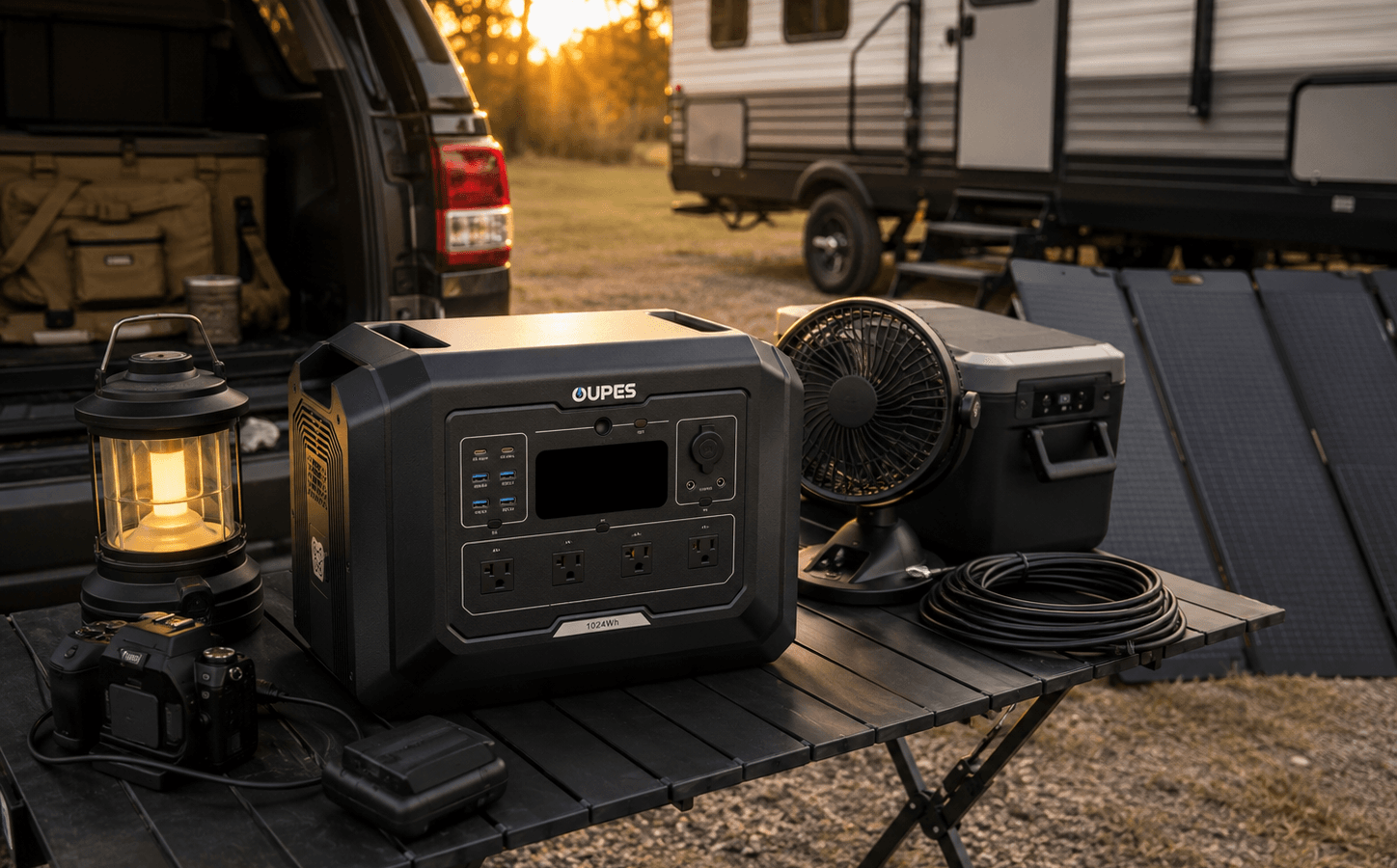
Expandable 1024Wh LiFePO4 portable power station with 2000W AC output, 4500W surge power, 800W solar input, app control, and UPS/EPS support. Best suited for short outages, garage backup, RV weekends, camping, and value-focused expandable backup planning.
Specifications
Key specs
Buyer Fit
Fit signals
Best for
Pros
- 2000W continuous output with 4500W surge
- 1024Wh LiFePO4 battery
- Expansion path to 5120Wh with two B2 batteries
- 27.8 lb for a 2000W-class station
- Dual 100W USB-C and Bluetooth app control
Cons
- Maximum solar-input specification not verified in current source
- Base 1024Wh battery is not a long high-draw backup reserve
- No verified 240V output
- Manual and accessory checks are required before solar planning
- Not a substitute for a code-compliant whole-home or life-safety system
Spec table
| Capacity | 1024 Wh |
|---|---|
| AC Output | 2000 W |
| Surge Output | 4500 W |
| Solar Input | 800 W |
| Weight | 27.8 lb |
| Battery | LiFePO4 |
| Warranty | 5-year warranty + 1-year extension after registration |
| Expandability | Up to 5120Wh with two OUPES B2 extra batteries. |
| UPS / EPS | Yes, <20ms UPS/EPS support |
| Recharge Time | 0–80% in 36 minutes listed; confirm charge method and full-charge time in the current manual. |
This page may contain affiliate links. If you buy through them, PowerLabPro may earn a commission at no extra cost to you. As an Amazon Associate I earn from qualifying purchases.
The OUPES Mega 1 portable power station is a 1,024Wh LiFePO4 battery system for buyers who need 2,000W continuous output, a manageable 27.8 lb form, and a documented path to more capacity through OUPES B2 batteries. This Product page is a verified central reference, not a hands-on test report. The connected OUPES Mega 1 Review provides deeper buyer trade-offs and alternatives.
OUPES Mega 1 Portable Power Station: Quick Product Reference
The OUPES Mega 1 portable power station fits a buyer who needs a deliberate essential-load battery rather than an unlimited-home-power promise. The current U.S. listing identifies a 1,024Wh LiFePO4 battery, 2,000W continuous AC output, 4,500W surge, a listed under-20ms UPS function, Bluetooth app control, two 100W USB-C ports, and expansion up to 5,120Wh with two B2 batteries.
Its buyer advantage is the combination of output and staged capacity. A base 1kWh battery can cover communication gear, laptop work, lighting, charging, small fans, and other controlled loads. If testing shows that the reserve is too short, the B2 route may add capacity without replacing the main unit. The trade-off is that a base battery remains finite, and the current source did not establish a maximum solar-input ceiling for panel planning.

- REVOLUTIONARY FAST-CHARGING TECHNOLOGY: Experience industry-leading recharge speeds with 0-80% capacity in just 36 minut…
- MODULAR EXPANSION CAPABILITY: Create a custom power ecosystem by connecting up to two B2 Extra Batteries, scaling your c…
- PROFESSIONAL-GRADE POWER DELIVERY: Delivering consistent 2000W continuous output (4500W surge) through premium AC outlet…
Table of Contents
OUPES Mega 1 Portable Power Station Specifications and Buyer Meaning
| Specification | Current source-backed information | Buyer meaning |
|---|---|---|
| Model identity | OUPES Mega 1, model S1, ASIN B0DG8JQNS4 | Confirm the model, seller, and bundle before checkout. |
| Battery capacity | 1,024Wh LiFePO4 | A finite energy reserve for controlled priorities, not a fixed runtime promise. |
| Continuous AC output | 2,000W | Use this as the normal combined AC-load ceiling. |
| Surge output | 4,500W | A brief startup allowance, not a separate continuous-output figure. |
| Expansion | Up to 5,120Wh with two OUPES B2 batteries | Offers more runtime after a real gap is established. |
| UPS function | Under 20ms listed | Potentially useful for tested compatible equipment, not a universal guarantee. |
| USB-C output | Two ports up to 100W | Useful for compatible laptops and gear without occupying AC outlets. |
| USB-A output | Four QC3.0 USB-A ports listed | Useful for phones and accessories. |
| App support | Bluetooth app control listed | Check current app functions before purchase. |
| Weight and dimensions | 27.8 lb; 15.1 x 9.1 x 11.6 in | Portable for planned movement, but needs safe lifting and stable placement. |
| Warranty | Five years listed | Confirm seller eligibility, coverage, and regional terms. |
| Solar input | Maximum input not verified in current source | Read the current manual before selecting panels, cables, or a series/parallel arrangement. |
The OUPES Mega 1 portable power station also includes an AC cable, car charging cable, MC4-to-Anderson cable, and manual according to the current listing. The presence of a solar cable does not establish a safe solar-array design. Panel open-circuit voltage, current, connector, polarity, and maximum input must come from the current manual.
The OUPES Mega 1 portable power station should be selected from the entire load plan, not one large product number. Capacity, continuous output, surge, charging, expansion, and port selection answer separate questions. A device can fit the inverter budget and still consume a large part of the battery in a short time.
Who the OUPES Mega 1 Portable Power Station Fits
The OUPES Mega 1 portable power station fits buyers who want one portable reserve for a controlled home, travel, or preparedness role and who value a future battery-expansion path. It is not a product for a buyer who needs unlimited appliance runtime or a home circuit system.
- Short-outage planners: people who prioritize a router, modem, lights, phones, laptop work, fans, and carefully chosen devices.
- Garage preparedness users: buyers who need a quiet power source for lighting, communications, tool-battery charging, inflators, and selected portable gear.
- RV and camping users: owners who want AC, USB-C, USB-A, and a portable energy reserve with a potential B2 growth path.
- Mobile-work users: people running laptops, cameras, chargers, lights, communications equipment, and controlled small loads.
- Expansion-aware buyers: users who will measure actual energy use before buying two extra batteries.
The OUPES Mega 1 portable power station is most convincing when its 2,000W continuous output solves a real compatibility problem while its 1,024Wh base capacity matches the required duration. The right buyer values output headroom but does not confuse output with the amount of stored energy.
For a short outage, a practical priority list may include a modem, router, phone charging, laptop work, LED lights, a small fan, and selected appliance use. For an RV weekend, it might include lighting, camera batteries, laptops, phones, and compatible low-to-moderate loads. The best use comes from deciding what must stay on first, not from trying to power everything at once.
Who Should Skip the OUPES Mega 1 Portable Power Station
Buyers should skip the OUPES Mega 1 portable power station when their requirement is clearly above a controlled 1kWh reserve. More output can run more devices at once, but it does not make high-watt loads efficient or turn the unit into a whole-home system.
- Whole-home buyers: portable power is not a substitute for a designed, code-compliant transfer arrangement or permanent home battery.
- 240V-equipment buyers: the current source identifies a 120V portable station; do not assume it covers 240V equipment.
- Long refrigerator-duration buyers: start with the appliance load and required hours, then compare a larger capacity class if food protection is the primary goal.
- High-draw heating, cooling, and cooking buyers: those loads can use stored energy rapidly even when the inverter can support a short task.
- Solar-first buyers without a current manual: do not commit to panels until the product’s verified solar-input limits are available.
- Critical-device buyers: medical, life-safety, server, security, and similar equipment must follow the device maker’s backup requirements.
Capacity, Output, and Runtime Reality
The OUPES Mega 1 portable power station has two different electrical roles. Its 1,024Wh battery represents stored energy. Its 2,000W continuous inverter represents the shared AC limit. A device may be within the inverter limit but still use a large amount of energy over a short period.
A lower-draw plan can include communications, LED lighting, phone charging, laptops, tablets, camera batteries, and a small fan. A higher-draw plan might add a refrigerator, coffee maker, microwave, kettle, heater, cooking device, portable air conditioner, pump, or tool. These loads behave differently, and several high-watt devices should not be assumed to run together just because they fit separate outlets.
The OUPES Mega 1 portable power station has a listed 4,500W surge rating. Use the 2,000W continuous figure for normal load planning. Surge can help with a short startup event, but it does not guarantee that every compressor, pump, motor, or appliance will start successfully. Test the actual priority device before relying on it.
Use the PowerLabPro sizing guide to translate the priority list into a realistic battery decision. Start with which devices must operate, how many hours matter, which loads cannot run together, and how the station will recharge. This is more reliable than selecting a battery from capacity or output alone.
The OUPES Mega 1 portable power station becomes more useful when the owner protects the battery for priority loads. Direct USB-C charging can reduce unnecessary use of AC adapters. Scheduling higher-watt tasks for short periods can preserve more energy for communications, food planning, work, and lighting.
Expansion and B2 Battery Planning
The OUPES Mega 1 portable power station has a published expansion route to 5,120Wh with two OUPES B2 batteries. That matters because an owner can begin with a portable base unit, record actual runtime, and add energy only when there is a measured shortfall.
Expansion is not an automatic recommendation. Extra batteries can add useful duration, but they also add cost, floor space, charging time, components to manage, and more total weight. A buyer who already knows they need multi-day appliance coverage, 240V, or larger home loads should compare complete higher-capacity platforms before using a smaller unit as a workaround.
The OUPES Mega 1 portable power station is best treated as a staged decision. First, test the base battery with a modest priority list. Second, determine whether the shortfall is capacity, output, solar recovery, or an unrealistic load expectation. Third, add B2 capacity only when it improves the real plan.
UPS, App Control, Ports, and Solar Verification
The current listing says the OUPES Mega 1 portable power station has an under-20ms UPS feature. This could help selected tested routers, modems, laptops, and monitors remain available during a brief grid interruption. It should not be assumed to provide the same outcome for every power supply, server, CPAP device, security device, or medical equipment.
Bluetooth app control and the available USB-C and USB-A ports can make a portable setup easier to manage. The two 100W USB-C ports are particularly helpful for compatible laptops, tablets, cameras, and other high-power USB-C equipment. The ports add convenience, but all AC devices still share the 2,000W continuous budget.
Solar information requires care. The OUPES Mega 1 portable power station comes with an MC4-to-Anderson cable according to the current listing, but PowerLabPro did not verify a maximum solar-input wattage, voltage range, or current limit from a current manual. Do not select a solar array or combine panels until those numbers are confirmed.
For safe use, keep the station dry, upright, ventilated, and on a stable surface. Keep cables away from walkways, water, doors, sharp edges, and crushing hazards. Do not backfeed a home electrical panel through an outlet. A portable station is strongest when used as a controlled source for selected loads, not improvised as a household electrical system.
Practical Use Cases
For a short home outage, the OUPES Mega 1 portable power station can support a priority sequence such as router, modem, phone charging, LED lights, laptop work, and a small fan. Add an appliance only after confirming its running and startup behavior and deciding how much battery reserve is still needed.
For a garage or preparedness kit, the OUPES Mega 1 portable power station can make sense for LED work lights, communications, a weather radio, tool-battery chargers, a compact inflator, camera or phone charging, and other portable equipment. It is quieter and more indoor-appropriate than a gas generator for the right loads, but it still needs the same careful placement and cable discipline.
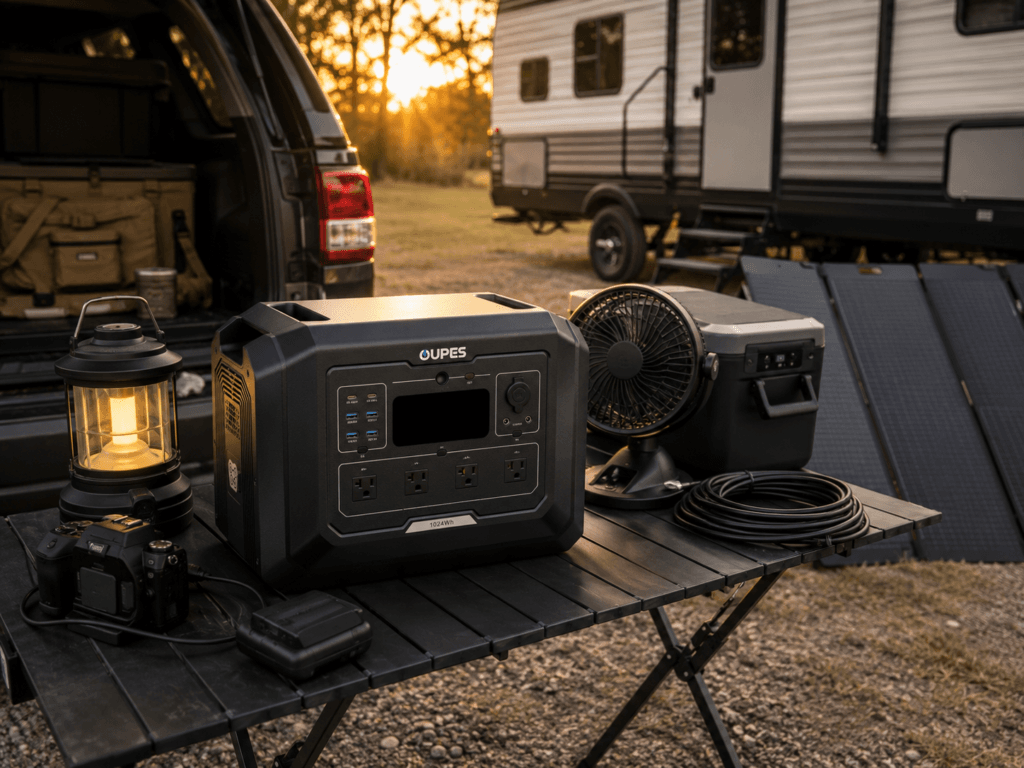
For camping and RV use, the OUPES Mega 1 portable power station works best when the device list is planned around finite energy. Charge cameras, laptops, and phones in daylight where a safe recovery source is available. Reserve evening energy for lights, fans, communication, and other priority devices. Avoid treating a portable battery as a replacement for campground service or a full vehicle electrical design.
For general outage preparedness, read Ready.gov’s power-outage guidance. Keep a written priority list with the unit, and store charging cables, device adapters, and any verified solar connectors together. A power station is more valuable when its owner has tested the setup before an outage begins.
What to Verify Before Buying
| Verify | Why it matters |
|---|---|
| Current listing identity | Confirm OUPES Mega 1, model S1, ASIN B0DG8JQNS4, seller, and exact bundle. |
| Priority-load watts and needed hours | They determine whether the 1,024Wh base battery is enough before expansion. |
| Combined AC demand | Every AC device shares the 2,000W continuous-output limit. |
| Compressor or motor startup behavior | Refrigerators, pumps, tools, and similar devices can behave differently from their normal running-watt label. |
| B2 compatibility and total cost | Expansion should solve a real duration gap, not create unplanned complexity. |
| UPS behavior for exact equipment | The listed transfer figure should be tested with the real router, laptop, monitor, or other device. |
| Solar input limits | Check the current manual for voltage, current, wattage, connector, and polarity before selecting panels. |
| Placement and cable plan | 27.8 lb requires a stable, dry, ventilated operating surface and clear cable routing. |
A useful backup routine includes charging the unit according to current manufacturer guidance, checking cables for damage, confirming the state of charge before a forecast outage or trip, and testing the priority devices when you are present. A battery that has only been read about is less useful than a setup that has been safely rehearsed.
Do not rely on a single power figure when comparing products. Capacity determines a reserve over time, output determines which loads may run together, and charging input determines how quickly the reserve may recover. A buyer who needs more duration may benefit from a larger battery. A buyer who needs more simultaneous-device capacity may need a different inverter class. A buyer who needs both must plan both.
The best location is stable, dry, and ventilated, with the display and outlets accessible and cords routed away from foot traffic. Keep the product manual, AC cable, car cable, verified solar leads, and key device adapters stored nearby. This makes the unit easier to deploy without improvising during an outage.
Related Decision Paths
Read the connected OUPES Mega 1 Review for detailed trade-offs, use-case limits, and alternative directions. This Product record remains the factual reference for the exact model identity, key specifications, ASIN, and current affiliate destination.
Buyers who need a broader home-backup shortlist should use the home backup buying guide. Buyers deciding whether a compact station can support their own device list should begin with the sizing guide. Those paths are more useful than treating any portable unit as a universal answer.
OUPES Mega 1 Portable Power Station FAQ
Is the OUPES Mega 1 Portable Power Station good for short outages?
The OUPES Mega 1 portable power station can be a strong fit for a short, controlled essentials plan. It is useful for communications, lights, laptop work, charging, a fan, and selected tested appliances. It is not a whole-home power solution, and actual runtime depends on the connected load and whether B2 batteries are added.
Can the OUPES Mega 1 Portable Power Station power a refrigerator?
It may power a compatible refrigerator when the appliance fits the 2,000W continuous-output limit and has been tested. Runtime varies with compressor startup, cycling, room temperature, door openings, other connected devices, and how much reserve you want to keep. Do not rely on a generic refrigerator-hour claim.
How does expansion work?
The current listing says the base battery can expand from 1,024Wh to 5,120Wh with two OUPES B2 batteries. Confirm current battery compatibility, included cables, availability, charging requirements, and total system cost before buying an expanded setup.
Final Product Decision
The OUPES Mega 1 portable power station is a practical central Product reference for a buyer who wants 1,024Wh of LiFePO4 capacity, 2,000W continuous output, a listed under-20ms UPS feature, dual 100W USB-C, Bluetooth app control, and an optional path to more capacity. It is strongest for controlled home essentials, preparedness, RV weekends, camping, and mobile equipment.
Skip the OUPES Mega 1 portable power station when the real need is long high-draw runtime, native 240V, whole-home coverage, or a solar plan that cannot wait for manual verification. Choose based on measured device demand, required duration, safe placement, and a realistic recharge path.