
Buying Guide
Best Portable Power Station for CPAP: 5 Backup Picks for Outages and Camping
Compare the best portable power station for CPAP backup, including smart picks for home outages, camping, RV use, runtime planning, and safer overnight backup power.
Product Shortlist
Featured products
Product
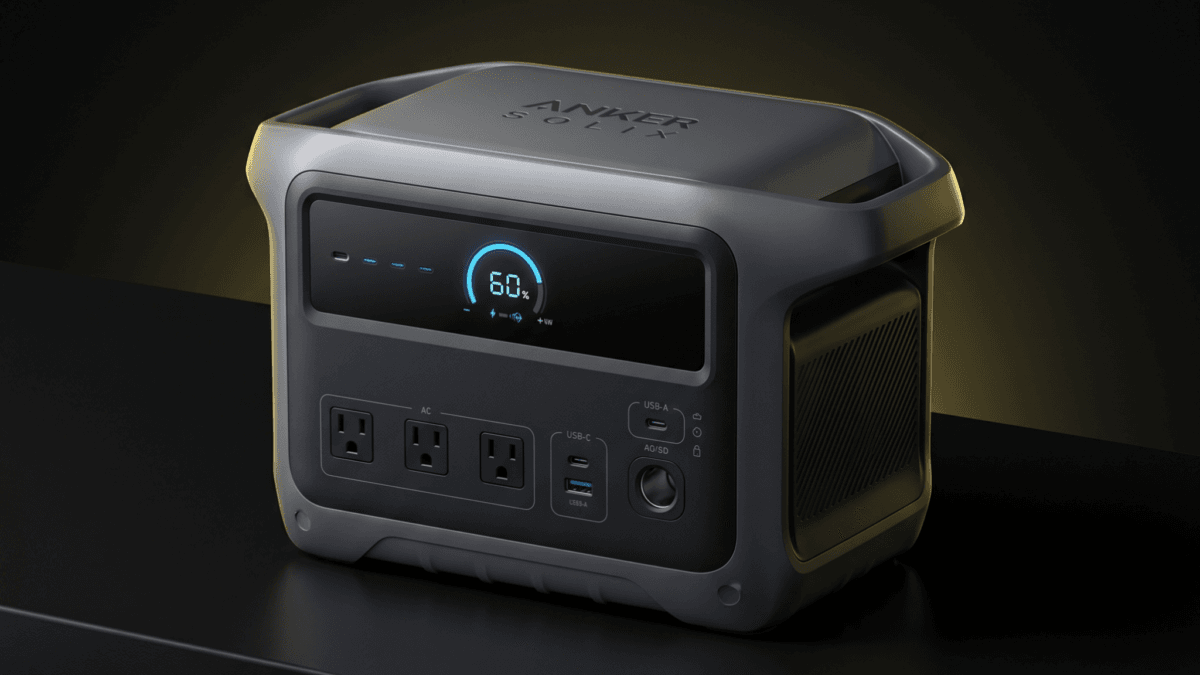
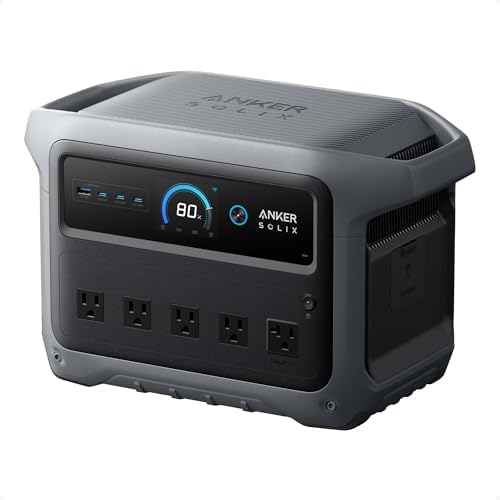
Anker SOLIX C1000 Gen 2 Portable Power Station
Compact 1,024Wh portable power station with 2,000W output, 3,000W peak, 49-minute fast AC recharge, 600W solar input, and 10 ms UPS support for home backup, camping, and RV use.
Product
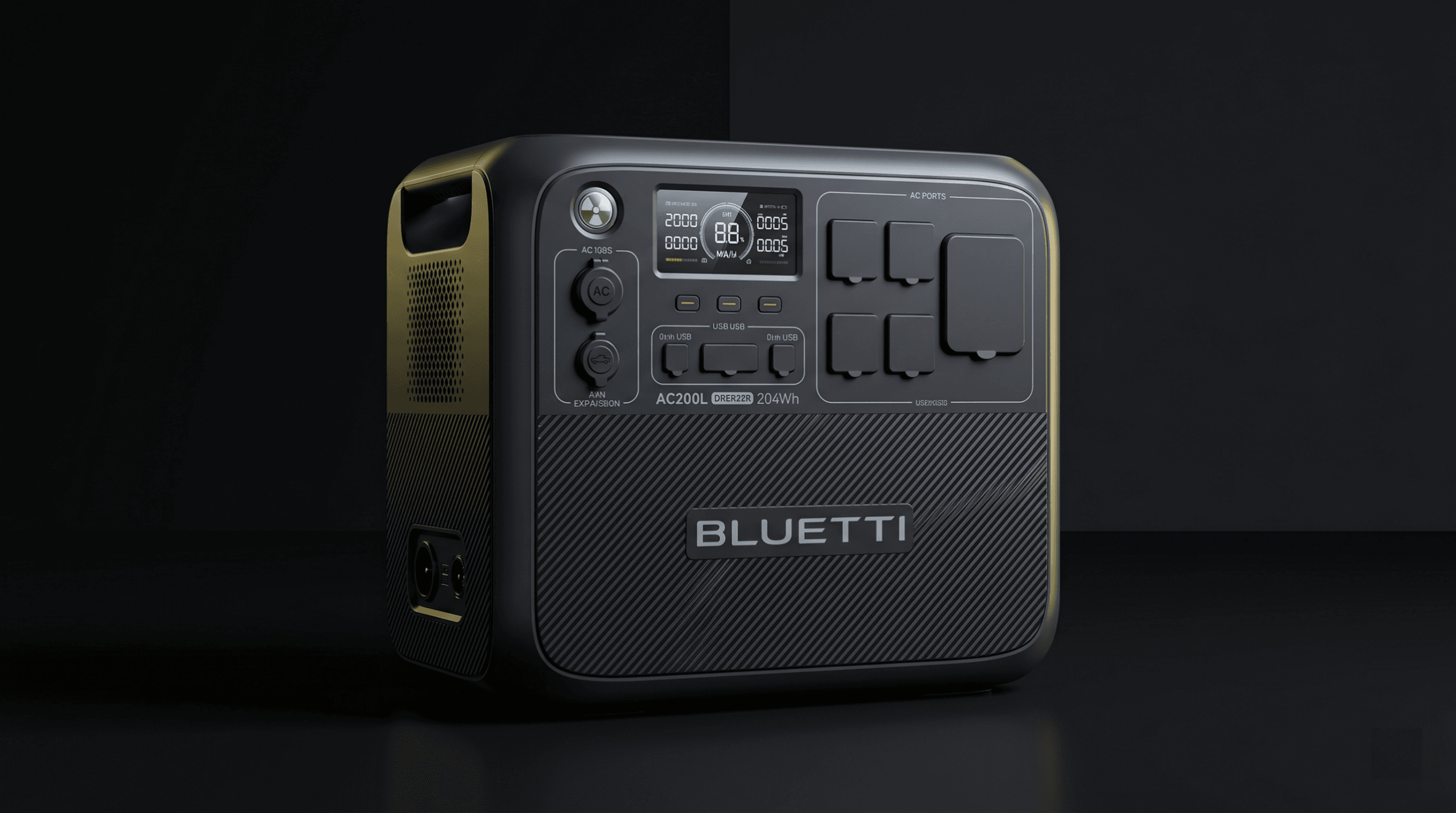
BLUETTI AC200L Portable Power Station
Expandable 2,048Wh LiFePO4 power station with 2,400W AC output, fast AC charging, strong solar input, app control, and serious backup power for RV and home use.
Product
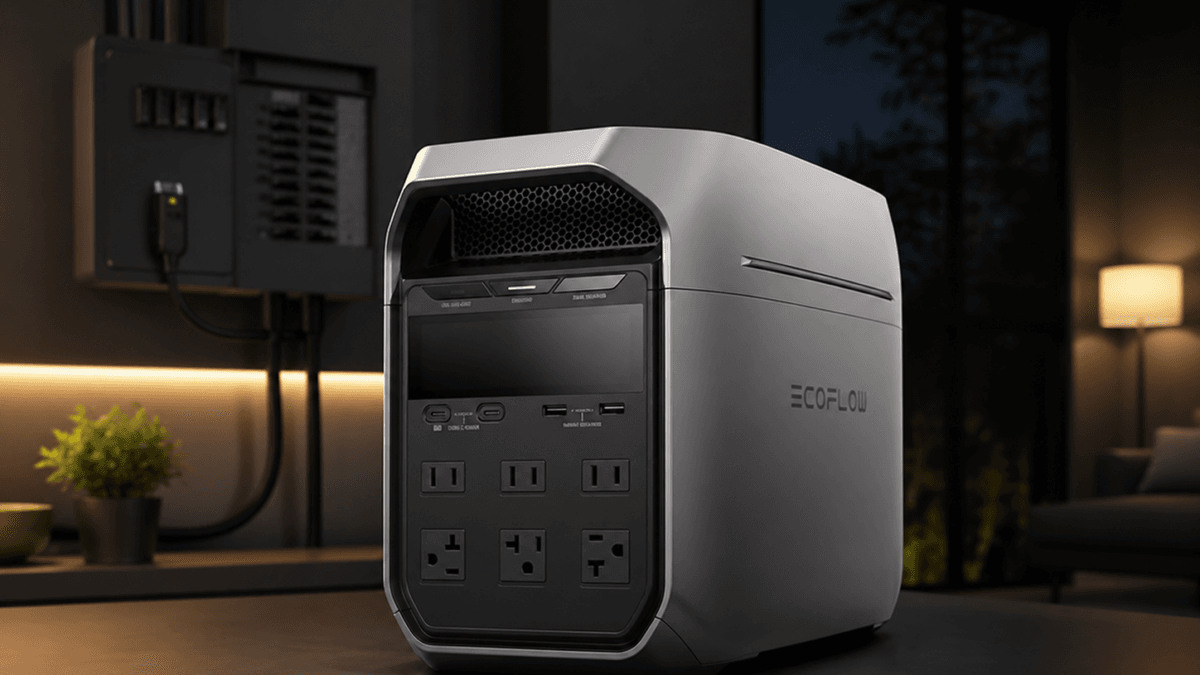
EcoFlow DELTA 3 Plus Portable Power Station
Compact 1,024Wh LFP portable power station with 1,800W AC output, fast recharge, 1,000W max solar input, UPS support, and expandable battery compatibility.
Product
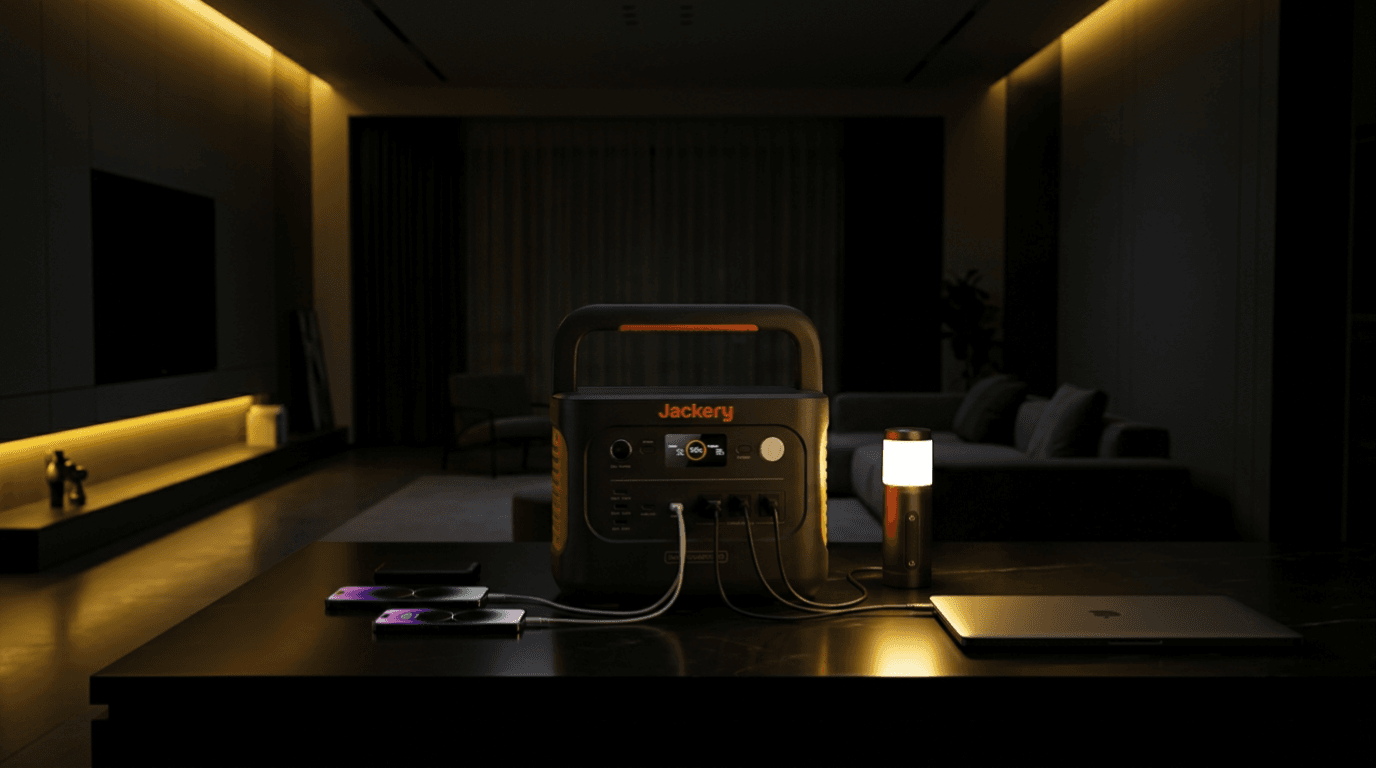
Jackery Explorer 1000 v2 Portable Power Station
Jackery Explorer 1000 v2 is a 1070Wh LiFePO4 portable power station with 1500W AC output, 3000W surge capacity, app control, and up to 400W solar input. It fits camping, road trips, apartment backup, and light home emergency use.
Product
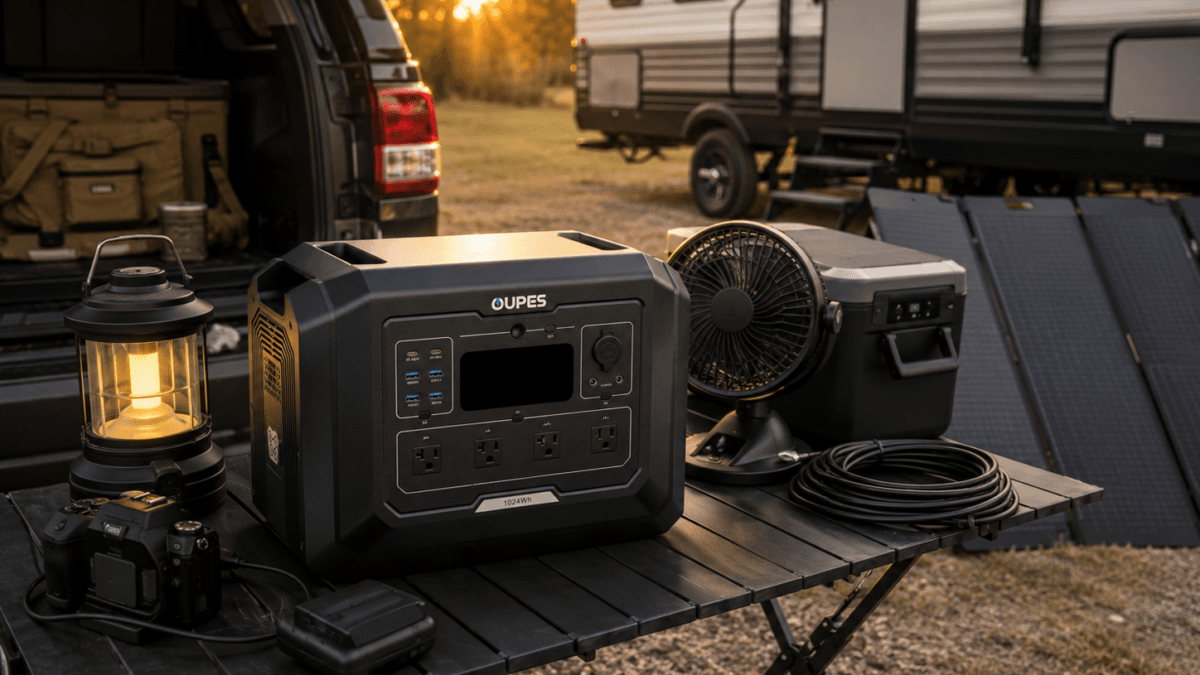
OUPES Mega 1
Expandable 1024Wh LiFePO4 portable power station with 2000W AC output, 4500W surge power, 800W solar input, app control, and UPS/EPS support. Best suited for short outages, garage backup, RV weekends, camping, and value-focused expandable backup planning.
This article may contain affiliate links. If you buy through these links, PowerLabPro may earn a commission at no extra cost to you. As an Amazon Associate I earn from qualifying purchases.
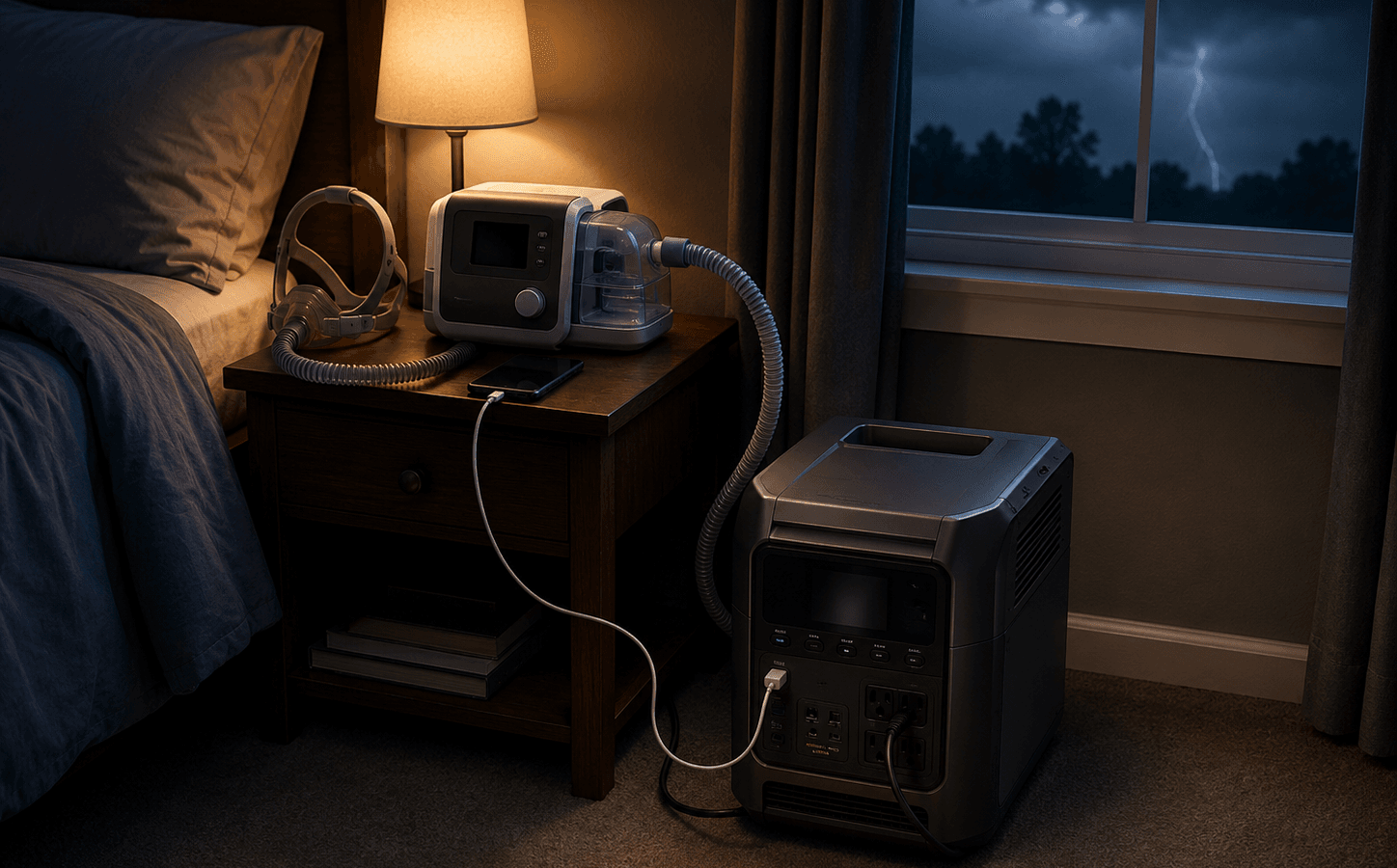
The best portable power station for CPAP is not automatically the biggest battery. The right choice depends on your CPAP model, power adapter, pressure settings, humidifier or heated-tube use, outage length, and whether the same station also needs to run a phone, light, router, or other essential device.
A portable power station can help with CPAP backup planning, but it does not replace medical advice, manufacturer guidance, or a tested backup plan. Check your CPAP manual, use the correct adapter, and test the full setup at home before relying on it overnight.
Quick verdict: EcoFlow DELTA 3 Plus is the balanced 1kWh-class pick for CPAP plus small outage essentials. Anker SOLIX C1000 Gen 2 is a comparable modern option. Jackery Explorer 1000 v2 suits buyers who want a simpler portable setup. OUPES Mega 1 adds an expansion path, while BLUETTI AC200L makes sense only when CPAP backup is part of a larger selected-load home plan.


How to choose a portable power station for CPAP
CPAP power needs vary more than many buyers expect. Heated humidification, heated tubing, pressure settings, a DC adapter, inverter losses, battery reserve, and other connected devices can all change the overnight load. Do not choose from a generic runtime claim. Start with your CPAP label, power adapter, and normal overnight settings.
- Battery capacity: enough stored energy for your planned overnight use and any additional essential devices.
- Correct output: compatible AC or approved DC adapter support for your machine.
- Quiet operation: the station must be practical near a sleeping area without blocking ventilation.
- Recharge plan: wall, vehicle, or solar charging may matter during a longer outage or camping trip.
- Real buyer fit: CPAP-only backup is not the same job as CPAP plus outage essentials.
Before buying, use a plug-in watt meter if possible and test your normal CPAP setup. For broader load planning, use the PowerLabPro sizing guide.
Portable power station for CPAP comparison
| Product | Best role | Main trade-off |
|---|---|---|
| EcoFlow DELTA 3 Plus | Balanced CPAP plus small-essentials backup | More capacity and weight than CPAP-only buyers may need |
| Anker SOLIX C1000 Gen 2 | Modern 1kWh-class backup | Check your adapter and real overnight draw |
| Jackery Explorer 1000 v2 | Simple portable CPAP and outage backup | Not an airline CPAP battery |
| OUPES Mega 1 | Expandable value-oriented backup | Brand ecosystem may matter to some buyers |
| BLUETTI AC200L | CPAP plus a larger selected-load home plan | Overkill for CPAP-only backup |
Best portable power stations for CPAP
EcoFlow DELTA 3 Plus: balanced CPAP and essentials backup
EcoFlow DELTA 3 Plus is the strongest fit for buyers who want one station to cover CPAP backup plus a phone, light, router, or other small outage essential. It is a better direction than a tiny battery when the plan must do more than one job, but it is still more manageable than a heavy multi-kilowatt-hour platform.
Best for: CPAP users who want a 1kWh-class backup for a controlled set of essentials.
Not ideal for: buyers who only need a small travel-specific battery.
Main advantage: balanced capacity and broader outage usefulness.
Main trade-off: it may be more unit than CPAP-only users require.

- 5 Fast Charging Options. With 1500W AC input, it charges to 80% in 40 mins. Solar charging reaches 80% in 1 hr, 100% in …
- Durable and Reliable for 10 Years. Powered by LiFePO4 (LFP) cells, with 4000 cycles to 80%, offering 25% more durability…
- Flexible Expansion up to 5kWh. The DELTA 3 Series seamlessly integrates with EcoFlow’s ecosystem, enabling the addition …
Anker SOLIX C1000 Gen 2: modern 1kWh-class option
Anker SOLIX C1000 Gen 2 fits buyers who want a current-generation 1kWh-class station for CPAP plus a small essential-load plan. It is a sensible alternative when you value a broader station ecosystem and want more flexibility than a CPAP-only battery can provide.
Best for: CPAP users who also want basic outage backup capability.
Not ideal for: buyers seeking the lightest possible travel battery.
Main advantage: useful general-purpose backup role.
Main trade-off: CPAP runtime still depends on the exact machine and settings.
- 49 Min UltraFast Recharging: With upgraded HyperFlash tech, fully recharge at 1,600W—for outage prepping, camping trips,…
- 2,000W Output via 10 Ports: Delivers 2,000W (3,000W peak) and 1,024Wh capacity. Power up to 10 devices—ideal for emergen…
- Compact and Portable: Easily carry, store, and move from room to room, your RV, or even on beach and park outings. C1000…
Jackery Explorer 1000 v2: simple portable CPAP backup
Jackery Explorer 1000 v2 is the simpler option for CPAP users who need a portable station for home outages, car camping, and basic emergency planning. It is not an airline-approved CPAP travel battery. It is a portable power station that can support a CPAP plan when the output, adapter, and battery requirements match the machine.
Best for: straightforward CPAP backup, camping, and small essentials.
Not ideal for: broad home backup or airline battery use.
Main advantage: practical portability with 1kWh-class capacity.
Main trade-off: not a substitute for a larger home-backup plan.
- Powerful yet Compact: Boasting a 1,500W AC output and a 3,000W surge peak, the Solar Generator 1000 V2 can power multipl…
- One Hour Fast Charging: Charge your Explorer 1000 v2 Portable Power Station from 0% to 100% battery level in just one ho…
- 10 Year Lifespan: The Explorer 1000 v2 portable power station is equipped with a durable LFP battery, maintaining over 7…
OUPES Mega 1: expandable value-oriented backup
OUPES Mega 1 is for buyers who want CPAP backup now and the option to expand into a larger outage plan later. It makes the most sense when expansion is a real future need, not just a number on a specification sheet.
Best for: buyers who value a staged capacity path.
Not ideal for: buyers whose priority is the deepest established accessory ecosystem.
Main advantage: expandable battery planning.
Main trade-off: support and accessory availability should be part of the purchase decision.
- REVOLUTIONARY FAST-CHARGING TECHNOLOGY: Experience industry-leading recharge speeds with 0-80% capacity in just 36 minut…
- MODULAR EXPANSION CAPABILITY: Create a custom power ecosystem by connecting up to two B2 Extra Batteries, scaling your c…
- PROFESSIONAL-GRADE POWER DELIVERY: Delivering consistent 2000W continuous output (4500W surge) through premium AC outlet…
BLUETTI AC200L: CPAP plus broader home essentials
BLUETTI AC200L is not the first pick for CPAP-only backup. It becomes relevant when CPAP is part of a larger selected-load plan that also includes lighting, communication gear, a fan, refrigeration planning, or other limited home essentials.
Best for: CPAP users building a larger home-outage backup plan.
Not ideal for: a compact bedside or travel-only battery need.
Main advantage: more capacity and output headroom.
Main trade-off: greater weight and cost than a CPAP-only plan requires.

- [Upgraded Version of AC200MAX] – AC200L boasts 2400W output, 200W more than AC200MAX, and it also supports expansion wit…
- [Multiple Expansion Batteries] – AC200L’s capacity can be expanded by 2 B300K (2764Wh each), 2 B210 ( 2150Wh each), 2 B3…
- [45 Min. Fast Recharge] – AC200L supports a max 2400W AC charging input, 0-80% only takes 45 mins. And up to 1200W solar…
How much power does a CPAP machine need?
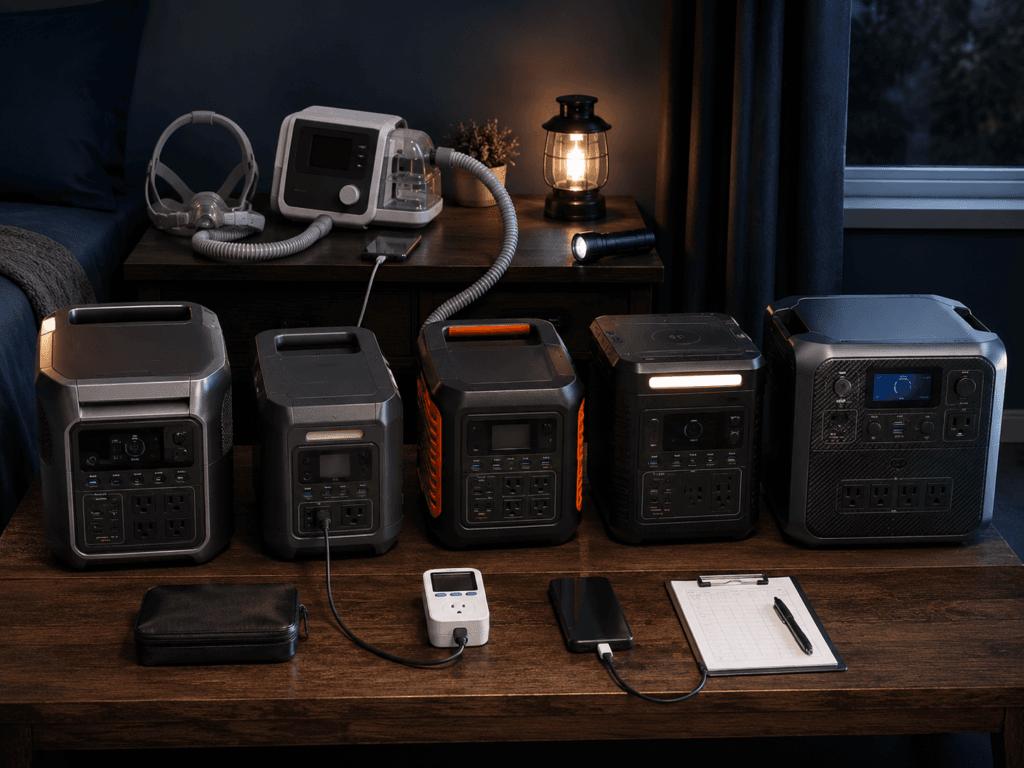
There is no single answer. CPAP power draw can change with the machine, pressure setting, humidifier, heated tubing, room conditions, and adapter. A machine without heated humidification may use less energy than the same machine with the humidifier and heated tube enabled. Measure your normal setup or use the manufacturer’s documentation before estimating overnight use.
DC operation can sometimes be more efficient than using an AC inverter, but only use a manufacturer-approved DC adapter that is compatible with the exact CPAP model. Do not improvise an adapter or assume a generic 12V lead is safe.
Safety notes for CPAP backup power
- Use the correct CPAP adapter and follow the machine manufacturer’s instructions.
- Keep the power station dry, ventilated, stable, and away from bedding or heat sources.
- Test the complete setup before an outage or camping trip.
- Do not overload outlets or use damaged cables.
- If you medically depend on CPAP or other powered equipment, discuss an outage plan with your clinician, equipment provider, or local emergency-preparedness contact.
- For air travel, verify current FAA, TSA, and airline battery rules before packing any lithium battery.
Review FAA lithium-battery travel guidance before flying with any backup battery.
FAQ
Can a portable power station run a CPAP machine?
Many can, provided they have the right output and enough capacity for your exact machine and settings. Confirm your adapter, humidifier use, heated-tube use, and normal overnight draw before relying on one.
What size portable power station do I need for CPAP?
Many buyers begin by comparing 500Wh to 1,000Wh-class stations, but the correct size depends on your machine, settings, desired number of nights, and any additional loads. Measure your own setup rather than relying on a generic runtime estimate.
Can I fly with a portable power station for CPAP?
Most large portable power stations exceed normal airline battery limits. Check current FAA, TSA, and airline policies, and use a travel-specific CPAP battery where appropriate.
Final recommendation
The best portable power station for CPAP is the one that matches your actual machine, normal settings, and backup plan. EcoFlow DELTA 3 Plus is the balanced 1kWh-class pick for many buyers. Anker SOLIX C1000 Gen 2 and Jackery Explorer 1000 v2 are strong alternatives for portable backup. OUPES Mega 1 works when expansion matters. BLUETTI AC200L is the larger-plan option.
Choose from measured needs, not a generic overnight-runtime promise.
Final Recommendation
Choose a portable power station for CPAP from measured needs: EcoFlow DELTA 3 Plus for balanced CPAP plus essentials backup, Anker SOLIX C1000 Gen 2 or Jackery Explorer 1000 v2 for portable 1kWh-class backup, OUPES Mega 1 when expansion matters, and BLUETTI AC200L only when CPAP is part of a larger selected-load plan.
Frequently Asked Questions
Can a portable power station run a CPAP machine?
Many can, provided the station has compatible output and enough capacity for the exact CPAP model and settings. Confirm the adapter, humidifier use, heated-tube use, and normal overnight draw before relying on one.
What size portable power station is needed for CPAP?
Many buyers compare 500Wh to 1,000Wh-class stations, but the right size depends on the CPAP model, settings, desired number of nights, and any additional loads. Measure the usual setup rather than relying on a generic runtime estimate.
Can a portable power station fly with CPAP equipment?
Most large portable power stations exceed normal airline battery limits. Check current FAA, TSA, and airline policies, and use a travel-specific CPAP battery where appropriate.