
Comparison
EcoFlow DELTA Pro 3 vs Anker SOLIX F3800 Plus: Which 4kWh-Class Backup Wins?
EcoFlow DELTA Pro 3 vs Anker SOLIX F3800 Plus comparison covering capacity, output, solar input, expansion, and buyer fit for home backup.
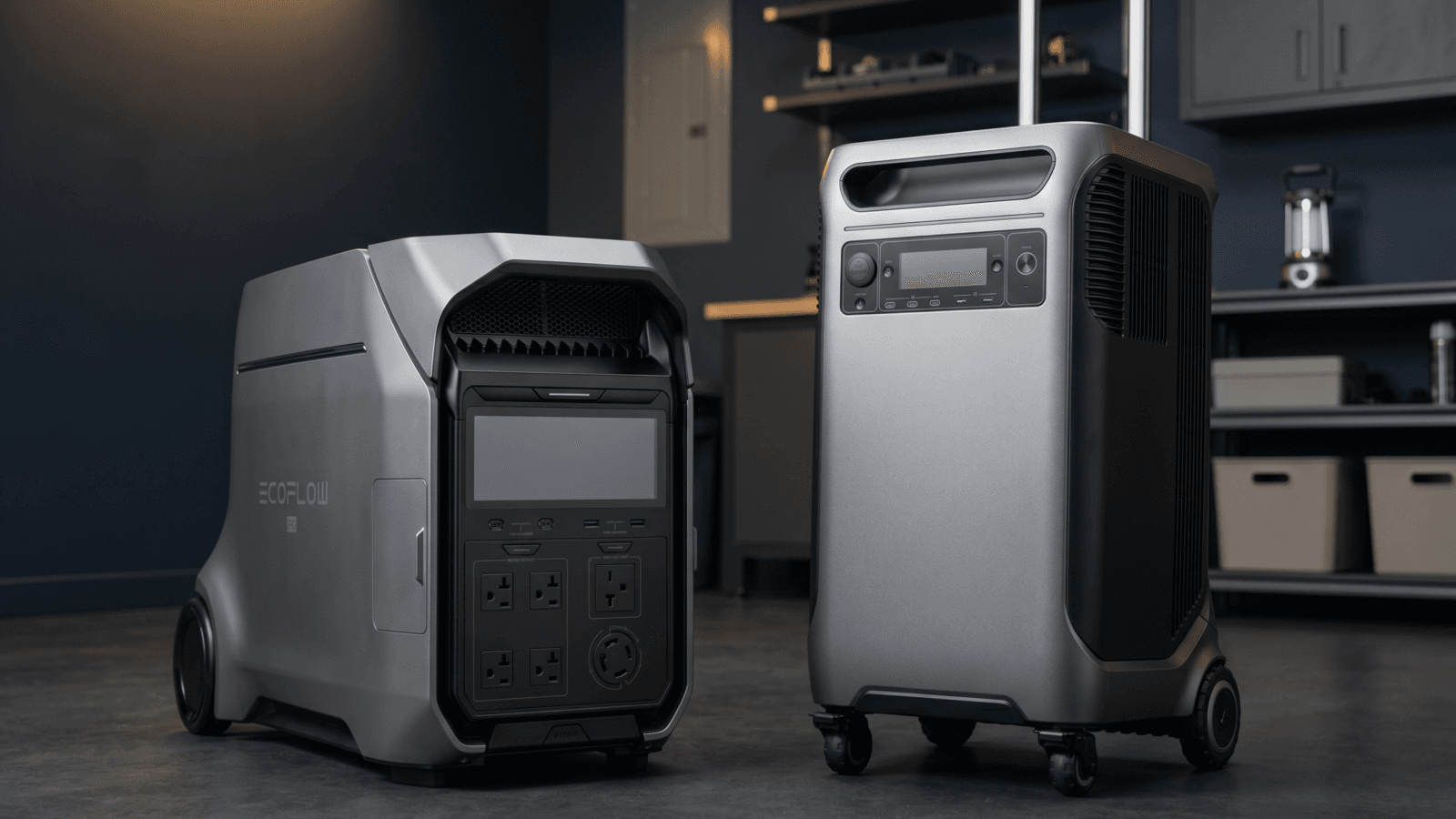
Product Matchup
Side-by-side summary
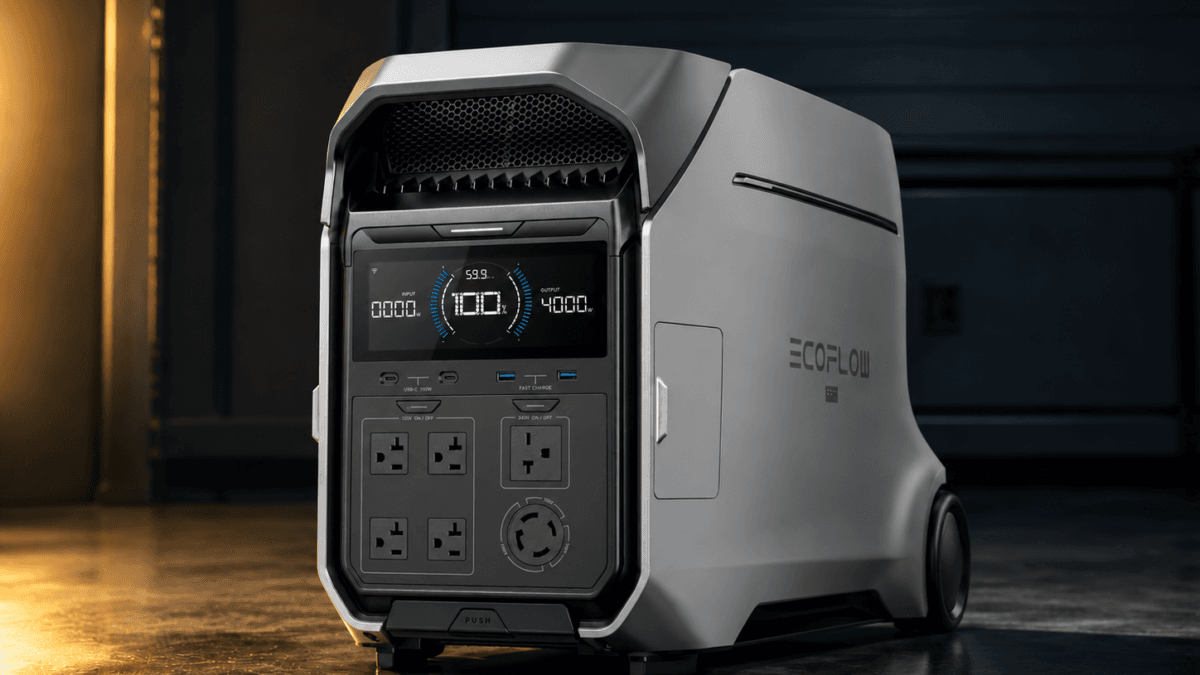
Product A
Overall Winner
EcoFlow DELTA Pro 3
The EcoFlow DELTA Pro 3 power station delivers 4096Wh LiFePO4 capacity, 4000W output, and single-unit 120V/240V support with up to 2600W solar input. Built for whole-home essential backup, well pumps, and transfer switch setups, expandable to 48kWh.
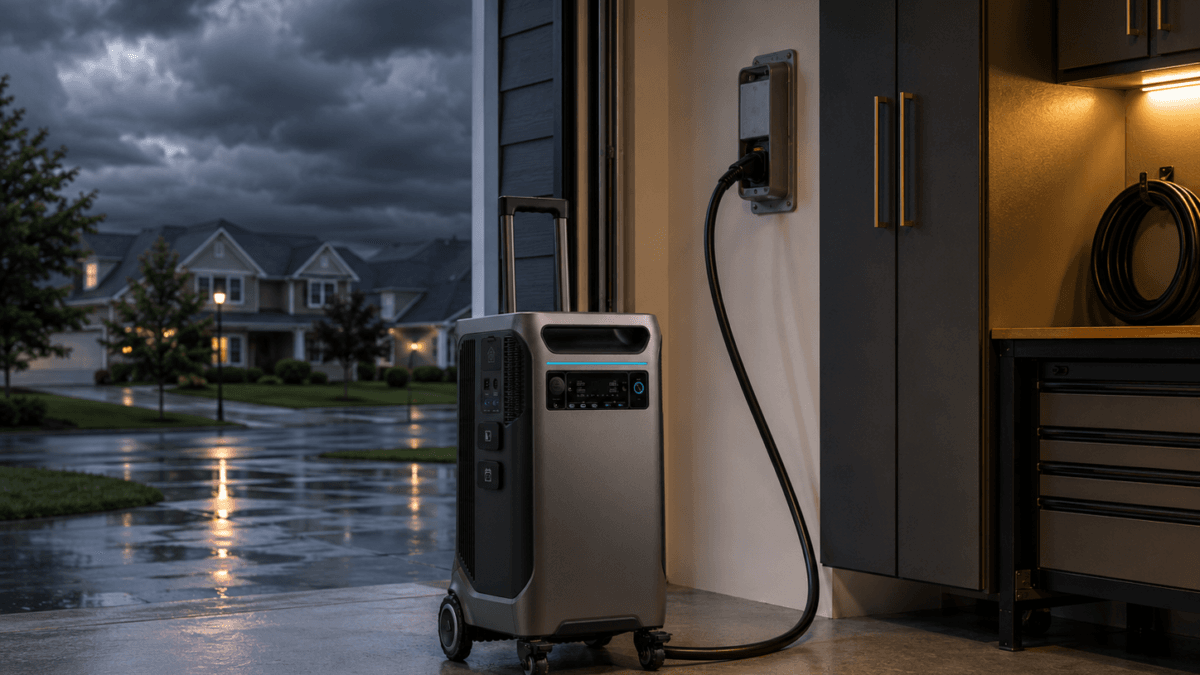
Product B
Anker SOLIX F3800 Plus Portable Power Station
Heavy-duty 3,840Wh LFP portable power station with 6,000W AC output, 120V/240V support, up to 3,200W solar input, and expandable backup capacity for home, RV, and outage planning.
Spec Comparison
Core numbers
| Spec | EcoFlow DELTA Pro 3 | Anker SOLIX F3800 Plus Portable Power Station |
|---|---|---|
| Capacity | 4096 Wh | 3840 Wh |
| AC Output | 4000 W | 6000 W |
| Solar Input | 2600 W | 3200 W |
This article may contain affiliate links. If you buy through these links, PowerLabPro may earn a commission at no extra cost to you. As an Amazon Associate I earn from qualifying purchases.
The EcoFlow DELTA Pro 3 vs Anker SOLIX F3800 Plus comparison is for buyers who need a large LFP power station for home backup, RV use, or an expandable off-grid setup. EcoFlow starts with a little more base capacity, lower listed weight, and a published 10ms UPS figure. Anker is the better fit when your plan can use its higher listed output capability, larger direct-solar ceiling, or its NEMA 14-50 and L14-30 outlet options.
This article compares manufacturer-listed specifications and practical buyer trade-offs. No hands-on lab testing is claimed. Check current manufacturer documentation before purchase, installation, or electrical planning.
Quick Verdict: EcoFlow DELTA Pro 3 vs Anker SOLIX F3800 Plus
Choose the EcoFlow DELTA Pro 3 if you want a 4,096Wh base battery, lower listed weight, EcoFlow’s published 10ms UPS figure, and a 4,000-cycle-to-80%-capacity rating. It is a strong fit for carefully managed essential loads that remain within its 4,000W continuous-output rating.
Choose the Anker SOLIX F3800 Plus when your planned loads can use its higher listed output capability, you can use up to 3,200W of compatible direct solar input, or its listed NEMA 14-50 and L14-30 outlets fit your RV, EV, transfer-switch, or inlet-box plan.
Bottom line: EcoFlow is a sensible default for many essential-load backup plans under 4,000W. Anker is the stronger match when higher output headroom, more direct solar input, or its specific 240V outlet options are genuine requirements.

- 𝗘𝗻𝗹𝗮𝗿𝗴𝗲𝗱 𝗖𝗮𝗽𝗮𝗰𝗶𝘁𝘆 𝗳𝗿𝗼𝗺 𝟯.𝟴𝟰𝗸𝗪𝗵: F3800 Plus starts with 3.84kWh, enough power for your family for one day. If that’s not …
- 𝗣𝗼𝘄𝗲𝗿 𝗠𝗼𝗿𝗲 𝗔𝗽𝗽𝗹𝗶𝗮𝗻𝗰𝗲𝘀 𝗦𝗶𝗺𝘂𝗹𝘁𝗮𝗻𝗲𝗼𝘂𝘀𝗹𝘆: F3800 Plus offers a massive 6,000W output, 58% more than other portable power stat…
- 𝗗𝘂𝗮𝗹-𝗩𝗼𝗹𝘁𝗮𝗴𝗲 𝗳𝗼𝗿 𝗔𝗻𝘆 𝗔𝗽𝗽𝗹𝗶𝗮𝗻𝗰𝗲: With 120V / 240V dual-voltage support, you can run everything at home without limitation…

- Energize Almost Everything. The EcoFlow DELTA Pro 3 supports 120V/240V voltage and has a 4000W output (6000W with X-Boos…
- Forget Refueling. Featuring a 4096Wh LFP battery capacity, expandable to 48kWh with extra batteries or smart generators,…
- Plug and Play. Experience hassle-free power with the DELTA Pro 3, a versatile portable power station that’s easy to set …
EcoFlow DELTA Pro 3 vs Anker SOLIX F3800 Plus: Quick Comparison
Specifications were checked against the EcoFlow DELTA Pro 3 product page and the Anker SOLIX F3800 Plus product page. Check current documentation before buying or planning a home-power installation.
| Feature | EcoFlow DELTA Pro 3 | Anker SOLIX F3800 Plus | Buyer takeaway |
|---|---|---|---|
| Base capacity | 4,096Wh | 3,840Wh | EcoFlow starts with 256Wh more nominal stored energy. |
| Continuous output | 4,000W; X-Boost is separate from the continuous rating | Anker lists up to 6,000W output in supported configurations | Use your actual load calculation and verify configuration requirements. |
| Solar input | Up to 2,600W total | Up to 3,200W through dual MPPT inputs | Anker offers more direct-solar headroom for a large compatible array. |
| UPS figure | EcoFlow lists 10ms | Verify current UPS conditions for the setup you plan to use | EcoFlow has the clearer published figure for sensitive electronics. |
| Battery cycle rating | LFP; 4,000 cycles to 80% capacity | LFP; 3,000+ cycles | EcoFlow has the stronger published rating; real aging still varies. |
| Expansion | EcoFlow markets a 4-48kWh system range | Anker markets up to 53.8kWh in a larger system | Compare the full accessory plan, not only the base unit. |
| Listed weight | 113.54 lb | 136.7 lb | EcoFlow is easier to reposition before extra batteries are added. |
| 240V options | 120V/240V capability; confirm outlet-mode limits | L14-30 and NEMA 14-50 outlets listed | Anker has more clearly stated outlet options for RV, EV, and transfer-switch planning. |
| Warranty | 5 years | 5 years | Published warranty period is a tie. |
In the EcoFlow DELTA Pro 3 vs Anker SOLIX F3800 Plus comparison, EcoFlow’s main advantages are its slightly larger base battery, lower listed weight, published 10ms UPS figure, and stronger published cycle-life rating. Anker’s main advantages are its higher listed output ceiling, larger direct solar-input ceiling, and more specialized 240V outlet options.
Readers searching for EcoFlow DELTA Pro 3 vs Anker SOLIX F3800 Plus usually need to match a real load plan to the right system, not simply choose the product with the biggest headline number.
Output and Load Planning
For the EcoFlow DELTA Pro 3 vs Anker SOLIX F3800 Plus decision, output is the most important difference when you have demanding appliances. EcoFlow’s 4,000W continuous-output rating is the number to use for a real backup plan. Its X-Boost feature should not be treated as a universal replacement for a 6,000W continuous inverter because appliance compatibility can vary.
Anker lists the F3800 Plus with up to 6,000W output in supported configurations. Before choosing it for a high-draw appliance, check the current manual for outlet, bypass, expansion-battery, and configuration requirements. That is especially important for pumps, HVAC equipment, workshop tools, RV circuits, and transfer-switch connections.
For many essential-load plans, 4,000W is substantial. The decision comes down to what runs at the same time and whether any motor-driven device has a demanding startup surge.
That is why the EcoFlow DELTA Pro 3 vs Anker SOLIX F3800 Plus decision should begin with a written list of the appliances you must keep running.
Battery Capacity and Cycle Life
In the EcoFlow DELTA Pro 3 vs Anker SOLIX F3800 Plus comparison, EcoFlow starts with 4,096Wh, while Anker starts with 3,840Wh. That 256Wh difference equals about 6.7% more nominal base capacity. It can extend runtime, but it should not outweigh an output requirement that the EcoFlow cannot meet.
EcoFlow lists 4,000 cycles to 80% capacity. Anker lists 3,000+ cycles. EcoFlow therefore has the stronger published cycle-life figure, although real battery aging also depends on temperature, storage conditions, depth of discharge, charging habits, and total use.
Charging and UPS
The EcoFlow DELTA Pro 3 vs Anker SOLIX F3800 Plus charging comparison is not a one-number contest. EcoFlow advertises charging to 80% in 50 minutes under its stated fast-charging configuration. Anker lists several charging paths, including standard AC charging, direct solar input, Home Power Panel options, and generator-related configurations.
Do not compare maximum charging figures as though both units produce the same result from the same outlet. The actual result depends on available voltage, accessories, system configuration, attached expansion batteries, and charging mode.
EcoFlow publishes a 10ms UPS figure. That can matter for routers, NAS devices, and home-office equipment, but critical devices may still need a true online UPS or product-specific confirmation.
Solar Input
For solar-focused buyers comparing the EcoFlow DELTA Pro 3 vs Anker SOLIX F3800 Plus, Anker lists up to 3,200W of direct solar input, compared with EcoFlow’s listed maximum of 2,600W. The Anker ceiling matters most when you can deploy a large compatible array. With a modest portable solar setup, panel angle, shading, weather, wiring, and cable losses can matter more than the headline maximum.
For either unit, verify panel voltage, amperage, connectors, and wiring before building an array. Do not assume a rooftop solar system will recharge a portable power station during an outage without the required hardware and a properly designed electrical setup.
Expansion and System Scale
Expansion is another important part of the EcoFlow DELTA Pro 3 vs Anker SOLIX F3800 Plus decision. Both systems can scale beyond their base batteries. EcoFlow markets a 4-48kWh system range. Anker markets up to 53.8kWh in a larger system. The useful comparison is not only the maximum number. It is the real path to reach it: expansion batteries, hubs, transfer equipment, floor space, wiring, and current accessory compatibility.
For a one-night essential-load plan, a single unit or one expansion battery may be enough. For multi-day outage coverage, price the complete system before choosing an ecosystem. Start with PowerLabPro’s sizing guide before planning expansion.
Home Backup Fit
For home backup, the EcoFlow DELTA Pro 3 vs Anker SOLIX F3800 Plus choice depends on your load calculation. EcoFlow is a practical fit for buyers who want a larger base battery, lower listed weight, and a published UPS figure while managing essential loads below 4,000W. That can include a refrigerator, freezer, router, lights, phones, laptops, fans, and selected appliances when combined demand stays within the unit’s continuous rating.
Anker is the better fit when your verified load calculation needs more output headroom, when you have a larger compatible direct solar array, or when its listed 240V outlets match the plan. Both systems need appliance-by-appliance planning for running demand, startup surge, circuit limits, and installation.
For help planning capacity, read PowerLabPro’s portable power station sizing guide.
Which One Should You Buy?
The EcoFlow DELTA Pro 3 vs Anker SOLIX F3800 Plus comparison comes down to whether you need more output headroom or a slightly larger and lighter base battery.
Use this EcoFlow DELTA Pro 3 vs Anker SOLIX F3800 Plus guide as a final check after adding up running watts and considering motor-start surge.
Choose the EcoFlow DELTA Pro 3 if:
- You want 4,096Wh of base capacity.
- Your plan stays within 4,000W of continuous output.
- You value the lower listed base-unit weight.
- You want EcoFlow’s published 10ms UPS figure.
- You prefer its 4,000-cycle-to-80%-capacity rating.
Choose the Anker SOLIX F3800 Plus if:
- Your verified plan can use its higher listed output capability in a supported configuration.
- You need up to 3,200W of compatible direct solar input.
- You need its listed NEMA 14-50 or L14-30 outlet options.
- You have checked the current manual and accessories for your exact setup.
For individual product detail, read the EcoFlow DELTA Pro 3 review and the Anker SOLIX F3800 Plus review.
EcoFlow DELTA Pro 3 vs Anker SOLIX F3800 Plus FAQ
These EcoFlow DELTA Pro 3 vs Anker SOLIX F3800 Plus questions cover the final points buyers usually check before choosing a larger backup system.
Which has more base capacity?
EcoFlow has 4,096Wh versus Anker’s 3,840Wh, a modest 256Wh difference before losses and real operating conditions.
Which has more output power?
EcoFlow is rated for 4,000W continuous output. Anker lists up to 6,000W output in supported configurations. Verify the current manual for the conditions required by your appliance and setup.
Which charges faster?
Charging depends on the configuration. EcoFlow advertises 80% in 50 minutes in its stated setup, while Anker lists multiple AC, solar, panel, and generator-related paths. Do not treat those claims as a same-outlet comparison.
Which is better for solar?
Anker has the higher listed maximum at 3,200W versus EcoFlow’s 2,600W. The practical winner depends on the compatible array you can actually deploy.
Which has the stronger published cycle-life rating?
EcoFlow lists 4,000 cycles to 80% capacity, while Anker lists 3,000+ cycles. EcoFlow has the stronger published figure, but real battery aging varies with use and storage conditions.
Is this hands-on tested?
No. This comparison is based on manufacturer-listed specifications, product documentation, and PowerLabPro’s backup-power decision framework. No hands-on lab testing is claimed.
Final Verdict: EcoFlow DELTA Pro 3 vs Anker SOLIX F3800 Plus
The EcoFlow DELTA Pro 3 vs Anker SOLIX F3800 Plus comparison favors EcoFlow for many buyers who need essential-load backup under 4,000W, want slightly more base capacity, value lower listed weight, and prefer its published 10ms UPS and 4,000-cycle-to-80%-capacity figures.
For buyers who are still undecided, this EcoFlow DELTA Pro 3 vs Anker SOLIX F3800 Plus guide is most useful when it is paired with a simple list of essential loads, expected runtime, and compatible charging options.
Anker is the better fit when your verified requirements call for more output headroom, a larger compatible direct solar array, or the listed NEMA 14-50 and L14-30 outlet options. Before choosing it for high-demand loads, confirm the exact requirements for the output, bypass, and expansion configuration you plan to use.
Before purchasing either unit, verify the current manual, outlet modes, AC charging path, solar limits, expansion-battery compatibility, and installation requirements. For help planning capacity, read what size power station do I need.
Winners by Category
| Overall | EcoFlow DELTA Pro 3 Power Station |
|---|---|
| Value | EcoFlow DELTA Pro 3 Power Station |
| Portability | EcoFlow DELTA Pro 3 Power Station |
| Output | Anker SOLIX F3800 Plus: Powerful 3.8kWh Backup |
| Battery | EcoFlow DELTA Pro 3 Power Station |
Final Verdict
The EcoFlow DELTA Pro 3 is the stronger overall pick for most serious home backup buyers: more base capacity, faster charging, a 10ms UPS, 4500-cycle battery life, and a lighter frame. The Anker SOLIX F3800 Plus is the right choice only when 6000W continuous output, 3200W solar input, or a native NEMA 14-50 EV charging port is a firm requirement.