
Product Intelligence
Compact 2kWh Backup PickJackery Explorer 2000 v2 Portable Power Station: 2042Wh, 2200W Guide
A self-contained 2042Wh LiFePO4 portable power station for selected-load home backup, RV travel, off-grid weekends, and mobile work. Its verified advantages are 2200W rated AC output, three 120V AC outlets, 100W USB-C, 400W maximum DC solar input, 1.75-hour listed AC charging, low listed noise, and a compact 39.5 lb form for its capacity class. Its key limit is no expansion-battery path.
Specifications
Key specs
Buyer Fit
Fit signals
Best for
Pros
- 2042Wh LiFePO4 capacity in a compact 39.5 lb design
- 2200W rated AC output with 4400W surge peak
- Three 120V AC outlets plus 100W and 30W USB-C outputs
- About 1.75-hour listed AC charging
- 400W solar input, app monitoring, low listed noise, and under-20ms UPS-style switching
Cons
- No expansion-battery path
- 400W solar input is modest for a 2kWh off-grid plan
- No 120V/240V split-phase output or transfer-switch platform
- High-watt appliances can consume the battery reserve quickly
- UPS-style performance must be confirmed with actual devices
Spec table
| Capacity | 2042 Wh |
|---|---|
| AC Output | 2200 W |
| Surge Output | 4400 W |
| Solar Input | 400 W |
| Weight | 39.5 lb |
| Battery | LiFePO4 |
| Warranty | 3-year standard warranty plus 2-year extended warranty for qualifying Jackery.com, Jackery-branded third-party, or authorized-dealer purchases, subject to current terms. |
| Expandability | Not expandable. Jackery's official FAQ states that the Explorer 2000 v2 does not support expansion batteries. |
| UPS / EPS | UPS-style bypass mode with under-20ms switching is listed by Jackery. Test the exact connected equipment before relying on it. |
| Recharge Time | AC adapter: about 1.75 hours. Car adapter: about 24 hours. Solar: up to 400W through two DC 8mm inputs with compatible panels and operating conditions. |
This article may contain affiliate links. If you buy through these links, PowerLabPro may earn a commission at no extra cost to you. As an Amazon Associate I earn from qualifying purchases.
The Jackery Explorer 2000 v2 is a self-contained 2kWh portable power station for buyers who want a serious reserve for selected loads without moving into a larger expandable system. Its current official specification set pairs 2,042Wh of LiFePO4 storage with 2,200W of rated AC output, 4,400W of surge peak, three 120V AC outlets, a 100W USB-C port, a 30W USB-C port, a 12V car port, and up to 400W of DC solar input. Those figures create a useful middle ground between a compact 1kWh unit and a heavier multi-battery platform.
The Jackery Explorer 2000 v2 is not a whole-home battery, a 240V system, or a substitute for fixed electrical work. Its most useful job is more focused: keeping the small group of devices that matter available during a short or moderate outage, an RV stay, a road trip, or a controlled mobile-work setup. That can include communications, lighting, laptop work, charging, a compatible refrigerator, and carefully selected AC loads after their running draw and startup behavior have been verified.
The first decision is not whether 2,200W sounds high enough. It is whether 2,042Wh matches the duration you need. Output determines whether the inverter can support the load. Battery capacity determines how long the load can run. A buyer who understands that distinction will get much more value from the Jackery Explorer 2000 v2 than someone who treats every outlet as a reason to add another appliance.
This is a research-led Product guide based on current Jackery documentation and the connected U.S. retail identity. It is not a claim of hands-on testing by PowerLabPro. Confirm the current listing, bundle contents, warranty eligibility, and accessory compatibility before buying.
Jackery Explorer 2000 v2 quick verdict
The Jackery Explorer 2000 v2 is a strong choice for buyers who want fixed-capacity portable power with real appliance headroom and a relatively manageable carry weight. At about 39.5 lb, it remains substantial but is lighter and more compact than many 2kWh competitors. Its 2,200W rated inverter gives it flexibility for a planned home-backup kit, RV setup, or work station, while the 2,042Wh battery is large enough to make a measured essential-load plan worthwhile.
The primary trade-off is fixed capacity. Jackery states that the model is not expandable. That simplicity can be an advantage for a buyer who wants one portable unit with no external battery decisions, but it becomes a limitation when a refrigerator-first plan, several days of RV use, or repeated high-watt appliance use will eventually need more energy. When future capacity growth is central, an expandable alternative is the better decision from the start.
Best for: selected-load outage planning, RV travel, weekend off-grid use, mobile work, and buyers who want a compact fixed 2kWh class rather than a larger system.
Not ideal for: 120V/240V needs, transfer-switch integration, long high-draw use, large fixed solar arrays, or buyers who know they will need more battery capacity later.
Main advantage: 2,042Wh and a 2,200W rated inverter in a comparatively compact 39.5 lb package.
Main limitation: no expansion-battery route and a 400W solar-input ceiling.
Better alternative if: expansion, more solar input, or broader home-backup capability matters more than simplicity and carry-friendly 2kWh capacity.
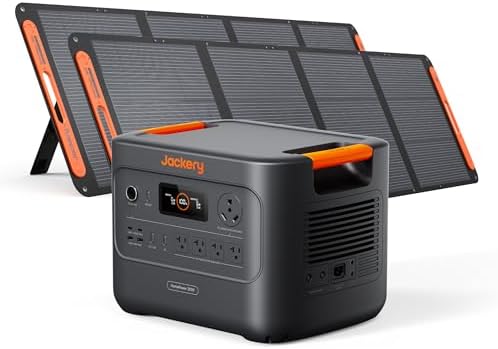
- Essential Home Backup: With a robust 3600W output (7200W surge) and a 3072Wh capacity, the Jackery HomePower 3000 provid…
- ≤20ms UPS: Featuring a UL-certified UPS that switches seamlessly within ≤20ms, the Jackery HomePower 3000 Portable Power…
- Power for Essentials: The Jackery HomePower 3000 keeps your essentials charged at once with versatile AC, USB-C, USB-A, …
Table of Contents
Jackery Explorer 2000 v2 verified specifications
| Specification | Current documented figure | Buyer meaning |
|---|---|---|
| Battery capacity | 2,042Wh | A serious energy reserve for a measured load plan, not unlimited backup. |
| Battery chemistry | LiFePO4 | Jackery lists 4,000 cycles to 70% or more capacity under stated conditions. |
| Rated AC output | 2,200W | The normal planning ceiling for AC loads running at the same time. |
| Surge peak | 4,400W | Temporary startup margin, not a 4,400W sustained rating. |
| AC outlets | 3 × 120V, 60Hz | Enough for selected essential loads, not every appliance in a room. |
| USB-C | 1 × 100W and 1 × 30W | Direct charging for compatible laptops and devices can reduce use of AC adapters. |
| USB-A | 18W maximum | Suitable for phones and smaller accessories. |
| Car port | 12V / 10A maximum | Supports compatible DC accessories within the shared plan. |
| Solar input | Up to 400W | Useful for portable daytime recovery but modest for a 2kWh off-grid system. |
| AC charge time | About 1.75 hours | Helps restore readiness between uses under stated conditions. |
| Weight | About 39.5 lb | Portable in its class but still a deliberate lift and carry. |
| Expansion | Not expandable | Capacity must be sufficient on day one. |
Jackery lists the Jackery Explorer 2000 v2 at 2,042Wh with LiFePO4 cells, three 120V AC outlets, 2,200W rated output, 4,400W surge peak, a 100W USB-C port, a 30W USB-C port, USB-A, a 12V car output, two DC 8mm inputs, 400W maximum solar input, and a 1.75-hour AC-adapter charge time. It also lists the unit at about 39.5 lb with a 3+2-year warranty structure. Read the official Jackery Explorer 2000 v2 product page for current documentation and package details.
What 2042Wh means for a real Jackery Explorer 2000 v2 runtime plan
The capacity of the Jackery Explorer 2000 v2 is enough to change an outage from a phone-charging problem into an essential-load planning problem. It can preserve a router, modem, phones, laptops, lighting, charging equipment, and selected refrigeration or work loads for meaningful periods. The exact result always depends on the watt draw, battery temperature, inverter losses, charge state, cable path, and whether a device cycles on and off.
A practical method is to divide loads into three tiers. First are communications and safety: internet equipment, phones, weather alerts, essential lighting, and a battery bank. Second are work and comfort loads: laptop work, a monitor, a small fan, selected chargers, or a compatible refrigerator after its real behavior is checked. Third are discretionary high-watt tasks, such as short cooking or workshop needs. This approach keeps the Jackery Explorer 2000 v2 available for the reason it was purchased rather than spending its reserve on convenience loads too early.
Capacity is not a simple divide-by-watts promise. A refrigerator can have a modest average draw but a different compressor startup demand and duty cycle. A laptop may draw little while idle and much more under rendering or data work. A coffee maker may run briefly but use a meaningful amount of stored energy. Use the PowerLabPro sizing guide to calculate the equipment you own before expecting the Jackery Explorer 2000 v2 to meet an overnight or multi-day goal.
The fixed-capacity design makes the capacity decision more important. There is no battery module to add later if the first outage reveals that the runtime is too short. Buyers should be generous with the energy margin they expect to need. When a plan frequently pushes past a 2kWh reserve, a larger or expandable platform is safer than assuming solar or a faster wall recharge will solve every event.
Jackery Explorer 2000 v2 2200W rated output and 4400W surge explained
The 2,200W rated inverter is one reason the Jackery Explorer 2000 v2 is more flexible than a smaller portable battery. It can support a controlled mix of conventional AC devices that would be out of reach for a 500W or 1,000W unit. That can include a home-office setup, charging stations, lighting, selected power tools, portable refrigeration, or short-use appliances when the total continuous load and startup behavior fit the plan.
The rated figure is the number to use for normal planning. Jackery also lists a 4,400W surge peak. Surge exists to give temporary margin during startup, especially with some motor-based loads. It does not turn the Jackery Explorer 2000 v2 into a 4,400W continuous power station. A device that runs close to 2,200W for long periods may be technically possible yet still be a poor energy choice because it drains the battery rapidly and leaves little headroom for other essentials.
Motor and compressor loads need individual checks. The wattage label may show running demand but not the brief startup draw. A refrigerator, pump, air compressor, or workshop tool can behave differently based on temperature, load, extension-cord quality, and the other equipment already connected. Test important equipment in a controlled setting before a trip or outage. Do not make a purchase decision around a surge claim alone.
For the most resilient plan, leave headroom. The Jackery Explorer 2000 v2 can support a small set of meaningful loads more reliably when the normal total sits below its rated limit. A priority list of router, laptop, monitor, phone charging, lighting, refrigerator, and one short-use device is more realistic than treating all three outlets as high-watt appliance outlets.
Jackery Explorer 2000 v2 charging, 400W solar, and direct device power
Fast AC recovery is a practical ownership advantage. Jackery lists an AC-adapter charging time of about 1.75 hours. That does not add capacity, but it can make the Jackery Explorer 2000 v2 easier to prepare before an outage, recharge after a weekend, or return to service between work sessions. Real charging time can change with the battery state, ambient temperature, wall supply, and selected operating mode.
The two DC 8mm inputs can accept up to 400W of solar input under the documented voltage and current conditions. A 400W portable solar arrangement is useful for recovery while camping, traveling, or during daylight outages. It is not a promise that two 200W panels will deliver 400W at every moment. Shade, angle, heat, season, cable loss, panel compatibility, and battery state all reduce real harvest at times.
The port mix also supports a more efficient device plan. The 100W USB-C port can power or charge compatible laptops directly, while the 30W USB-C port can suit tablets, phones, camera gear, and smaller work devices. Direct USB-C does not create additional stored energy, but it can avoid running a device through the AC inverter and a separate power brick. The Jackery Explorer 2000 v2 also includes USB-A and a 12V / 10A car port for compatible accessories.
Jackery Explorer 2000 v2 app monitoring, UPS-style switching, and noise
Jackery documents app-based monitoring for battery level, remaining runtime, solar input, and charging mode. This can help a buyer see whether a priority plan is consuming more power than expected. App features can change, so confirm current device compatibility and connection behavior before treating the app as a core purchase reason. The Jackery Explorer 2000 v2 should remain easy to operate through its physical controls even when a phone is unavailable.
Jackery also positions the unit with under-20ms UPS-style switching. That can be useful for some routers, lights, and personal work devices that need a quick bridge through a utility interruption. It is not a universal zero-interruption promise. Test the exact router, monitor, laptop supply, or network device that matters to you before relying on the feature. Do not use a portable power station as a substitute for certified medical, life-safety, or professionally engineered critical backup.
Noise can matter in a bedroom, apartment, RV, or quiet campsite. Jackery lists about 30dB in Quiet Mode and about 45dB at full load in its stated measurements. Actual fan behavior depends on charge rate, output draw, temperature, and placement. Give the Jackery Explorer 2000 v2 ventilation space and keep it away from fabric, standing water, high heat, and locations where its cables can become trip hazards.
Jackery Explorer 2000 v2 home backup, RV, and mobile-work fit
Selected home backup
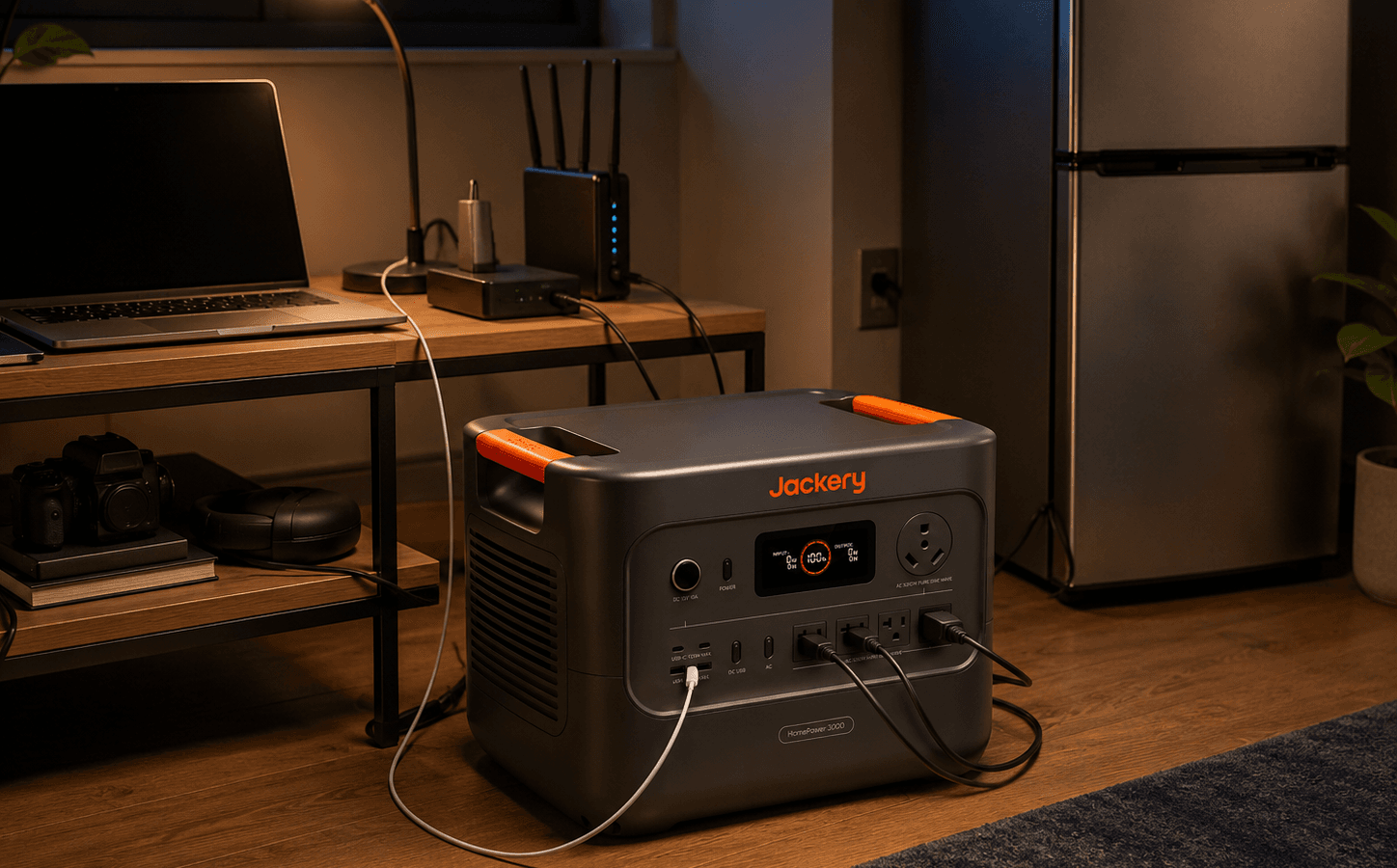
For an outage, the Jackery Explorer 2000 v2 works best as a selected-load station. Start with router, modem, phones, laptop work, task lighting, charging, and a written plan for refrigeration. Decide what should remain off. A 2kWh battery becomes much more useful when it protects communications and work continuity first instead of trying to reproduce normal household operation.
Read Ready.gov’s power-outage guidance alongside the device plan. Store the unit charged, locate the right cables in advance, test key loads before an emergency, and keep the product dry and ventilated. The Jackery Explorer 2000 v2 is portable energy storage, not a replacement for fixed home wiring, a transfer switch, or a whole-home generator.
RV, vehicle travel, and weekend off-grid use
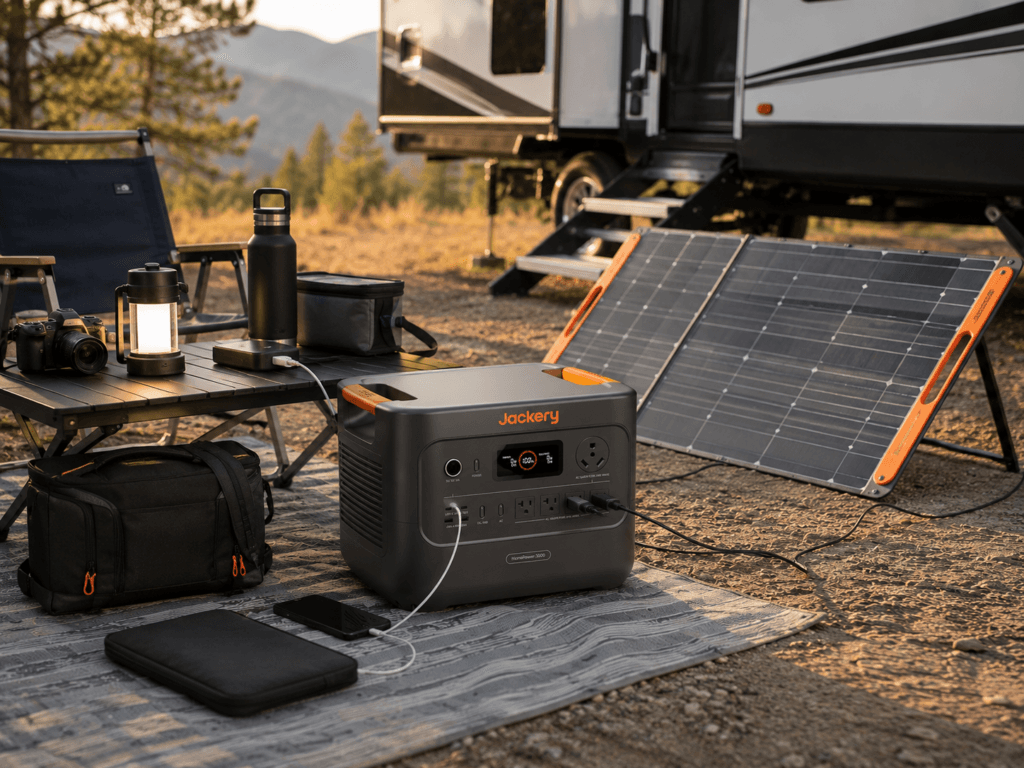
For an RV or vehicle, the Jackery Explorer 2000 v2 is a sensible one-unit option when the load list is electronics, charging, lighting, a compatible portable refrigerator, fan use, laptop work, and occasional moderate AC loads. The fixed battery is simple to move between a vehicle, home, camp table, and storage. The limit is that extended high-consumption trips will eventually expose the 400W solar ceiling and the lack of expansion batteries.
Mobile work and creator equipment
For mobile work, the Jackery Explorer 2000 v2 can centralize a laptop, monitor, router, camera chargers, phones, a task light, and selected AC equipment. The 100W USB-C port is useful for a compatible work laptop, while the inverter keeps conventional chargers available. It is not a rugged jobsite generator or a substitute for professional electrical service, but it can provide a quiet battery-based hub for carefully managed field and desk gear.
What to verify before buying
| Check | Why it matters |
|---|---|
| Your essential-load watts | 2,200W is the normal simultaneous AC-output limit. |
| Motor or compressor startup | A refrigerator, pump, or tool can draw more than its running label at startup. |
| Required runtime | 2,042Wh is fixed because the model is not expandable. |
| Solar configuration | The product accepts up to 400W only with compatible voltage, connectors, and conditions. |
| USB-C requirements | Only a compatible device can use the 100W USB-C maximum. |
| UPS behavior with your hardware | Under-20ms switching does not guarantee every device remains online. |
| Warranty seller eligibility | Jackery limits the listed 3+2 coverage to qualifying official or authorized purchases. |
| Carry and storage location | 39.5 lb requires a stable lifting, transport, and ventilation plan. |
Jackery Explorer 2000 v2 safety and storage
Use the Jackery Explorer 2000 v2 on a dry, stable surface with its vents unobstructed. Keep it away from rain, sinks, standing water, hot appliances, damaged cables, vehicle footwells, and exits. Do not cover the unit while charging or operating. Follow the manual for battery storage, temperature, and maintenance. A portable power station should be charged and tested before it is needed, not only unpacked when an outage begins.
Safe planning also means respecting the device’s role. It is not intended to power medical or life-safety equipment without device-specific professional planning. It should not be connected to a home electrical panel without appropriate equipment and professional guidance. The safest backup plan is one that has a small number of tested priority loads, clear cable routing, and enough remaining energy to adapt when an outage lasts longer than expected.
Jackery Explorer 2000 v2 final product decision
The Jackery Explorer 2000 v2 is a practical high-output fixed 2kWh choice when its capacity fits the buyer’s actual outage, RV, or mobile-work plan. Its strongest advantages are the 2,200W rated inverter, 2,042Wh battery, 39.5 lb form, direct 100W USB-C, fast listed AC recovery, app monitoring, and simple self-contained ownership. Its biggest limitation is that the capacity cannot grow later.
Choose the Jackery Explorer 2000 v2 when you want simple substantial portable power and can define the loads that matter. Choose an expandable platform when long duration, future battery growth, 240V support, or a larger solar plan are already part of the requirement. Read the connected Jackery Explorer 2000 v2 review for deeper trade-offs and alternatives, then use the PowerLabPro sizing guide before the final purchase decision.