
Review
Jackery Explorer 2000 v2 Review: 2042Wh, 2200W, Fixed Capacity
A compelling compact 2kWh choice for selected-load backup, RV use, and mobile work when 2200W output and 39.5 lb portability fit the real plan. It is a poor fit where battery expansion, 240V, broader home backup, or high daily off-grid energy use are core requirements.
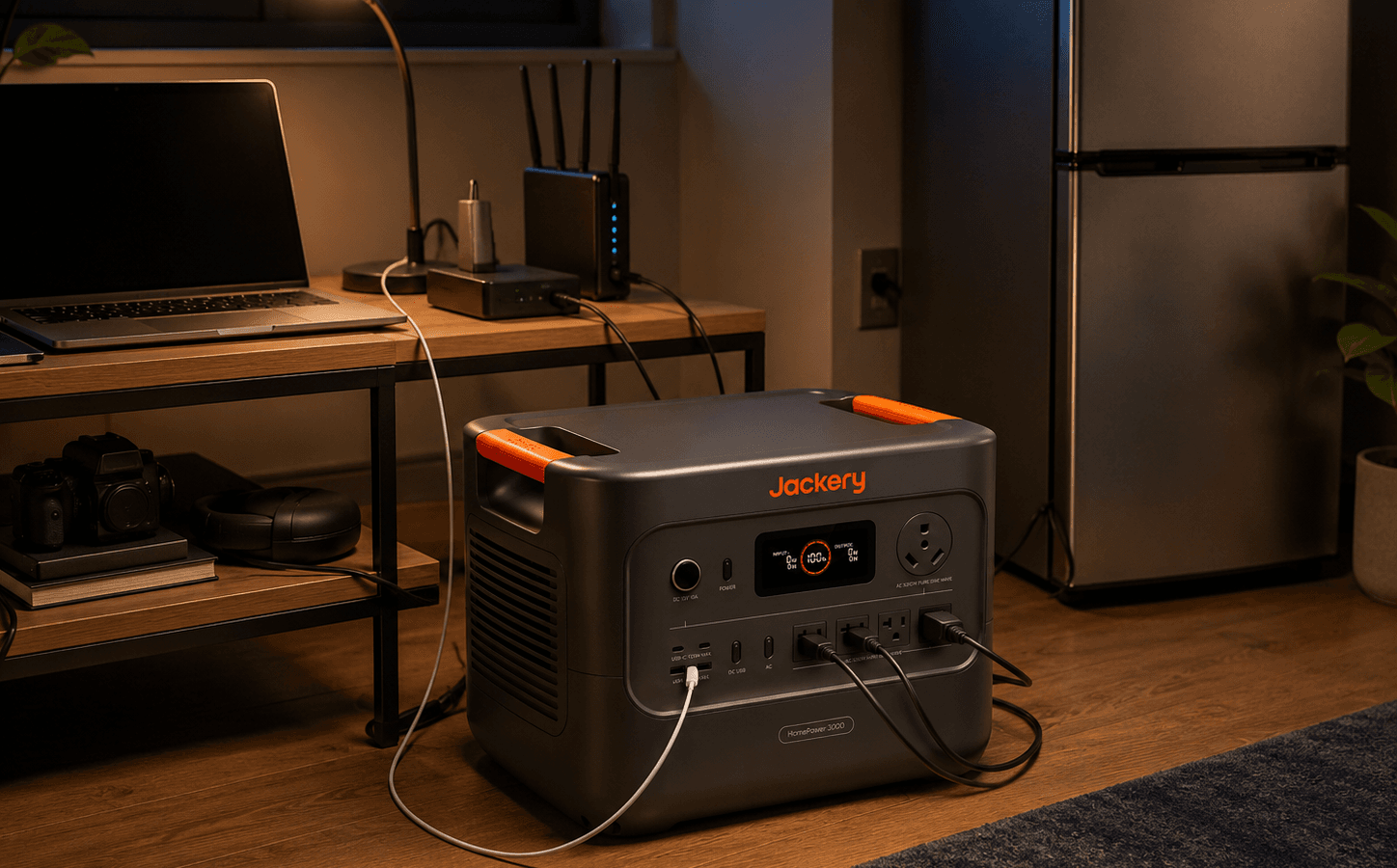
Linked Product Snapshot
Core specs
Buyer Fit
Pros and tradeoffs
Strengths
Pros
- 2042Wh LiFePO4 capacity in a 39.5 lb form
- 2200W rated output and 4400W surge for controlled AC loads
- Three AC outlets plus 100W and 30W USB-C ports
- About 1.75-hour listed AC charging
- 400W solar input, app monitoring, low listed noise, and under-20ms UPS-style switching
Tradeoffs
Cons
- No expansion-battery path
- 400W solar input is modest for 2kWh off-grid planning
- No 120V/240V output or whole-home system role
- High-watt devices can consume the fixed reserve quickly
- UPS-style behavior must be tested with each important connected device
This article may contain affiliate links. If you buy through these links, PowerLabPro may earn a commission at no extra cost to you. As an Amazon Associate I earn from qualifying purchases.
This Jackery Explorer 2000 v2 review answers a focused buyer question: is a compact fixed 2kWh station enough, or will the lack of expansion become a problem later? The product combines 2,042Wh of LiFePO4 capacity with 2,200W rated AC output, 4,400W surge peak, three 120V outlets, a 100W USB-C port, a 30W USB-C port, 400W maximum solar input, and a 39.5 lb carry weight. It is a serious portable power station, but it is not a replacement for a 240V system, a transfer-switch backup plan, or an expandable battery platform.
The central conclusion of this Jackery Explorer 2000 v2 review is simple. Buy it when you want substantial, quiet, fixed-capacity power for a clearly defined set of home essentials, RV equipment, travel devices, or mobile work loads. Skip it when your requirement already includes future battery growth, a larger solar system, long high-watt runtime, or a household plan that depends on more than one portable 2kWh energy reserve.
PowerLabPro did not perform hands-on or laboratory testing of this product. This is research-led analysis based on current Jackery documentation and the connected U.S. retail identity. Check the exact seller, bundle, documentation, warranty eligibility, accessories, and load compatibility before purchasing.
Jackery Explorer 2000 v2 review quick verdict
The Jackery Explorer 2000 v2 is a strong fixed-capacity option when a buyer wants a meaningful energy reserve without dealing with external batteries, stacked modules, or a heavier home-backup class. Its 2,200W inverter gives it appliance flexibility that smaller stations lack, while 2,042Wh of capacity makes it more useful than a basic laptop-and-phone battery. The 39.5 lb design also matters. It is not lightweight, but it is easier to move than many products in the same capacity range.
This Jackery Explorer 2000 v2 review is not a blanket recommendation. A buyer who needs several days of refrigeration, daily cooking, multiple high-watt appliances, 120V/240V circuits, or the option to buy more battery later should choose a different platform. The product is most persuasive when its fixed capacity is a deliberate simplifying choice rather than a compromise that will create disappointment during the first long outage.
Best for, not ideal for, and the real buyer fit
Best for: a selected-load outage plan, RV weekends, occasional boondocking, mobile work, cameras, laptops, routers, lighting, and compatible refrigeration where a self-contained 2kWh station is sufficient.
Not ideal for: whole-home expectations, 240V loads, high daily off-grid consumption, large solar arrays, fixed electrical integration, or future battery expansion.
Main advantage: 2,042Wh and 2,200W rated output in a 39.5 lb package that stays straightforward to own.
Main downside: the system cannot grow. If 2kWh is too little for the real event, the buyer must change the plan or add another independent station.
Best alternative route: choose an expandable 2kWh platform when runtime growth or a broader home-energy role is already foreseeable.
A useful Jackery Explorer 2000 v2 review separates product capability from buyer fit. The inverter rating makes some appliances and work loads compatible. The battery decides whether using them is sensible. A product can technically support a device and still be the wrong choice when it spends too much of the reserve needed for communications, work, lighting, refrigeration, or safe overnight planning.
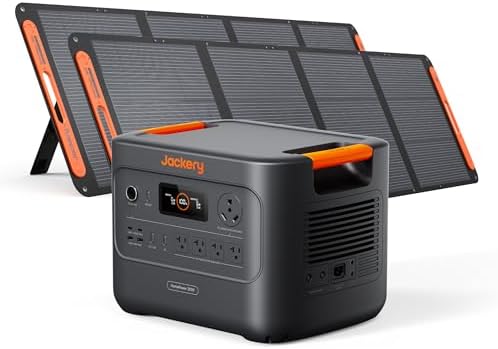
- Essential Home Backup: With a robust 3600W output (7200W surge) and a 3072Wh capacity, the Jackery HomePower 3000 provid…
- ≤20ms UPS: Featuring a UL-certified UPS that switches seamlessly within ≤20ms, the Jackery HomePower 3000 Portable Power…
- Power for Essentials: The Jackery HomePower 3000 keeps your essentials charged at once with versatile AC, USB-C, USB-A, …
Table of Contents
Jackery Explorer 2000 v2 review: verified specifications
| Specification | Current documented figure | Buyer implication |
|---|---|---|
| Battery capacity | 2,042Wh | A defined energy reserve for a focused priority-load plan. |
| Battery chemistry | LiFePO4 | Jackery lists 4,000 cycles to 70% or more capacity under stated conditions. |
| Rated AC output | 2,200W | The normal limit for simultaneous continuous AC loads. |
| Surge peak | 4,400W | Brief startup margin, not a sustained appliance rating. |
| AC outlets | 3 × 120V, 60Hz | Useful for selected essentials, not a full household circuit plan. |
| USB-C | 100W maximum plus 30W maximum | Supports direct charging for compatible work devices and accessories. |
| Solar input | Up to 400W | Provides daytime recovery potential with compatible portable panels. |
| AC charging | About 1.75 hours | Fast recovery is useful between uses, subject to conditions. |
| UPS-style switching | Under 20ms listed | Must be tested with the actual device before relying on it. |
| Weight | About 39.5 lb | Portable for the capacity class but still a planned lift. |
| Expansion | Not expandable | The buyer must be confident that fixed capacity meets the long-term plan. |
This Jackery Explorer 2000 v2 review uses Jackery’s current product page and FAQ as the primary specification sources. Jackery lists 2,042Wh capacity, 2,200W rated AC output, 4,400W surge peak, three AC outlets, a 100W USB-C port, a 30W USB-C port, USB-A, a 12V car port, 400W maximum DC solar input, 1.75-hour AC charging, 39.5 lb weight, 3+2 warranty, and no expansion-battery compatibility. Review the official Jackery Explorer 2000 v2 page before buying.
Jackery Explorer 2000 v2 review: capacity and real runtime
The 2,042Wh capacity can be generous or restrictive depending on the devices. A router, phone, LED lighting, laptop, tablet, camera charger, and selected monitor can make a reliable priority plan. A refrigerator changes the calculation because it has a compressor cycle. A heater, kettle, microwave, air fryer, or high-watt tool can consume a significant part of the battery quickly. This Jackery Explorer 2000 v2 review therefore treats capacity as an energy budget rather than a universal number of hours.
Use a three-level plan. The first level is connection and safety: router, modem, phones, lighting, and weather information. The second level is work and necessary comfort: a laptop, monitor, medical or CPAP equipment only after device-specific guidance, a small fan, and refrigeration after testing. The third level is optional high-draw equipment. This structure keeps the Jackery Explorer 2000 v2 useful for the longest portion of the event rather than spending most of its energy before the buyer knows how long the outage will last.
Battery runtime also includes losses and behavior that a paper calculation does not show. AC inversion, the efficiency of a device power supply, ambient temperature, battery state, cable quality, and cycling loads all affect the result. Direct USB-C charging for a compatible laptop can reduce an extra AC conversion step, although it does not enlarge the stored battery. Use the PowerLabPro sizing guide to total actual watts and required hours before assuming that 2kWh is enough.
The non-expandable design is the most important runtime limitation. The Jackery Explorer 2000 v2 cannot accept a battery pack to increase capacity later. A buyer who wants a second day of refrigeration, a larger RV setup, or repeated power-tool use should be honest about that requirement now. Simplicity is valuable only when the fixed storage amount remains sufficient across the use cases that matter.
Jackery Explorer 2000 v2 review: 2200W output and surge
The 2,200W rated inverter is the major capability advantage in this Jackery Explorer 2000 v2 review. It gives a controlled home, RV, or mobile-work plan room for devices that are not practical on a small station. A user can keep a work desk, routers, chargers, lighting, a compatible refrigerator, and selected AC equipment available without immediately hitting the inverter ceiling.
The output rating should still be used conservatively. The 4,400W surge figure is temporary headroom for startup. It does not mean a 4,400W appliance can run continuously, and it does not prove that every motor load will start. Compressors, pumps, tools, and refrigerators can demand more at startup than their normal label values. Other loads already plugged in, cord length, temperature, and equipment condition can change the result.
A responsible Jackery Explorer 2000 v2 review starts with continuous load, then leaves margin. A station that operates well below its ceiling is more useful than one that is expected to run at the edge of its rated output. This is particularly important during outages because the reserve may be needed for many hours. A high-watt appliance can be compatible with the inverter yet still be an inefficient use of the finite battery.
Test the exact important appliance before the first outage or trip. For food preservation, check refrigerator running watts, startup behavior, duty cycle, and what else will be connected. For work, check the laptop brick, monitor, router, charging hub, and any tool or light that might run at the same time. Test results from a different household, vehicle, or setup do not guarantee the same behavior in yours.
Jackery Explorer 2000 v2 review: charging, solar, and ports
Jackery lists about 1.75 hours for AC-adapter charging. That is a valuable readiness feature for a station that might be used in more than one role. After an RV trip, field-work day, device test, or short outage, the Jackery Explorer 2000 v2 can return to service more quickly than a slower-charging competitor. Exact time depends on battery state, temperature, source power, and mode, so it should be treated as a manufacturer-condition figure rather than a promise for every home outlet.
The solar limit is up to 400W through two DC 8mm inputs. That is enough for a compact portable panel setup and can support daylight recovery while traveling or waiting through an outage. It is modest for a 2kWh station compared with models designed around larger arrays. A 400W nameplate does not mean 400W of real energy will arrive every hour. Sun angle, shade, weather, heat, panel suitability, cable losses, and battery state all affect performance.
The port selection is practical for a small device ecosystem. Three AC outlets cover selected conventional loads. The 100W USB-C port can suit a compatible laptop, while the 30W USB-C and USB-A outputs suit phones, tablets, cameras, batteries, and smaller accessories. The 12V / 10A car port can serve compatible DC equipment. This Jackery Explorer 2000 v2 review sees direct device ports as useful because they can reduce the number of AC bricks drawing through the inverter.
Jackery Explorer 2000 v2 review: app, UPS, and noise
Jackery documents app monitoring for battery level, charging status, remaining runtime, solar input, and charging mode. This can be helpful when the station is part of a longer outage or RV plan because it makes load decisions more visible. App features are not a replacement for an energy plan. The owner should still know which devices are essential, what they draw, and when to disconnect optional loads.
Jackery also lists under-20ms UPS-style switching. In this Jackery Explorer 2000 v2 review, that is best understood as a potential convenience for compatible routers, lights, and personal work devices. It is not a zero-interruption guarantee and it is not a safe substitute for a dedicated UPS in critical settings. Test the exact equipment under supervision before relying on the function for work continuity.
The company lists about 30dB in Quiet Mode and about 45dB at full load in its stated measurements. Quiet operation can be meaningful in a bedroom, apartment, RV, or campsite. Fan behavior may still change with charging rate, temperature, and output. Keep the station on a dry stable surface with clear ventilation, and do not place it behind furniture, under bedding, or in a confined hot compartment.
Jackery Explorer 2000 v2 review: use-case analysis
Selected home backup
For home outages, the Jackery Explorer 2000 v2 has the capacity and inverter headroom to make a well-prepared plan feel resilient. Router, modem, phones, LED lighting, laptop work, charging, and selected refrigeration can all be part of the plan. The key is not treating it as a house battery. It cannot supply split-phase 240V, replace a transfer switch, or support normal whole-home behavior. Every additional high-watt load changes the runtime calculation.
Keep the plan simple. Decide which internet equipment, lights, chargers, work devices, and food-preservation loads matter. Test them. Store the station charged, accessible, and with the required cables. Review Ready.gov power-outage guidance for household planning. This Jackery Explorer 2000 v2 review supports a portable station as one part of preparedness, not a substitute for professional electrical backup.
RV, camping, and road travel
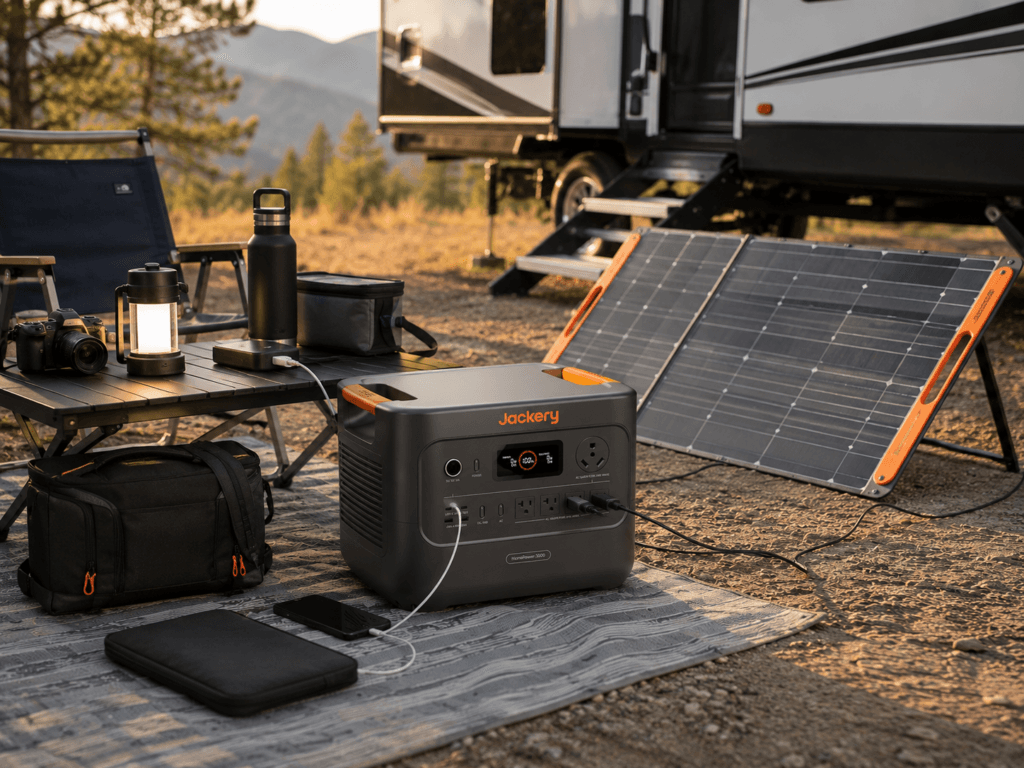
For RVs, camping, and road trips, the Jackery Explorer 2000 v2 suits device charging, lighting, laptops, cameras, a compatible portable refrigerator, fans, and occasional appliance use that fits the energy plan. Its roughly 39.5 lb carry weight is manageable for many travelers, though it should be secured for transport and used on a stable dry surface. The 400W solar limit can help a weekend or occasional boondocking plan, but it is not a high-throughput off-grid system.
Mobile work and creator equipment
For mobile work, the Jackery Explorer 2000 v2 can support a laptop, monitor, router, cameras, chargers, task lights, phone charging, and selected AC equipment. The 100W USB-C port can be helpful when a compatible laptop can charge directly. Its appeal is quiet, self-contained power rather than a deeply modular jobsite platform. Buyers who need frequent high-power tools, many hours of render work, or a large vehicle installation should calculate their actual energy use before relying on a fixed 2kWh battery.
Jackery Explorer 2000 v2 review: alternatives
Jackery Explorer 2000 Plus for expansion and a larger platform
The Jackery Explorer 2000 Plus is the closest alternative when the buyer wants to remain in the Jackery ecosystem but needs more room to grow. It is a different class of decision: more output, external expansion batteries, and a more system-oriented path. The Jackery Explorer 2000 v2 is the better fit when the ownership goal is a compact fixed unit that does not require additional battery planning.
EcoFlow DELTA 2 Max for a different expandable 2kWh path
The EcoFlow DELTA 2 Max is relevant for a buyer who values expansion and a different charging and app ecosystem. It can be a better choice when battery growth or broader solar flexibility is expected. This Jackery Explorer 2000 v2 review favors the Jackery only when the buyer specifically values fixed capacity, compactness, and a simpler ownership model over future platform growth.
BLUETTI Elite 200 V2 for a different high-output 2kWh design
The BLUETTI Elite 200 V2 is worth comparing when a buyer wants a different 2kWh-class design, port arrangement, charging behavior, and overall platform approach. Compare verified weight, output, solar requirements, app behavior, and the use case that matters most. The Jackery Explorer 2000 v2 is not automatically better because it is simpler; it is better only when fixed capacity actually fits the buyer’s real plan.
Jackery Explorer 2000 v2 review: pros and cons
| Pros | Cons |
|---|---|
| 2042Wh LiFePO4 capacity in a comparatively compact 39.5 lb package. | No expansion-battery path when long-term energy needs grow. |
| 2200W rated output and 4400W surge create useful device compatibility headroom. | No 120V/240V split-phase or transfer-switch platform. |
| Three AC outlets, 100W USB-C, 30W USB-C, USB-A, and 12V output cover a controlled device kit. | 400W solar input is limited for larger off-grid or high-daily-use plans. |
| About 1.75-hour AC charging can improve readiness between uses. | High-watt appliance use consumes the fixed energy reserve quickly. |
| App monitoring, quiet-mode claim, and under-20ms UPS-style switching add practical convenience. | Actual UPS behavior, noise, and app use depend on the connected equipment and conditions. |
Jackery Explorer 2000 v2 review FAQ
Can the Jackery Explorer 2000 v2 run a refrigerator?
It may support many refrigerator plans, but the actual appliance must be checked for normal running watts, compressor startup behavior, duty cycle, temperature, and the other loads connected at the same time. The 2,200W inverter improves compatibility, while the 2,042Wh battery determines how long the plan remains useful. Test the exact refrigerator before an outage.
Can the Jackery Explorer 2000 v2 charge from solar panels?
Yes. Jackery lists up to 400W of DC solar input through two DC 8mm inputs. Use compatible panels, voltage, connectors, and cables. The rated maximum is not a guaranteed field harvest because sunlight, shade, panel angle, heat, cable loss, weather, and battery state influence solar output.
Is the Jackery Explorer 2000 v2 expandable?
No. Jackery’s FAQ states that the Explorer 2000 v2 is not expandable. This is the core trade-off. The fixed battery makes the product simpler, but buyers who expect their runtime requirement to increase should choose an expandable platform before purchase.
Does the Jackery Explorer 2000 v2 have UPS functionality?
Jackery lists under-20ms UPS-style switching. It may be useful for compatible personal and network devices, but it is not a universal uninterrupted-power guarantee. Test your actual router, computer, monitor, or other hardware before relying on it, and do not use it as a substitute for critical medical or life-safety backup.
Safety and outage limits
Operate the Jackery Explorer 2000 v2 on a stable dry surface with the vents clear. Keep it away from water, heat sources, damaged cables, walkways, vehicle footwells, and exits. Do not cover the unit while it is charging or supplying power. Store it according to the manufacturer’s guidance and recharge it before a planned trip or forecast outage.
For broader planning, follow Ready.gov’s outage guidance and prioritize communication, lighting, safe food planning, and the work devices that must remain available. A portable power station should be one controlled part of preparedness. It is not a panel-connected home battery, transfer switch, or professionally designed whole-home backup system.
Jackery Explorer 2000 v2 review: final recommendation
The conclusion of this Jackery Explorer 2000 v2 review is positive for buyers who want a serious, relatively compact, self-contained 2kWh station. Its 2,200W rated output, 2,042Wh battery, 39.5 lb form, direct USB-C, fast listed AC charging, quiet-mode claim, and app monitoring make it a practical choice for selected-load backup, RV travel, mobile work, and occasional off-grid use.
The conclusion changes when fixed capacity conflicts with the buyer’s real plan. Choose the Jackery Explorer 2000 Plus when expansion is needed, the EcoFlow DELTA 2 Max when a different expandable ecosystem is a better fit, or the BLUETTI Elite 200 V2 when its verified design and capabilities better match the equipment list. Read the Jackery Explorer 2000 v2 product page for the structured reference record, then calculate your load plan before purchase.
Testing Notes
- Research-led editorial analysis based on current Jackery Explorer 2000 v2 manufacturer specifications and FAQ, plus the connected U.S. Amazon destination ASIN B0FFSDCNR4.
- PowerLabPro did not conduct hands-on or laboratory testing of the Jackery Explorer 2000 v2.
- Actual runtime, solar harvest, UPS-style transfer behavior, and appliance compatibility depend on the connected devices, conditions, and buyer setup.