
Review
BLUETTI Elite 300 Review: 3kWh RV and Backup Power
A strong fixed 3kWh-class choice for planned RV, camping, mobile-work, and selected home-essential loads, but not for buyers who need battery expansion, native 240V power, or an uncontrolled appliance-heavy backup plan.
Linked Product Snapshot
Core specs
Buyer Fit
Pros and tradeoffs
Strengths
Pros
- 3,014.4Wh capacity for a defined selected-load plan
- 2,400W continuous output
- TT-30 RV outlet and 12V/30A DC capability
- Bluetooth and Wi-Fi app support
- 10ms UPS claim for compatible equipment
Tradeoffs
Cons
- No compatible expansion-battery path listed
- 4,800W Lifting Power is not a continuous-output rating
- 3kWh class needs a deliberate lifting and storage plan
- 1,200W alternator-and-solar charging depends on optional Charger 2 hardware
- Not a whole-home or native 240V system
This article may contain affiliate links. If you buy through these links, PowerLabPro may earn a commission at no extra cost to you. As an Amazon Associate I earn from qualifying purchases.
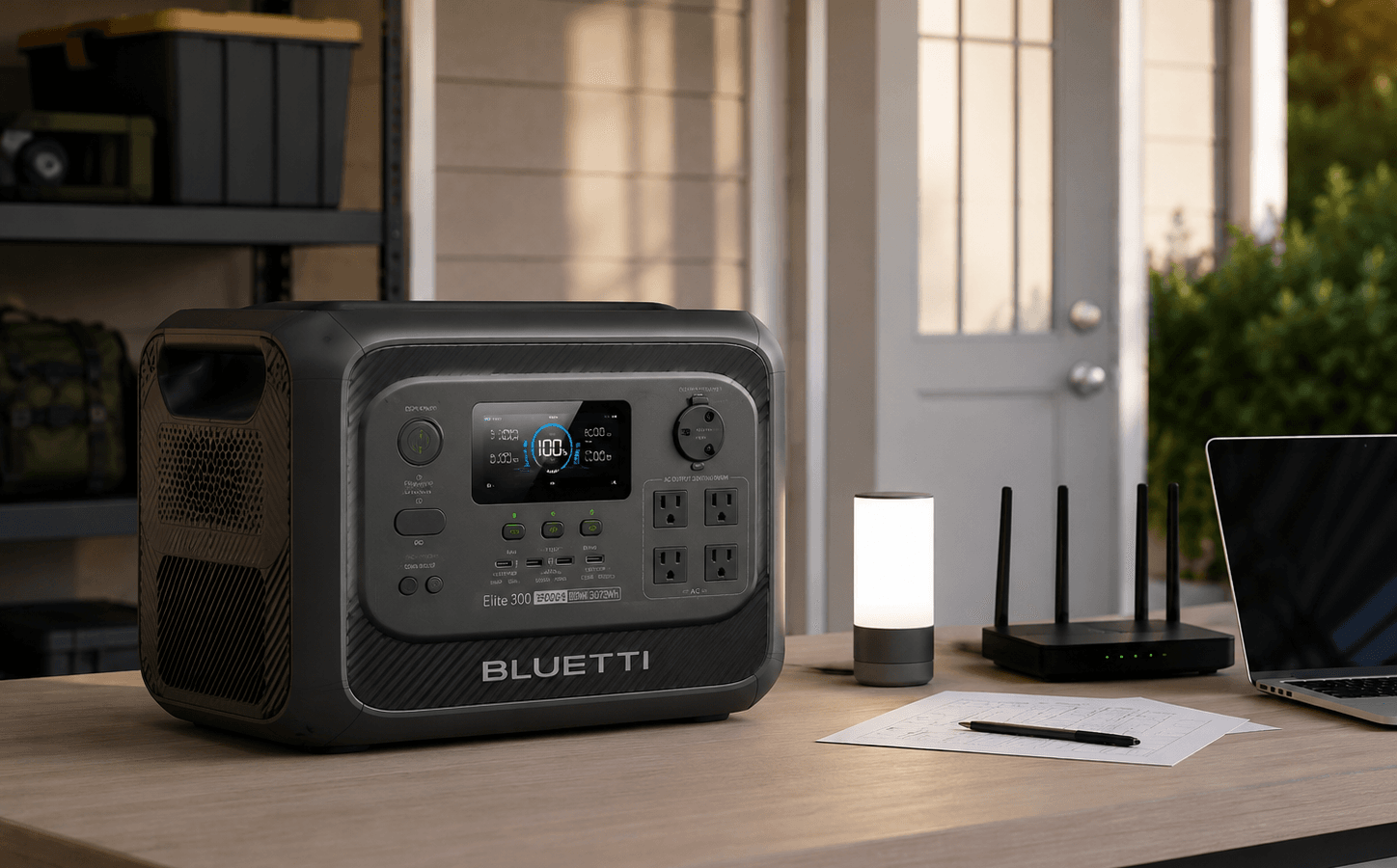
This BLUETTI Elite 300 review is for buyers deciding whether a fixed-capacity 3kWh-class station is the right step up from a compact 1kWh or 2kWh portable unit. BLUETTI lists 3,014.4Wh of capacity, 2,400W of continuous output, a TT-30 RV outlet, 12V/30A DC capability, Bluetooth and Wi-Fi control, and a stated 10ms UPS switchover. Those features can make the unit useful for a measured RV, campsite, mobile-work, or selected home-essential plan. They do not make it unlimited power or a substitute for a permanent home electrical system.
The main decision in this BLUETTI Elite 300 review is capacity versus flexibility. The unit carries more stored energy than a typical compact station, but its battery is fixed. A buyer who needs a self-contained platform with a realistic recharge plan may value that simplicity. A buyer who expects needs to grow toward several days of refrigeration coverage, more household circuits, or a modular battery system should evaluate that limitation before purchase.
This is researched editorial analysis based on current manufacturer information and the matching U.S. Amazon identity for ASIN B0GKRTX336. PowerLabPro does not claim hands-on or laboratory testing. Confirm the exact listing, bundle, current warranty terms, connection requirements, and compatibility of every important device before ordering.
BLUETTI Elite 300 review: quick verdict
The BLUETTI Elite 300 is a strong fit for buyers who want a meaningful one-box energy reserve, 2,400W of continuous output, an RV-oriented TT-30 connection, and app-managed portable power without stepping into a wheeled modular system. It is especially sensible when the plan is already defined: communications, lights, laptops, charging, selected refrigerator support, RV devices, or a vehicle-supported campsite.
This BLUETTI Elite 300 review is not a universal recommendation. The core trade-off is fixed capacity. It is not the right product for a buyer who wants add-on batteries later, native 240V power, whole-home circuits, or a platform sized for uncontrolled high-watt loads. Use its 2,400W rating for normal load planning, not the separate 4,800W Lifting Power label.
Best for, not ideal for, and the buyer decision
Best for: small RV or camper owners, vehicle-supported camping, selected home-essential backup, and mobile-work buyers who need around 3kWh of fixed portable energy with 2,400W continuous AC output.
Not ideal for: buyers needing battery expansion, full-house circuits, native 240V power, frequent one-hand carrying, or many hours of high-watt heating and cooling.
Main advantage: an RV-aware, fixed 3kWh-class station with TT-30, 12V/30A DC, a stated 10ms transfer mode, and Bluetooth/Wi-Fi management.
Main drawback: the capacity cannot be expanded later, so the first purchase must match the real runtime plan.
Better alternative if: you need less stored energy with slightly higher continuous output, or you need a larger expandable 3kWh platform.
Read the connected BLUETTI Elite 300 Product reference for the central model record, published specifications, current ASIN, and purchase checks. This BLUETTI Elite 300 review focuses on the ownership decision: what the numbers mean, where the product fits, and when a different design is the safer buy.
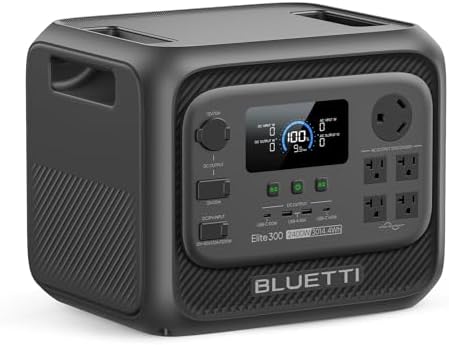
- [Compact 3kWh Power — Verified by Frost & Sullivan] – Elite 300 packs a full 3014Wh capacity into an ultra-compact desig…
- [RV-Ready with TT-30 Port & 12V/30A DC Output] – Designed for RV power systems, Elite 300 includes a TT-30 RV outlet and…
- [Reliable Home Backup Power for Outages] – Be prepared for unexpected power outages. With 3014Wh capacity and 2400W outp…
Table of Contents
BLUETTI Elite 300 review: verified facts that matter
| Current published item | Buyer meaning |
|---|---|
| 3,014.4Wh capacity | A substantial portable energy reserve for selected loads, not a fixed runtime promise. |
| 2,400W continuous output | The normal combined AC-load limit to plan around. |
| 4,800W Lifting Power | Manufacturer terminology for supported high-load behavior, not a separate continuous-output rating. |
| 6,000+ cycle claim | A manufacturer cycle-life statement, not a guaranteed years-of-service result. |
| TT-30 and 12V/30A DC capability | Useful RV-oriented connection options when the vehicle and device plan are compatible. |
| Bluetooth and Wi-Fi app support | Can simplify monitoring, remote wake, and settings management. |
| 10ms UPS claim | Potentially useful for compatible equipment after real setup testing. |
| Optional Charger 2 route | BLUETTI markets up to 1,200W alternator-and-solar charging with the separate accessory and compatible setup. |
The important specification in this BLUETTI Elite 300 review is the 2,400W continuous output. That is the figure to use when deciding what may run together. A refrigerator, router, lights, laptop, charger, small kitchen appliance, or tool battery can all look reasonable in isolation. The total running demand, plus the startup demand of compressor or motor loads, decides whether the plan is actually suitable.
BLUETTI also lists 4,800W of Lifting Power. Treat that as its own limited manufacturer feature, not as evidence that the Elite 300 can continuously supply 4,800W. A buyer should not transform a Lifting Power label into a conventional surge rating, nor assume it validates a motor, pump, air conditioner, or heating appliance without checking the appliance requirements.
A buyer should also separate capacity from output. The 3,014.4Wh battery helps with duration, while the inverter determines moment-by-moment compatibility. A station can have enough stored energy left but still reject an oversized load. It can also support a high-watt appliance briefly but consume much of the battery reserve before the important loads have been covered.
BLUETTI Elite 300 review: 2,400W output and Lifting Power
The best use of this BLUETTI Elite 300 review is to stop a buyer from buying the product only because the output looks large. A 2,400W continuous inverter gives much more flexibility than a 500W or 1,000W station. It can support a larger controlled device mix, selected cooking tasks, RV equipment, power-tool battery charging, and other moderate loads that fit under the limit. It still does not give unlimited simultaneous appliance power.
Build the plan around priority loads and sequence high-watt tasks. A kettle, microwave, coffee maker, heater, or tool may be workable as a brief individual task if it fits the published rating and the station is not already supporting other heavy demand. That same appliance can become a poor choice when a refrigerator compressor, RV load, laptop setup, and charging equipment are already drawing power.
Motor-driven equipment deserves extra caution. The normal label wattage may not show the startup behavior of a compressor, pump, fan, or power tool. Test an important load at home before a trip or outage while supervision is available. Do not use a portable station as a substitute for dedicated medical, life-safety, or code-governed electrical backup.
BLUETTI Elite 300 review: 3kWh capacity and realistic runtime
A 3,014.4Wh battery can create a meaningful essential-load reserve, but it does not produce a universal number of hours. A reliable BLUETTI Elite 300 review has to account for inverter losses, device efficiency, ambient temperature, battery state, compressor cycles, cable choice, and the other loads connected at the same time. The only useful runtime number is the one built around your actual equipment.
Start with communications and light. A router, phone chargers, LED lighting, laptop, and selected work devices are normally lower-demand uses that preserve the battery for longer. Add refrigerator backup only after checking its real running draw and startup behavior. Keep heating, cooking, and cooling loads separate from the baseline plan because they can consume a large amount of energy quickly.
Direct USB-C or DC power can sometimes avoid an unnecessary AC conversion for a compatible device, but it does not create extra capacity. The practical benefit is reducing adapter clutter and keeping AC outlets available for a different priority device. Use the PowerLabPro sizing guide to total watts, estimate hours, and decide whether a fixed 3kWh class is the right level before purchase.
BLUETTI Elite 300 review: RV, camping, and mobile work
The RV connection is a central reason to consider the BLUETTI Elite 300. BLUETTI lists a TT-30 outlet and a 12V/30A DC output for RV-oriented use. That can make the product more practical for a small travel trailer, camper, or vehicle-supported setup than a station limited to basic household outlets and USB ports. It does not mean every onboard appliance can run together or that an RV air-conditioning plan is automatically suitable.
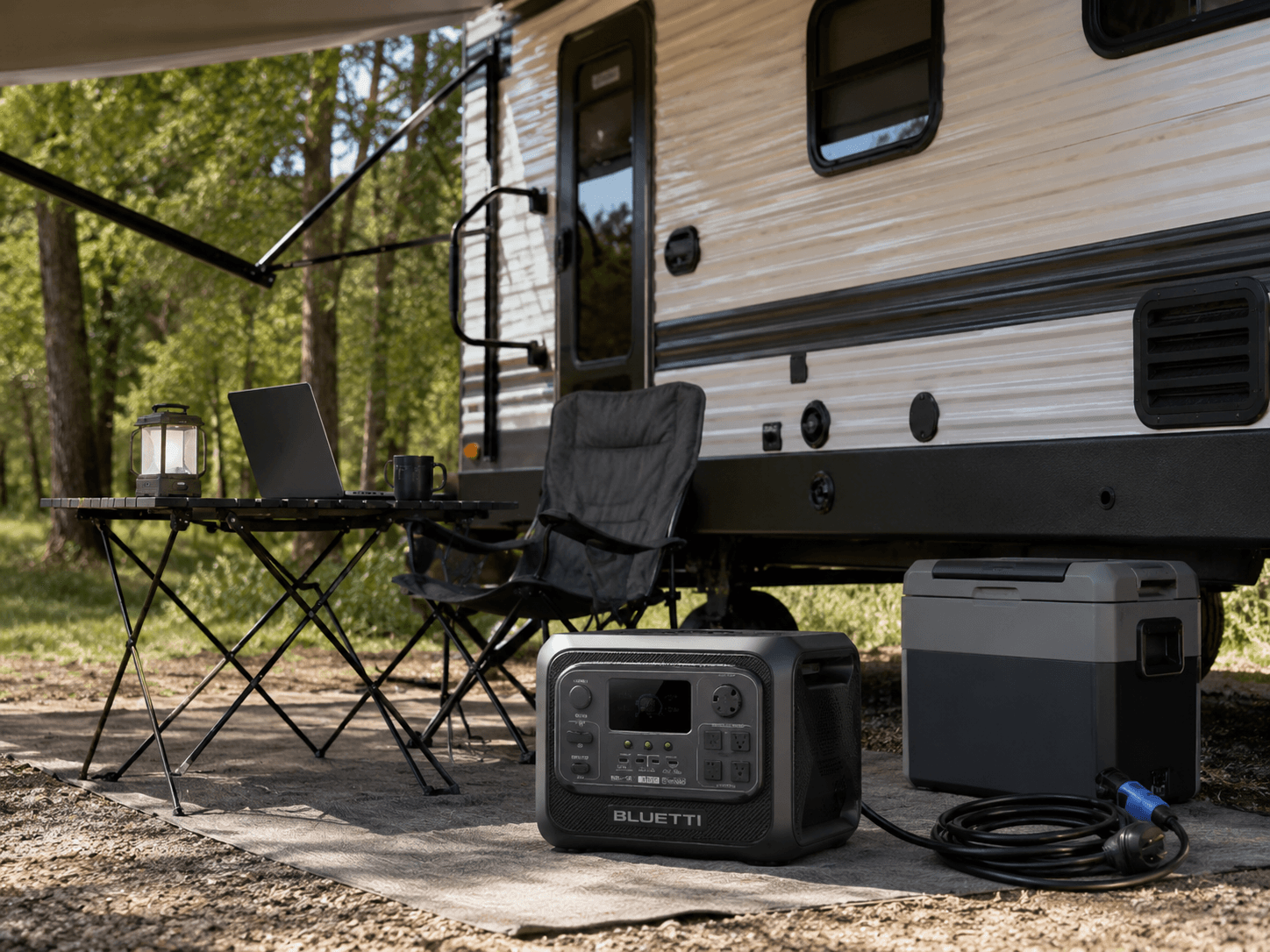
For camping, this BLUETTI Elite 300 review favors a basecamp or vehicle-supported scenario. The size class can make sense for a compressor cooler, camera batteries, laptops, lighting, fans, shared charging, and selected short-duration AC tasks. It is less sensible for a minimalist overnight trip where phones, a small light, and a laptop are the only requirements. Match the station to the actual daily energy budget and carry path.
For mobile work, the product can be valuable where a router, laptops, task lighting, monitors, selected chargers, and tool batteries need to be staged together. Do not choose it for a welder, large compressor, industrial heating load, or other equipment without first checking the nameplate, startup demand, and duty cycle.
BLUETTI Elite 300 review: charging and recovery planning
The best charging plan is the one a buyer can actually repeat. BLUETTI says the BLUETTI Elite 300 can charge from wall power, solar, or a vehicle, and it highlights a Charger 2 setup that can reach up to 1,200W through combined alternator-and-solar charging. That is a specific accessory-dependent path, not a general statement that any vehicle outlet or panel arrangement can deliver 1,200W.
Solar input is a ceiling, not a daily promise. Array voltage, current, connector type, open-circuit voltage, cable run, weather, shade, panel orientation, and battery state all matter. Treat a solar array as recovery support. A buyer should not plan a multi-day outage around the maximum marketing input figure unless the actual panels and conditions can support the plan.
This BLUETTI Elite 300 review recommends writing down both the energy used and the realistic energy restored. If the station supplies 1,500Wh overnight and the next day’s charging setup reliably returns only 700Wh, the plan becomes smaller each day. A wall outlet, suitable solar setup, or compatible vehicle-recovery method is therefore part of the purchase decision, not an optional accessory detail.
BLUETTI Elite 300 review: UPS behavior and app control
BLUETTI lists a 10ms UPS switchover and Bluetooth/Wi-Fi app functions. That can be useful for a router, modem, selected lighting, compatible security equipment, or a home-office setup when the exact hardware has been tested. It is not proof that every computer, server, network-storage device, medical device, or sensitive load will behave correctly during a utility interruption.
A responsible BLUETTI Elite 300 review treats app features as convenience tools. The app can help a user monitor the station, wake it remotely, or manage settings. It cannot make an overloaded plan safe or solve a device compatibility problem. Test the specific router, laptop charger, monitor, and power strip before an outage, not when continuity matters most.
Keep the station dry, stable, and ventilated, and route cables so they do not create a trip hazard. Do not backfeed household wiring, use improvised high-current adapters, or treat a portable unit as transfer equipment. For a panel, inlet, or circuit-level project, use a qualified electrician and the applicable equipment instructions.
BLUETTI Elite 300 review: the fixed-capacity trade-off
The defining limitation is not a minor missing feature. This BLUETTI Elite 300 review finds that the product is best when the buyer is confident that roughly 3kWh is enough. The current official Elite 300 product page does not list a compatible expansion-battery path. Simplicity is the benefit: one chassis, one battery, fewer components, and a direct transport plan. The downside is that the buyer cannot grow the energy reserve later without buying a different product.
That trade-off matters most for refrigerator-first and multi-day backup planning. A station can be excellent for a short outage, trip, or controlled daily load yet become restrictive once the plan includes longer food preservation, more people, more work equipment, or a larger household load list. Buyers who expect those demands to increase should compare an expandable platform before committing.
Portability is another practical limit. A 3kWh-class battery deserves a storage and lifting plan even when its body is compact. Consider the distance from storage to use, stairs, vehicle lift-in, an RV compartment, and whether two people may be needed. A product is only portable when the owner can place it safely and consistently.
BLUETTI Elite 300 review: alternatives that solve different problems
BLUETTI Elite 200 V2 for a smaller fixed-capacity path
The BLUETTI Elite 200 V2 review is the useful internal comparison for a buyer who wants a smaller fixed-capacity BLUETTI station with 2,073.6Wh of capacity and 2,600W continuous output. It makes sense when the load plan needs slightly more inverter headroom but less stored energy, and when a lower-capacity all-in-one platform is easier to justify. It does not solve the expansion issue because it is also a fixed-capacity design.
Anker SOLIX F3000 for capacity growth and a larger backup platform
The Anker SOLIX F3000 review is the better comparison when future expansion is the deciding requirement. It starts in the same broad 3kWh capacity class but adds a rolling form factor, expansion-battery path, high solar potential, and a more involved RV and backup platform. The trade-offs are greater size, more system planning, and substantially more effort to move. Choose it only when the expansion path is a real requirement rather than a hypothetical feature.
The best alternative is not automatically a more expensive product. A smaller station is better when the core plan is communication, laptop work, lights, and basic travel power. A larger modular platform is better when the gap is duration and future growth. This BLUETTI Elite 300 review favors the Elite 300 only when its fixed 3kWh reserve and RV-oriented connections match the real load plan today.
BLUETTI Elite 300 review: pros and cons
| Pros | Cons |
|---|---|
| 3,014.4Wh capacity offers a meaningful selected-load reserve. | No compatible expansion-battery path is listed on the current official page. |
| 2,400W continuous output supports a broad controlled device mix. | A 3kWh-class station still needs a deliberate lifting and storage plan. |
| TT-30 and 12V/30A connections can be useful for compatible RV planning. | 4,800W Lifting Power should not be treated as continuous output. |
| Bluetooth/Wi-Fi app controls and 10ms UPS messaging add practical convenience. | UPS behavior must be tested with the exact connected device. |
| Optional Charger 2 creates a potentially strong vehicle-recovery path. | 1,200W charging depends on optional hardware and compatible vehicle or solar conditions. |
BLUETTI Elite 300 review FAQ
Is the BLUETTI Elite 300 good for RV use?
It can be a strong fit for a planned small-RV or camper setup because BLUETTI lists a TT-30 outlet and a 12V/30A DC output. The buyer still needs to confirm vehicle electrical compatibility, appliance demand, cable choice, and which loads may operate together.
Can the BLUETTI Elite 300 run home essentials during an outage?
It can support selected direct-connected loads when their combined demand remains within the 2,400W continuous rating and the battery has enough energy for the required period. It is not a whole-home circuit solution and should not be used to backfeed household wiring.
Can the BLUETTI Elite 300 recharge from a vehicle?
BLUETTI markets an alternator-and-solar charging path of up to 1,200W through the optional Charger 2 and a compatible configuration. Confirm the exact accessory, vehicle, alternator capacity, wiring, fuse protection, and product instructions before purchase or installation.
Is the BLUETTI Elite 300 expandable?
The current official Elite 300 page does not list a compatible expansion-battery path. Buyers who need capacity growth should choose an expandable platform from the start.
Safety and purchase checks
Before buying, confirm the base-unit identity, ASIN B0GKRTX336, seller, bundle, return terms, included cables, and the exact ports shown on the listing. Review BLUETTI’s official Elite 300 page for current manufacturer information. Confirm the planned appliance label and manual, especially for motor loads, refrigeration, RV equipment, or sensitive electronics.
For wider outage preparation, use Ready.gov’s power-outage guidance alongside a written priority-load list. Keep the power station dry, ventilated, and on a stable surface. Never backfeed a home panel or use an improvised connection in place of correct transfer equipment and qualified electrical work.
BLUETTI Elite 300 review: final recommendation
The conclusion of this BLUETTI Elite 300 review is positive for a buyer who needs a fixed 3kWh-class station with a credible 2,400W continuous-output ceiling, RV-oriented TT-30 capability, app controls, and a planned recharge route. It is an especially sensible choice for selected home essentials, a small RV or camper, vehicle-supported camping, and mobile work where the loads are known in advance.
Skip it when the real requirement is modular growth, native 240V power, a whole-home circuit strategy, or many hours of appliance-heavy demand. Read the connected BLUETTI Elite 300 Product reference, calculate the actual device plan, and choose the smallest verified platform that covers both the watts and the hours you truly need.
Testing Notes
- Manufacturer documentation reviewed: BLUETTI Elite 300 current product page and published specifications.
- Retail identity verified: Amazon ASIN B0GKRTX336.
- PowerLabPro has not performed hands-on or laboratory testing.