
Buying Guide
240V Portable Power Station: 4 Picks for Selected Home Loads
240V portable power station guide comparing four verified U.S. 120/240V platforms for selected home circuits, higher-voltage loads, solar recovery, portability, expansion, and safe transfer-equipment planning.
Product Shortlist
Featured products
Product
Anker SOLIX F3800 Plus Portable Power Station
Heavy-duty 3,840Wh LFP portable power station with 6,000W AC output, 120V/240V support, up to 3,200W solar input, and expandable backup capacity for home, RV, and outage planning.
Product
EcoFlow DELTA Pro 3
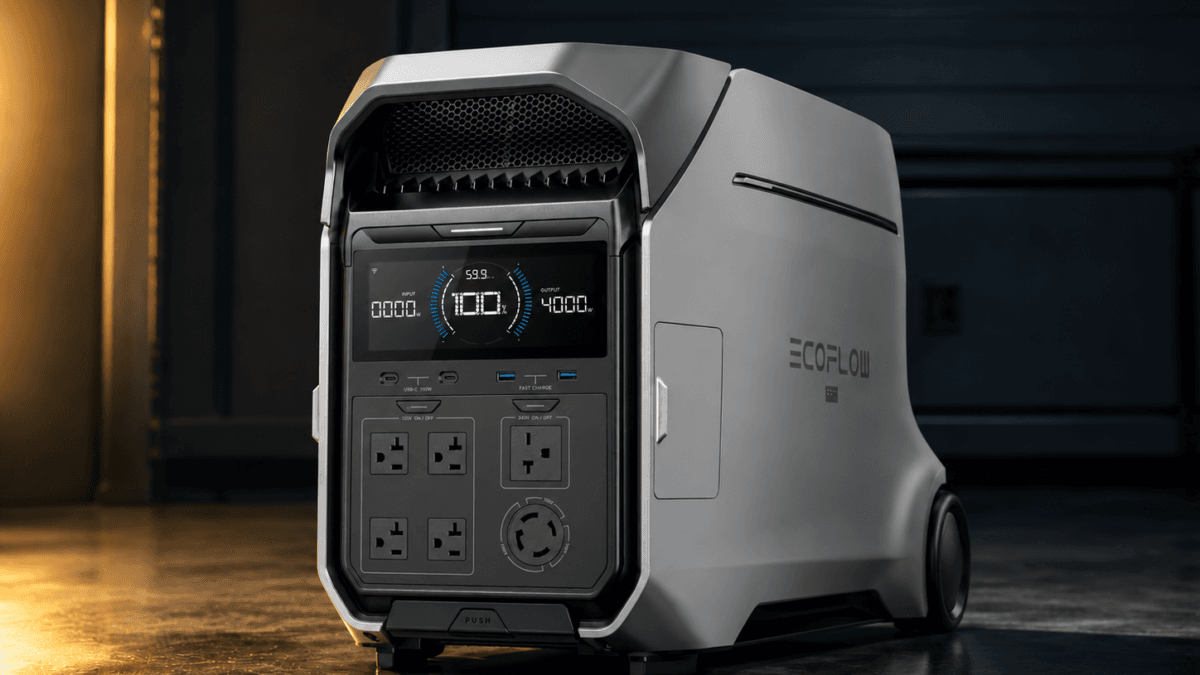
The EcoFlow DELTA Pro 3 power station delivers 4096Wh LiFePO4 capacity, 4000W output, and single-unit 120V/240V support with up to 2600W solar input. Built for whole-home essential backup, well pumps, and transfer switch setups, expandable to 48kWh.
Product
Jackery Explorer 5000 Plus
Large 5,040Wh LiFePO4 portable power station with 7,200W AC output, 14,400W surge, 120V/240V support, solar charging up to 4,000W, and expandable home-backup capacity.
Product
Jackery HomePower 3600 Pro Max
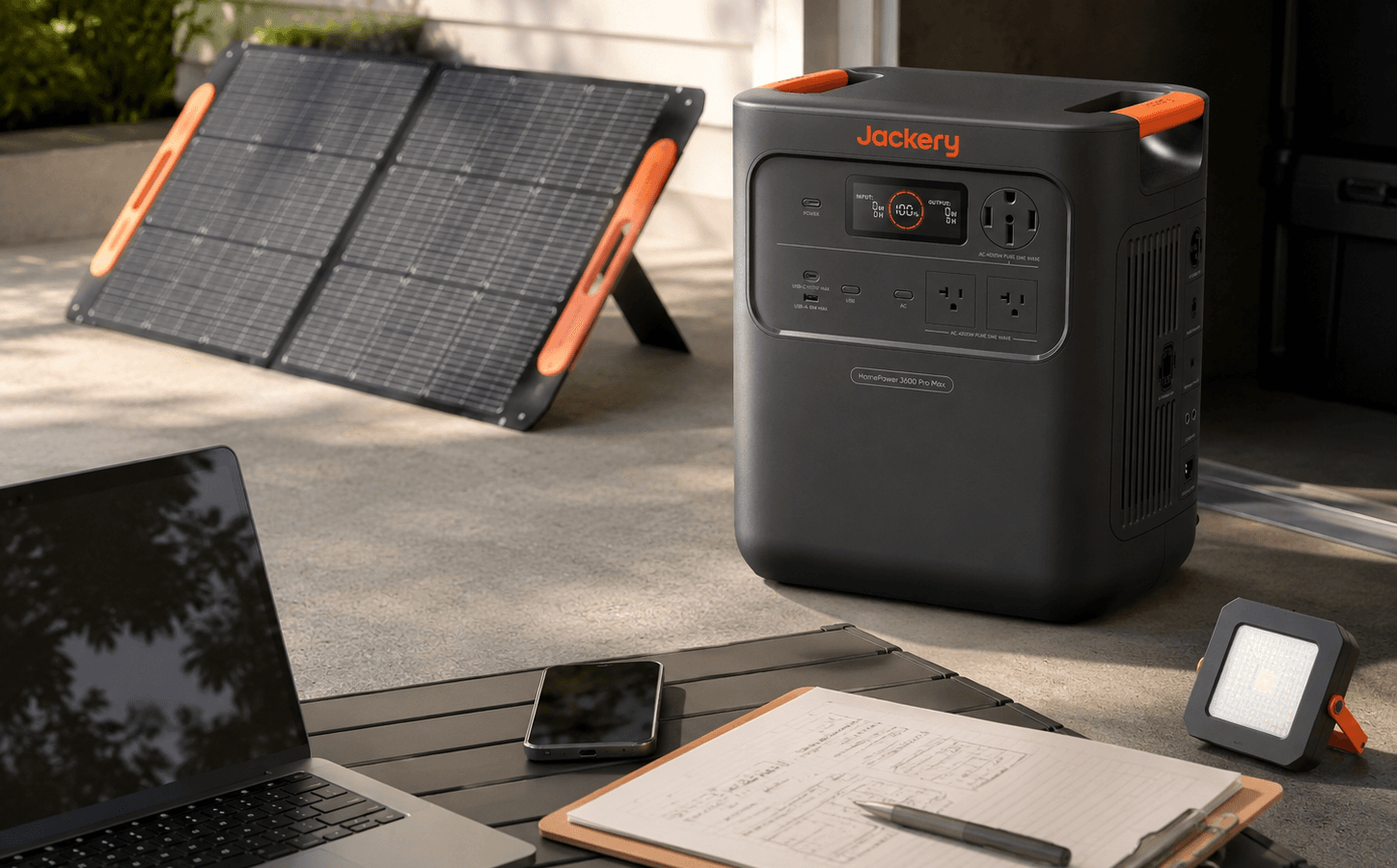
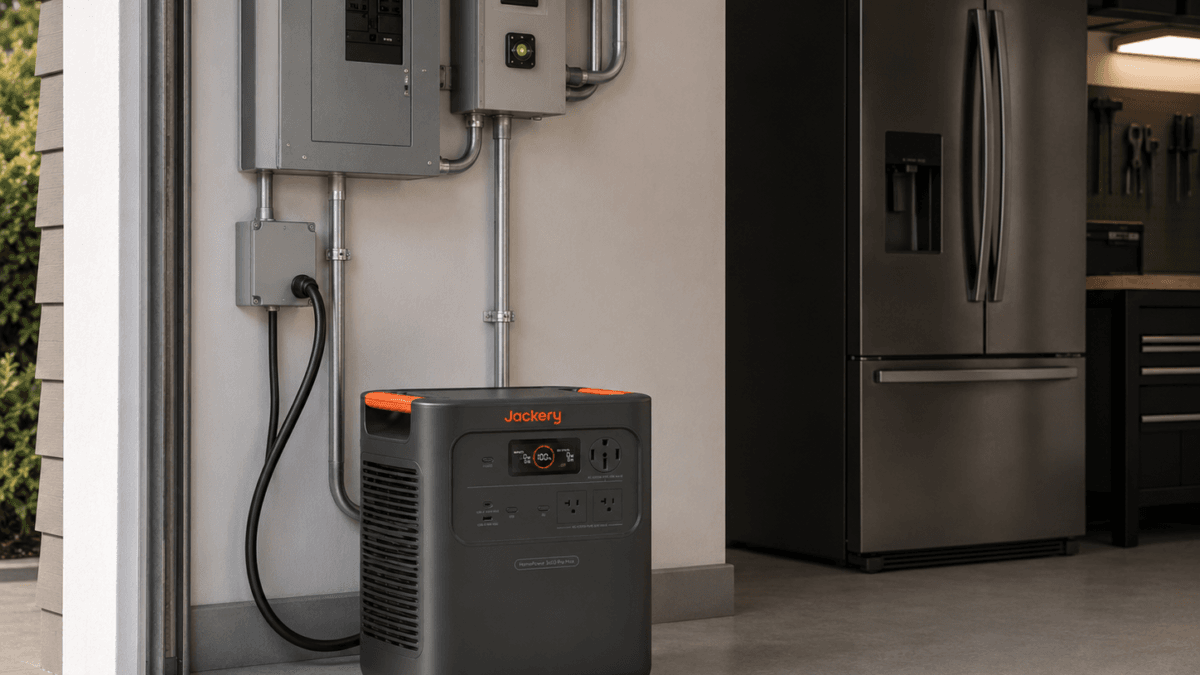
A 3,584Wh LiFePO4 portable power station with 4,000W 120/240V output for measured essential-load backup, compatible selected-circuit planning, and staged expansion. Its trade-off is a 73.85 lb base unit that needs a planned operating location.
This article may contain affiliate links. If you buy through these links, PowerLabPro may earn a commission at no extra cost to you. As an Amazon Associate I earn from qualifying purchases.
A 240V portable power station is relevant in the United States when the backup plan includes a verified 120/240V load or selected circuit that cannot be served by an ordinary 120V outlet. That can include some pumps, workshop equipment, HVAC-related loads, RV connections, and properly designed home-inlet arrangements. It does not mean every large appliance is a sensible battery load, and it does not turn a portable battery into an automatic whole-home system.
This guide compares four verified PowerLabPro Product records with distinct 120/240V roles. EcoFlow DELTA Pro 3 is the best balanced modular choice. Jackery HomePower 3600 Pro Max is the lightest platform in this shortlist. Jackery Explorer 5000 Plus provides the largest base battery and the highest documented 240V output path here. Anker SOLIX F3800 Plus is the heavy-duty Anker option with a documented L14-30R 120/240V path and a large expansion ecosystem.
PowerLabPro has not performed hands-on electrical or load-bank testing of these systems. Current manufacturer documentation controls the technical facts, while the decision framework focuses on voltage, continuous output, startup demand, stored energy, solar recovery, handling, transfer equipment, and safe installation. Never backfeed household wiring or improvise a panel connection.
- Quick pick for the most balanced system: EcoFlow DELTA Pro 3 for 4,096Wh, 4,000W continuous 120/240V output, 2,600W solar input, and verified single-unit expansion to about 12kWh.
- Best lighter platform: Jackery HomePower 3600 Pro Max for a 73.85 lb chassis and 4,000W rated 240V output. Its current official expansion documentation conflicts, so do not buy it on an expansion claim without direct Jackery confirmation.
- Best larger base: Jackery Explorer 5000 Plus for 5,040Wh and a manufacturer-documented 240V path up to 7,200W, with outlet-specific limits and up to five compatible battery packs listed in current support material.
- Best heavy-duty Anker route: Anker SOLIX F3800 Plus for 3,840Wh, up to 6,000W on its L14-30R 120/240V path, 3,200W solar input, and up to six BP3800 expansion batteries.
- Look elsewhere: the real load is 120V only, the appliance is hardwired and no approved transfer path exists, the station cannot meet startup demand, or the plan assumes a high-draw 240V appliance can run for many hours without a measured energy budget.
Table of Contents

What 240V means for a U.S. portable power station
In the United States, ordinary residential service is commonly 120/240V split phase. Many receptacles and small appliances use 120V, while selected larger loads use 240V. A 240V portable power station in this guide has a manufacturer-documented U.S. output path that can provide the required voltage when the complete connection is correct. It does not mean every receptacle on the unit provides 240V.
This is different from countries where approximately 230V or 240V is the normal single-phase household supply. A European or international product page can therefore describe “240V” in a completely different electrical context. PowerLabPro is a U.S. buyer site, so this guide uses U.S. models, U.S. plugs, U.S. Product records, and U.S. Amazon identities.
Voltage is only one requirement. A compatible 240V load must also fit continuous watts, current, outlet type, startup behavior, battery duration, cable rating, and transfer equipment. Never choose a 240V portable power station from the voltage badge alone.
How to choose a 240V portable power station
Start with the actual load. Read the equipment nameplate, manual, plug, breaker, and circuit requirements. Determine whether the device really uses 240V and record its continuous running watts. Motors, compressors, pumps, and HVAC equipment can also have startup demand that a simple running-watt figure does not show.
Next inspect the station’s exact 240V output path. An L14-30R, 14-50-style interface, or 6-20R has its own voltage and current limitations. The presence of a high-current connector does not override the station’s inverter limit. A 50A receptacle on a 240V portable power station, for example, does not mean the battery can supply the same power as a 50A utility circuit.
Then size energy. A pump that runs for a few minutes at a time creates a different watt-hour budget from an air conditioner that cycles for hours. A 240V portable power station can start a load successfully and still have insufficient battery capacity for the desired outage duration. Use the PowerLabPro sizing guide before buying.
Quick comparison of the four picks
| Pick | Base capacity | Documented output context | Weight | Expansion context |
|---|---|---|---|---|
| EcoFlow DELTA Pro 3 | 4,096Wh | 4,000W continuous total, native 120/240V; 8,000W surge | 113.54 lb | Single unit to about 12kWh with two compatible extra batteries |
| Jackery HomePower 3600 Pro Max | 3,584Wh | 4,000W rated at 240V; 8,000W maximum instantaneous at 240V | 73.85 lb | Current Jackery official sources conflict; confirm before relying on expansion |
| Jackery Explorer 5000 Plus | 5,040Wh | 240V L14-30R and 14-50R paths up to 7,200W; outlet-specific limits apply | About 134.5 lb | Current support page lists up to five compatible battery packs |
| Anker SOLIX F3800 Plus | 3,840Wh | Up to 6,000W on documented L14-30R 120/240V path; standard 120V outlets lower | 136.7 lb | Up to six BP3800 batteries on one unit; larger paired systems can scale further |
The existing EcoFlow DELTA Pro 3 vs Anker SOLIX F3800 Plus comparison supports one of the closest platform decisions. That page does not cover the two Jackery products, so this Buying Guide remains the owner of the four-product use-case decision.
1. EcoFlow DELTA Pro 3: best balanced 240V portable power station
EcoFlow DELTA Pro 3 is the best balanced recommendation because it combines a 4,096Wh LFP battery, 4,000W continuous 120/240V output, an 8,000W surge rating, up to 2,600W total solar input, a 10 ms listed UPS mode, and a verified single-unit expansion path to about 12kWh with two compatible extra batteries. Its current U.S. specifications list both a NEMA 6-20R 240V outlet and an L14-30R 120/240V output within the 4,000W total continuous ceiling.
The 4,000W continuous ceiling is the key constraint. A buyer whose simultaneous loads remain below that level can gain a strong mix of capacity, solar recovery, ports, and modular growth. A buyer who genuinely needs more than 4,000W continuous should evaluate the larger Jackery or Anker output architecture instead of treating EcoFlow’s X-Boost mode as if it were the same as continuous inverter output.
Best for: selected-circuit home backup, a workshop, RV, or off-grid base where native 120/240V is useful and roughly 4kWh is a sensible starting point.
Not ideal for: a measured 240V load that requires more than 4,000W continuous or a buyer who needs a much lighter chassis.
Main advantage: the most balanced combination of 4,096Wh, 4,000W continuous 120/240V, 2,600W solar input, and verified single-unit expansion.
Main trade-off: 113.54 lb is still a planned-placement battery, and 4,000W continuous may be below some high-demand 240V loads.
Why it belongs in this guide: it is the strongest all-around 240V portable power station for buyers who value a complete ecosystem more than maximum single-number output.
Better alternative if: choose HomePower 3600 Pro Max when lower weight dominates, Explorer 5000 Plus when higher base energy and output headroom are required, or F3800 Plus when the Anker expansion and L14-30 ecosystem fit better.
Related Review: EcoFlow DELTA Pro 3 Review. See the EcoFlow DELTA Pro 3 Product page.
Official source: EcoFlow DELTA Pro 3 product information.

- Energize Almost Everything. The EcoFlow DELTA Pro 3 supports 120V/240V voltage and has a 4000W output (6000W with X-Boos…
- Forget Refueling. Featuring a 4096Wh LFP battery capacity, expandable to 48kWh with extra batteries or smart generators,…
- Plug and Play. Experience hassle-free power with the DELTA Pro 3, a versatile portable power station that’s easy to set …
2. Jackery HomePower 3600 Pro Max: best lighter platform
Jackery HomePower 3600 Pro Max stands out because its 4,000W rated 240V output is packaged in a 33.5 kg chassis, about 73.85 lb. Jackery’s current Basic Information page lists 3,584Wh capacity, 4,000W rated 240V output, up to 8,000W maximum instantaneous output at 240V, and up to 1,200W solar input. That is a much easier chassis to move than the other large systems here.
Expansion requires special caution because Jackery’s current official pages conflict. The August 20, 2026 HomePower 3600 Pro Max Basic Information page says the product does not support battery packs. At the same time, Jackery’s current Battery Pack 3600 product page explicitly says the pack is compatible with HomePower 3600 Pro Max and says each unit supports up to five packs. Because these official manufacturer sources conflict, PowerLabPro does not treat expansion as a settled buying fact. Confirm the exact U.S. configuration with Jackery before purchasing extra batteries.
Best for: buyers who need a verified 4,000W 240V path but care strongly about moving and storing the station.
Not ideal for: anyone whose purchase depends on a guaranteed expansion path until Jackery resolves the current documentation conflict, or a load that exceeds 4,000W continuous.
Main advantage: by far the lightest chassis in this shortlist at about 73.85 lb while retaining a 4,000W rated 240V path.
Main trade-off: 3,584Wh is the smallest base battery here, solar input is limited to 1,200W, and current official expansion documentation is contradictory.
Why it belongs in this guide: it gives the 240V portable power station buyer a materially lighter high-output option rather than assuming every 240V system must weigh well over 100 lb.
Better alternative if: choose DELTA Pro 3 when expansion certainty and solar recovery matter more, or Explorer 5000 Plus when larger base energy and higher 240V output headroom justify the weight.
Related Review: Jackery HomePower 3600 Pro Max Review. See the Jackery HomePower 3600 Pro Max Product page.
Official sources: Jackery HomePower 3600 Pro Max support information and Jackery Battery Pack 3600 product information.
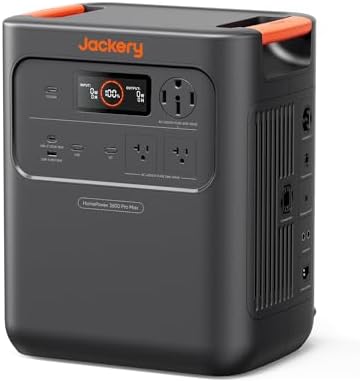
- 4kW–8kW Auto Backup, Ready in Half the Time: Turn your 3600 Pro Max into a home energy hub using a manual transfer switc…
- Experience True Seamlessness: With a <10ms UPS switch—faster than a blink—your computers and appliances keep running wit…
- True 240V Performance from a Single Unit: Get 4000W of 120V/240V power from one unit. Starting at 3.6kWh and expandable …
3. Jackery Explorer 5000 Plus: best base capacity and output headroom
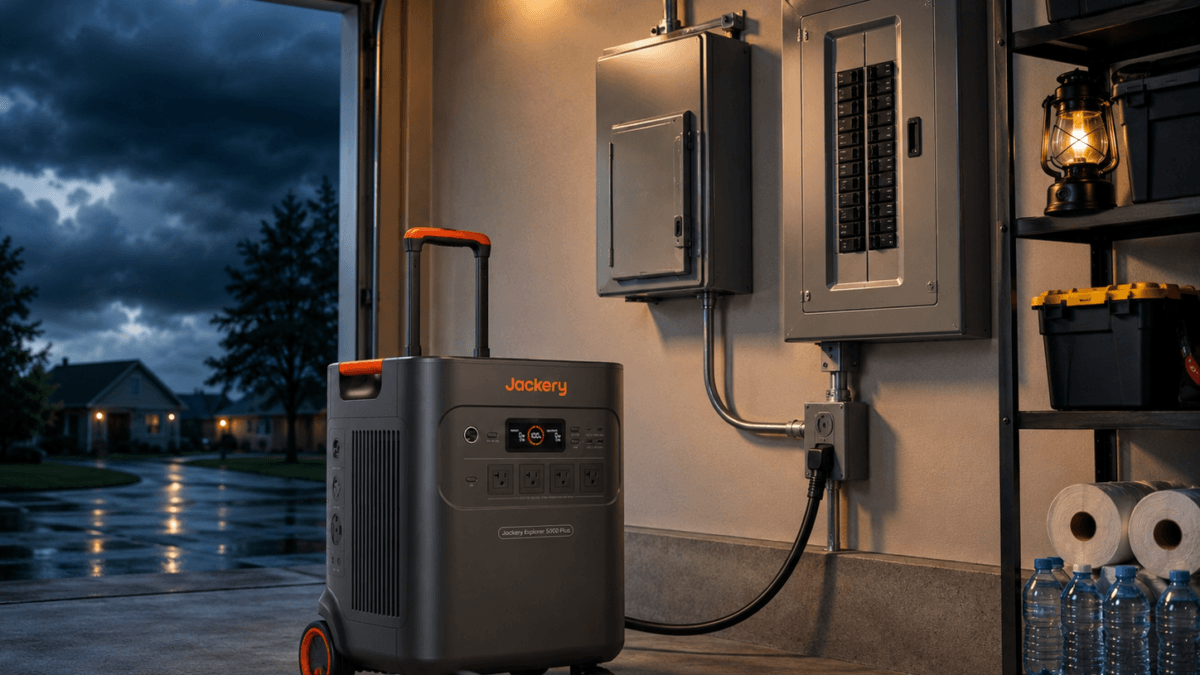
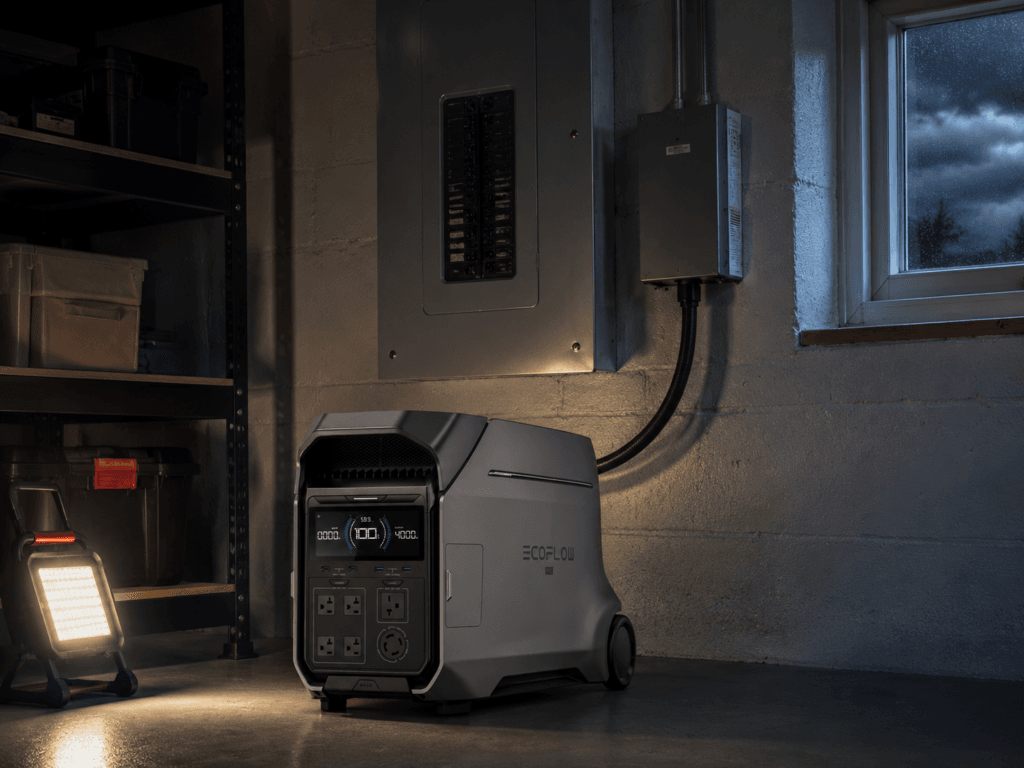
Explorer 5000 Plus is the strongest choice when the buyer has already proven a need for more base energy and a higher documented 240V output path. Jackery’s August 20, 2026 support page lists 5,040Wh LiFePO4 capacity, around 61 kg weight, high-voltage PV input up to 4,000W, and both L14-30R and 14-50R 240V output paths up to 7,200W. That same current page lists up to five compatible battery packs.
Outlet-specific limits remain essential. Jackery lists a single 120V 5-20 outlet at 2,400W, paired 120V outlet groups at up to 3,600W, and the 240V paths at up to 7,200W. The current support page lists maximum instantaneous output as 7,200W, so this guide does not repeat older 14,400W surge claims found in legacy material. The current manufacturer support page controls.
Best for: a buyer whose measured load genuinely benefits from 5,040Wh of base energy and up to 7,200W on the documented 240V path.
Not ideal for: light essential-load backup, frequent stair movement, or a plan that can be served by a much smaller and lighter 4,000W-class system.
Main advantage: the largest base battery in this shortlist plus the highest currently documented single-unit 240V output path here.
Main trade-off: about 134.5 lb weight and a large physical footprint demand a planned rolling route and storage location.
Why it belongs in this guide: it covers the high-energy, high-output end of the 240V portable power station decision without relying on outdated surge claims.
Better alternative if: choose DELTA Pro 3 when 4,000W is enough and modular balance matters more, or HomePower 3600 Pro Max when much lower weight is the priority.
Related Review: Jackery Explorer 5000 Plus Review. See the Jackery Explorer 5000 Plus Product page.
Official source: Jackery Explorer 5000 Plus support information.
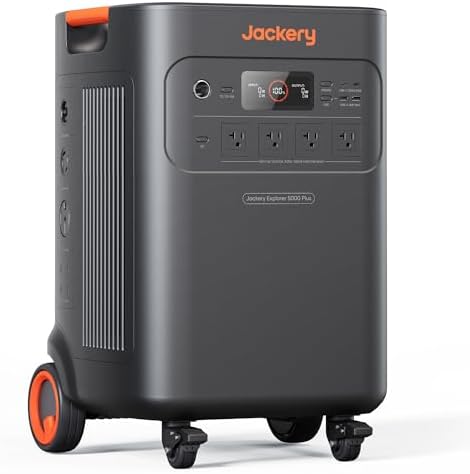
- Handles Even the Big Appliances: Run major home appliances with 7200W of rated power (14,400W surge). Supports both 120V…
- Backup That Lasts for 13 Days: A 5040Wh capacity, expandable up to 60kWh — enough to keep your home running through an e…
- More Power From the Sun: Compatible with both high-and low-voltage solar panels, recharge in about 2 hours with up to 40…
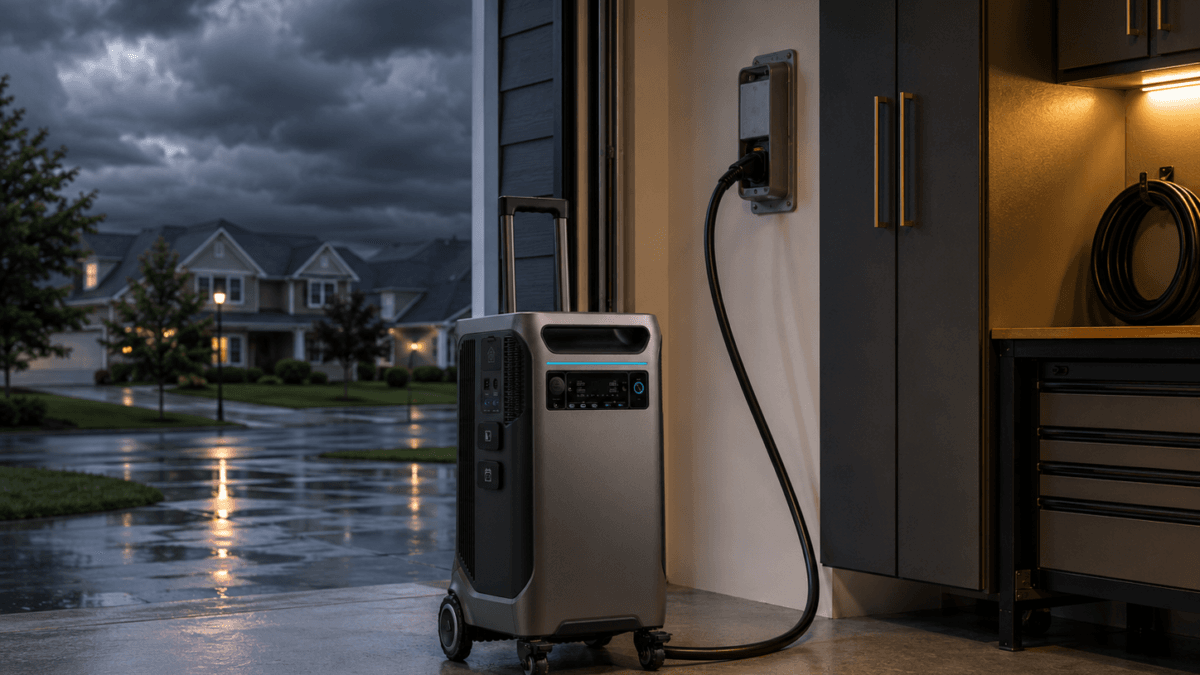
4. Anker SOLIX F3800 Plus: best heavy-duty expansion path
Anker SOLIX F3800 Plus starts at 3,840Wh and provides a documented L14-30R 120V/240V output path up to 6,000W. Current Anker documentation lists standard 120V AC output at up to 2,400W, two solar inputs at up to 1,600W each for 3,200W total, a 136.7 lb chassis, and support for up to six 3,840Wh BP3800 expansion batteries on one base unit.
This is the most deliberately heavy-duty 240V portable power station in the shortlist. The expansion path can take one unit from 3.84kWh to roughly 26.9kWh when six expansion batteries are used, while broader paired configurations can scale further. That does not mean every buyer should start with extra batteries. Expansion should solve a measured runtime shortfall after the base system proves it can support the load.
Best for: selected home circuits, large RV use, high solar input, long-outage planning, and buyers who want a documented Anker expansion path.
Not ideal for: frequent lifting, stairs, a small 120V essentials kit, or buyers who do not want to manage a large battery ecosystem.
Main advantage: 6,000W on the L14-30R 120/240V path, up to 3,200W solar input, and a large verified expansion route.
Main trade-off: 136.7 lb makes it the heaviest base unit in this shortlist, and standard 120V outlets have a lower 2,400W stated limit.
Why it belongs in this guide: it is the strongest Anker 240V portable power station option when expansion, solar recovery, and a documented L14-30R path all matter.
Better alternative if: choose DELTA Pro 3 for a more balanced 4kWh platform, HomePower 3600 Pro Max for much lower weight, or Explorer 5000 Plus for the larger starting battery and higher documented 240V path.
Related Review: Anker SOLIX F3800 Plus Review. See the Anker SOLIX F3800 Plus Product page.
Official source: Anker SOLIX F3800 Plus product information.
Which loads actually need 240V?
Do not buy a 240V portable power station because a general appliance category “usually” uses 240V. Some well pumps are 240V and some are not. Some window air conditioners use 120V while other HVAC equipment uses 240V. Workshop tools, EV charging equipment, ranges, dryers, water heaters, pumps, and RV systems all vary. The exact nameplate and circuit determine the requirement.
For a motor or compressor, voltage is only the first question. Running watts, startup current, control electronics, duty cycle, and the outlet or hardwired connection all matter. A 4,000W 240V portable power station may be able to run a 2,000W device yet struggle with an unusual starting event. A larger inverter may start it but drain the battery rapidly during continuous operation.
List each proposed load as 120V or 240V and record whether it is cord connected or part of household wiring. This prevents a common planning error where a buyer chooses a 240V portable power station for one appliance, then assumes the rest of the electrical system is automatically covered.
Continuous output, surge, and outlet-specific limits
Continuous watts determine sustained simultaneous load. Surge or peak ratings describe brief headroom and should never be presented as normal continuous power. Special load-management modes also need their own context. A 240V portable power station advertised with a large peak figure is not a generator that can sustain that figure indefinitely.
Outlet-specific limits matter especially in this class. Explorer 5000 Plus and F3800 Plus show large 240V-path figures while their ordinary 120V receptacles have different limits. HomePower 3600 Pro Max has a 14-50-style interface but remains a 4,000W-rated 240V station. DELTA Pro 3 has several 120V and 240V receptacles within its 4,000W total continuous output.
Build the simultaneous-load plan from the exact connection used. If the appliance needs an adapter, transfer inlet, or special cable, verify that every component is rated and manufacturer-supported. Do not stack adapters until a connector happens to fit a 240V portable power station.
Battery capacity and runtime are separate from voltage
A 240V portable power station can still be too small for the desired runtime. Capacity in watt-hours is the energy budget. A 5,040Wh Jackery stores more nominal energy than a 3,584Wh HomePower station, but the meaningful difference depends on average load. High-watt heating, HVAC, cooking, and water-heating loads can consume several kilowatt-hours quickly.
Selected-circuit backup is usually more realistic than trying to maintain every high-energy appliance. Refrigeration, communications, lighting, a few outlets, a pump, and selected heating controls can be prioritized. Large resistance heating and electric water heating may be technically possible but poor battery-value choices during a long outage.
Use measured or manufacturer-listed watts and estimate realistic daily energy, then keep a reserve. A 240V portable power station that can run a pump for ten minutes is solving a different problem from one expected to support an air conditioner for eight hours. Voltage capability does not answer the energy question.
Transfer switches, inlets, and panel safety
Never backfeed a home by connecting a 240V portable power station to an ordinary wall receptacle. A safe home-circuit setup uses the correct manufacturer-supported equipment and code-compliant transfer method. Depending on the product and home, that may involve a transfer switch, inlet, interlock where permitted, smart home panel, or another designed integration path.
Electrical-system work should be evaluated by a qualified electrician familiar with the intended equipment and local requirements. The electrician needs the station’s output architecture, neutral and grounding behavior, transfer equipment, conductor and breaker ratings, and the actual load list. A marketing claim such as “home backup ready” is not a wiring plan.
For general outage preparation, review Ready.gov power-outage guidance. A 240V portable power station should be integrated only through a connection method that is designed for the exact system.
Solar recovery and long-outage planning
High solar-input ceilings can help a large 240V portable power station recover during a multi-day outage. DELTA Pro 3 supports up to 2,600W total solar input. HomePower 3600 Pro Max lists up to 1,200W. Explorer 5000 Plus supports a high-voltage PV path up to 4,000W, while F3800 Plus supports up to 3,200W total direct solar input.
These ceilings are not daily-energy guarantees. Shade, winter sun, cloud cover, panel temperature, cable loss, voltage limits, array configuration, and battery state all affect recovery. A 4,000W input ceiling has little value if the property can safely deploy only 800W of compatible panels.
Compare realistic daily solar harvest with realistic daily load energy. If selected circuits consume more than the system can recover, expansion batteries extend the time before depletion but do not solve the long-term balance. Long outages reward load management as much as large hardware.
Portability, storage, and deployment
Weight varies dramatically. HomePower 3600 Pro Max is about 73.85 lb. DELTA Pro 3 is 113.54 lb. Explorer 5000 Plus is roughly 134.5 lb, and F3800 Plus is 136.7 lb. Wheels help on level floors, but they do not solve stairs, vehicle loading, thresholds, snow, or an inaccessible storage route.
Measure doors, ramps, storage clearances, cable reach, and the distance to the intended inlet before purchase. A lighter 240V portable power station can be more useful than a larger system that cannot be moved safely during an outage. Conversely, weight matters much less when a heavy system stays staged in a dry garage near its transfer equipment.
Plan any expansion-battery locations at the same time. More batteries require floor space, cable routing, and a safe environment. Keep vents clear and follow manufacturer spacing and temperature guidance.
When expansion batteries are worth it
Expansion is worthwhile when the base 240V portable power station already supports the load and measured runtime is the remaining constraint. DELTA Pro 3, Explorer 5000 Plus, and F3800 Plus have current manufacturer-documented expansion paths. HomePower 3600 Pro Max should be treated differently because Jackery’s current official support page and current Battery Pack product page contradict each other about compatibility.
Do not buy expansion batteries as insurance against an unknown load. First test or calculate the base system. If the station cannot start the pump, another battery does not increase inverter output. If the station runs every priority load but empties four hours too early, expansion directly addresses the problem.
Large expansion also changes recharge time, budget, physical footprint, and system complexity. The best 240V portable power station architecture is often the smallest one that reliably covers the selected-load plan and can recover energy before the next long discharge period.
Common 240V portable power station mistakes
- Assuming an appliance category is always 240V: verify the exact model and circuit.
- Confusing receptacle rating with inverter output: a 14-50 or L14-30 connection does not override the station’s continuous limit.
- Using surge or a special boost mode as continuous power: temporary headroom is not the normal inverter rating.
- Ignoring battery energy: starting a 240V appliance does not prove the station can run it for the desired hours.
- Backfeeding a home: use correct transfer equipment and qualified electrical guidance.
- Buying expansion before testing the base system: extra watt-hours do not fix an incompatible load.
- Ignoring conflicting manufacturer documentation: when official sources disagree, confirm the exact current configuration before spending money on accessories.
- Assuming maximum solar is guaranteed: real harvest depends on the complete array and weather.
Final recommendation by buyer type
Choose EcoFlow DELTA Pro 3 when you want the most balanced 240V portable power station: 4,096Wh base capacity, 4,000W continuous 120/240V output, 2,600W solar input, and a clearly documented single-unit expansion path. Choose HomePower 3600 Pro Max when 4,000W at 240V covers the plan and its 73.85 lb weight is the decisive advantage, but do not rely on expansion until Jackery resolves its conflicting current documentation.
Choose Explorer 5000 Plus when measured loads justify the larger 5,040Wh base battery and up to 7,200W on its current documented 240V path. Choose F3800 Plus when a 6,000W L14-30R 120/240V path, up to 3,200W solar, and up to six expansion batteries fit the plan. The best 240V portable power station is the one whose voltage, continuous output, stored energy, transfer equipment, recharge plan, and physical placement all support the same verified use case.
FAQ
What does 240V portable power station mean in the U.S.?
In this guide it means a U.S.-model portable battery system with a manufacturer-documented 120/240V output path for compatible loads. It does not mean every outlet supplies 240V, and it should not be confused with countries where roughly 230V or 240V is the standard single-phase household supply.
Can a 240V portable power station run a whole house?
Do not assume so. These systems are best planned around selected loads or selected circuits. Whole-home expectations require continuous and startup load analysis, battery-duration planning, compatible transfer equipment, and a realistic recovery strategy.
Can I connect a 240V portable power station directly to a panel?
Only through a properly designed and approved connection method such as compatible transfer equipment or a manufacturer-supported home-integration system. Never backfeed through an ordinary wall receptacle. Use qualified electrical guidance for code-governed wiring.
Do I need 240V for a well pump or air conditioner?
Maybe. Those appliance categories contain both 120V and 240V models. Verify the exact equipment nameplate, circuit, plug, manual, running watts, and startup behavior before choosing a station.
Final Recommendation
EcoFlow DELTA Pro 3 is the best balanced 240V portable power station for buyers who want a 4,096Wh base battery, 4,000W continuous 120/240V output, 2,600W solar input, and a clearly documented single-unit expansion path. Choose Jackery HomePower 3600 Pro Max when its much lower 73.85 lb weight and 4,000W rated 240V output fit the plan, but confirm battery-pack compatibility directly with Jackery because its current official expansion documentation conflicts. Choose Jackery Explorer 5000 Plus when more base energy and a higher currently documented 240V output path are genuinely required. Choose Anker SOLIX F3800 Plus when the priority is a heavy-duty expandable platform with a documented L14-30R 120/240V path and up to 3,200W solar input.
Frequently Asked Questions
What does 240V portable power station mean in the United States?
In this guide it means a U.S.-model portable battery system with a manufacturer-documented 120/240V split-phase output path for compatible loads. It does not mean every outlet supplies 240V, and it should not be confused with countries where roughly 230V or 240V is normal single-phase household power.
Can a 240V portable power station run a whole house?
Do not assume so. These systems are best planned around selected loads or selected circuits. Whole-home expectations require continuous and startup load analysis, battery-duration planning, compatible transfer equipment, and a realistic recharge strategy.
Can I connect a portable power station directly to my electrical panel?
Only through a properly designed and approved connection method such as compatible transfer equipment or a manufacturer-supported home-integration system. Never backfeed through an ordinary wall receptacle. Use qualified electrical guidance for code-governed wiring.
Do I need 240V for a well pump or air conditioner?
Some pumps, HVAC equipment, tools, RV systems, and appliances use 240V, while others use 120V. Check the exact equipment nameplate, circuit, plug, manual, running watts, and startup behavior before choosing a station.