
Comparison
Anker SOLIX C1000 Gen 2 vs EcoFlow DELTA 3 Classic
Anker SOLIX C1000 Gen 2 vs EcoFlow DELTA 3 Classic compared for output, charging, solar input, portability, UPS use, fixed capacity, and buyer fit.
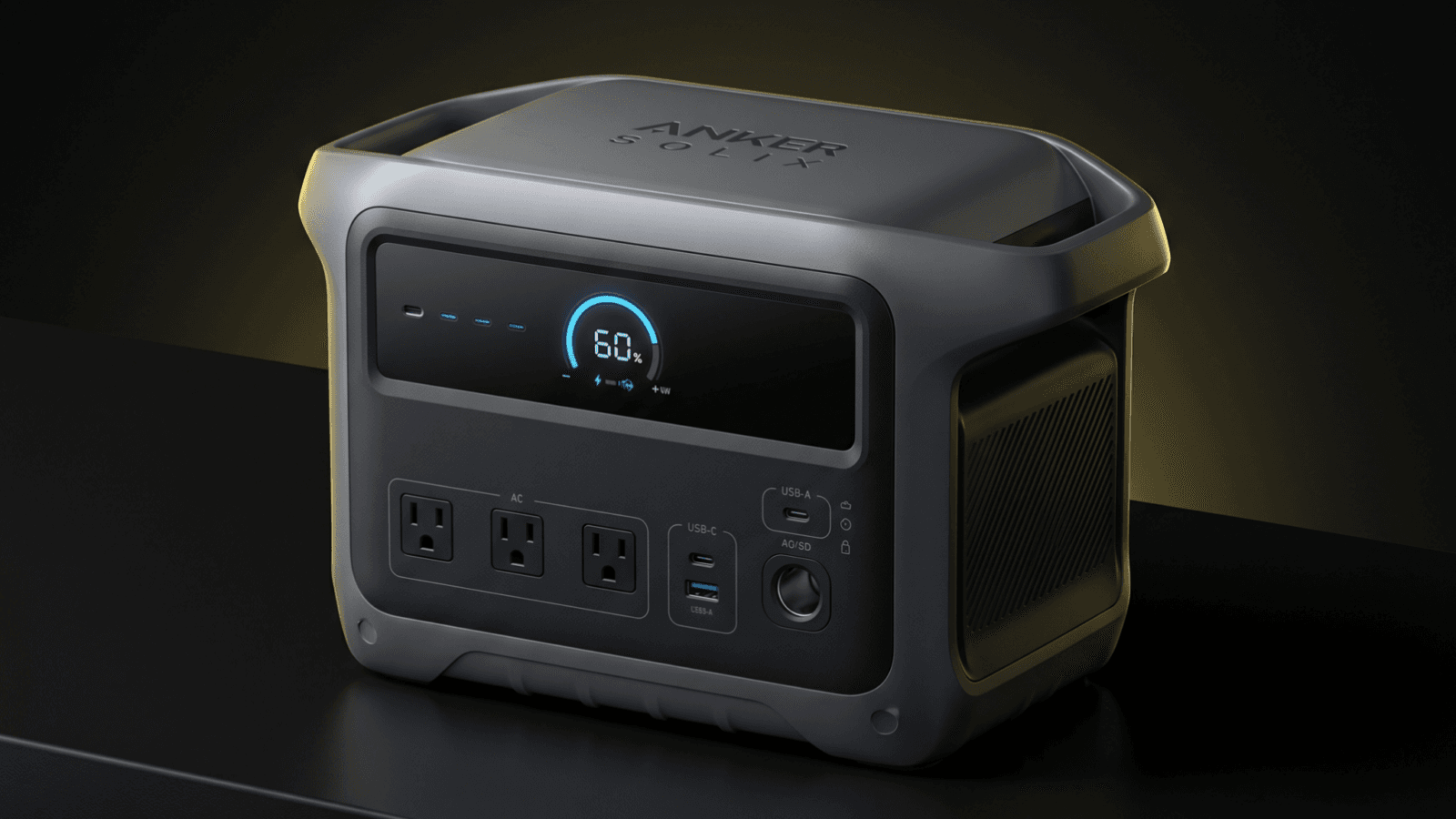
Product Matchup
Side-by-side summary
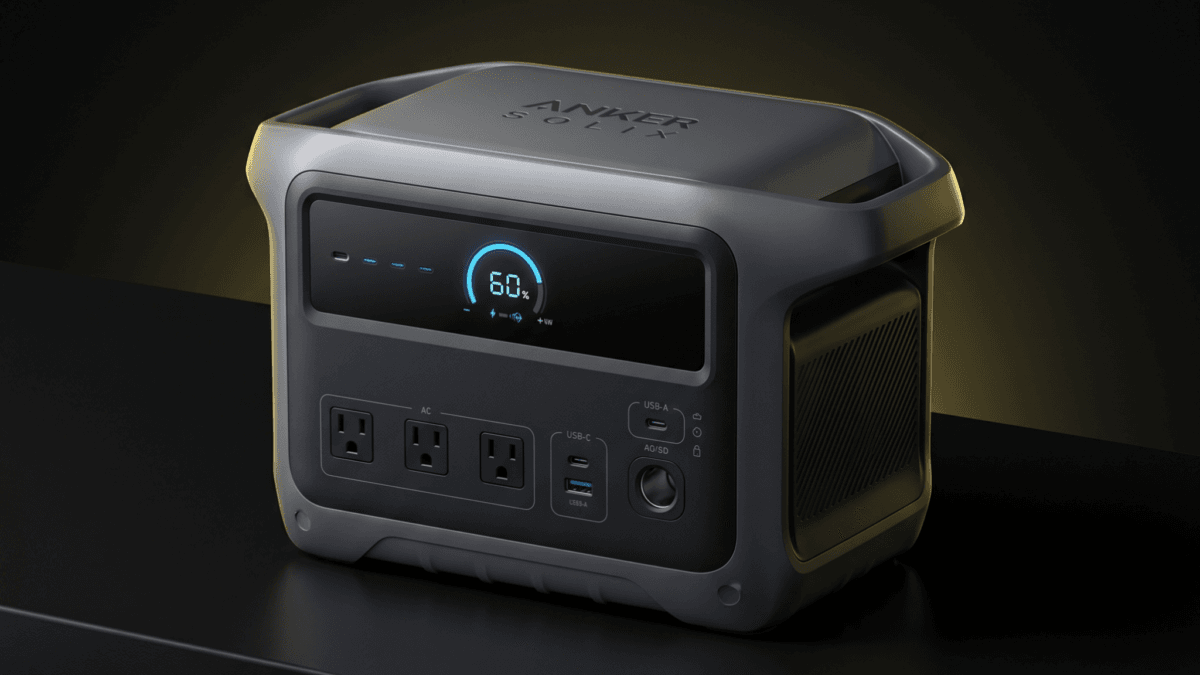
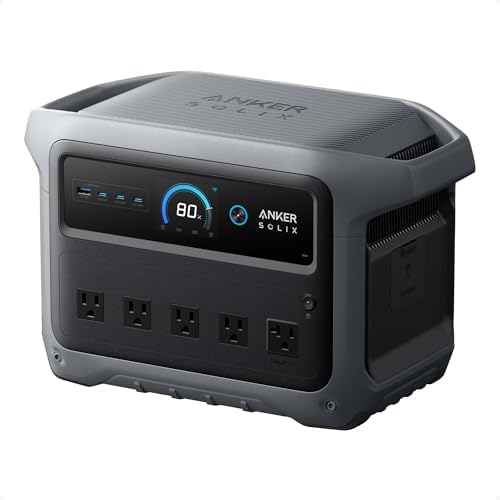
Product A
Overall Winner
Anker SOLIX C1000 Gen 2 Portable Power Station
Compact 1,024Wh portable power station with 2,000W output, 3,000W peak, 49-minute fast AC recharge, 600W solar input, and 10 ms UPS support for home backup, camping, and RV use.
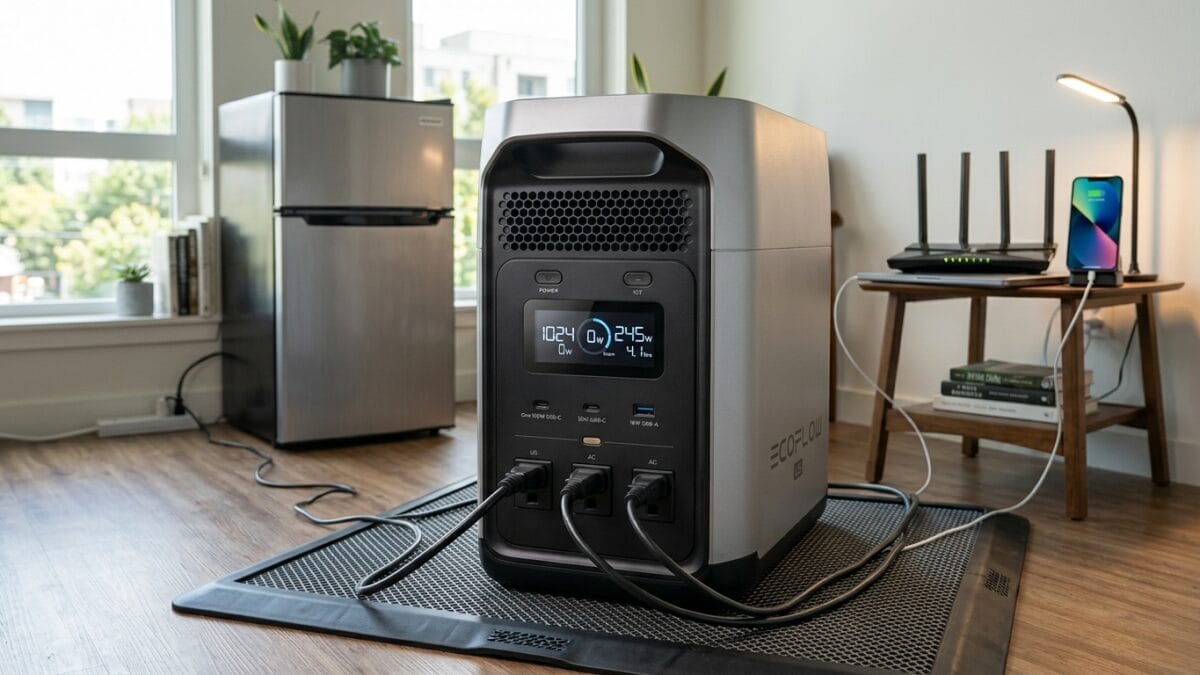
Product B
EcoFlow DELTA 3 Classic Portable Power Station
A fixed-capacity 1,024Wh LiFePO4 portable power station with 1,800W AC output, fast charging, 500W solar input, 10ms UPS support, and clear limits for longer outages.
Spec Comparison
Core numbers
| Spec | Anker SOLIX C1000 Gen 2 Portable Power Station | EcoFlow DELTA 3 Classic Portable Power Station |
|---|---|---|
| Capacity | 1024 Wh | 1024 Wh |
| AC Output | 2000 W | 1800 W |
| Solar Input | 600 W | 500 W |
This article may contain affiliate links. If you buy through these links, PowerLabPro may earn a commission at no extra cost to you. As an Amazon Associate I earn from qualifying purchases.
C1000 Gen 2 vs EcoFlow DELTA 3 Classic bottom line: Anker is the stronger hardware choice for buyers who want higher normal AC output, a faster manufacturer-stated full charge, more solar input, and slightly lower weight. EcoFlow remains a credible choice for a measured 1,800W load plan when its app ecosystem, selected-load X-Boost support, and warranty-registration path matter more. Both stations use 1,024Wh LiFePO4 batteries, both list a 10ms UPS transfer, and neither exact model has a published expansion-battery path.
The C1000 Gen 2 vs EcoFlow DELTA 3 Classic decision is not a simple contest between two headline wattage figures. The practical differences become clearer after separating battery capacity, normal output, temporary startup behavior, charging conditions, solar recovery, port layout, weight, and ecosystem. A buyer who compares only the largest number on a retailer page can choose a station that starts the load but does not provide the required runtime.
Research note: This C1000 Gen 2 vs EcoFlow DELTA 3 Classic comparison is research-led and uses current manufacturer-listed U.S. specifications, verified PowerLabPro Product records, official product pages, and buyer-fit analysis. PowerLabPro has not performed hands-on or laboratory testing of either station. Confirm the current manual, selected retailer bundle, included cables, warranty-registration steps, and every connected-device requirement before purchase.
Quick decision: In C1000 Gen 2 vs EcoFlow DELTA 3 Classic, choose Anker for the stronger combination of 2,000W normal output, 600W solar input, a 49-minute full-charge mode under stated conditions, and 24.9 lb weight. Choose EcoFlow when 1,800W is enough and its controls, selected-load X-Boost feature, and app-based warranty extension fit your plan. Choose neither when the requirement includes 240V equipment, whole-home expectations, future battery expansion, or sustained high-watt runtime.
Table of Contents

C1000 Gen 2 vs EcoFlow DELTA 3 Classic: category winners
| Category | Winner | Why it matters |
|---|---|---|
| Overall compact hardware | Anker | Higher normal output, higher solar input, faster stated full charge, and slightly lower weight. |
| Battery capacity | Tie | Both list 1,024Wh LiFePO4 batteries. |
| Continuous output | Anker | 2,000W compared with EcoFlow’s 1,800W. |
| Portability | Practical tie | Anker is about 1.8 lb lighter, but both still require deliberate handling. |
| Solar input | Anker | 600W maximum compared with EcoFlow’s 500W maximum. |
| App ecosystem | Buyer-specific | Both provide monitoring and controls; EcoFlow adds scheduled and Storm Guard functions, while Anker emphasizes charging and Time-of-Use control. |
| Value | Tie | A current bundle, seller, warranty, accessory, and price comparison is required. |
The overall C1000 Gen 2 vs EcoFlow DELTA 3 Classic winner is Anker only for buyers who can use its specification advantages. A household running a router, laptop, lights, and a modest refrigerator may never need the extra 200W. EcoFlow can still be the better ownership choice when the user already prefers its app, has compatible accessories, or values its warranty-registration path. A winner field should narrow the decision, not imply one product is best for everyone.
Verified specifications and buyer meaning
The verified C1000 Gen 2 vs EcoFlow DELTA 3 Classic specifications below describe the exact U.S. base units tied to the PowerLabPro Product records and current Amazon identities. They should not be transferred to a previous generation, a Plus model, a European variant, or a retailer bundle that changes the accessory package.
| Decision point | Anker SOLIX C1000 Gen 2 | EcoFlow DELTA 3 Classic |
|---|---|---|
| Capacity and chemistry | 1,024Wh LiFePO4 | 1,024Wh LiFePO4 |
| Continuous AC output | 2,000W | 1,800W |
| Temporary output | 3,000W peak | 3,600W surge; X-Boost for selected compatible loads up to 2,600W |
| AC charging | 49 minutes to full in app-enabled UltraFast mode under stated conditions | 0–80% in 45 minutes and full in about 60 minutes under stated conditions |
| Solar input | 600W maximum | 500W maximum |
| UPS | 10ms listed | 10ms listed |
| Weight | 24.9 lb | About 26.7 lb |
| AC outlets | 3 | 3 |
| Expansion | No published expansion path | No published expansion path |
| Amazon identity | B0FN7MSY4L | B0FQVC4RF5 |
In C1000 Gen 2 vs EcoFlow DELTA 3 Classic, capacity, output, and charging answer different questions. Capacity sets the energy budget. Continuous output limits the steady combined AC load. Surge or peak output may help during a short startup event but is not extra continuous wattage. Solar input is a compatibility ceiling, not guaranteed harvest. Charging time is conditional on temperature, settings, cable, battery state, wall voltage, and simultaneous loads.
Retail selectors can mix either station with solar panels, alternator chargers, bags, generators, or multi-unit packages. Before ordering, confirm that the selected listing still names the exact product and ASIN. The C1000 Gen 2 vs EcoFlow DELTA 3 Classic decision is valid only when both listings match the products and specifications evaluated here.
Capacity and realistic runtime
Because both stations list 1,024Wh, C1000 Gen 2 vs EcoFlow DELTA 3 Classic begins with no nameplate runtime winner. Real AC energy delivered to appliances is lower after inverter losses, internal electronics, standby draw, temperature, battery protection, and the reserve the owner keeps. Device cycling changes the result further. A refrigerator that runs intermittently behaves very differently from a heater that draws continuously.
A 100W average load uses 600Wh in six hours before losses. A 500W continuous load consumes that energy much faster. A kettle, microwave, coffee maker, toaster, induction appliance, space heater, or portable air conditioner can fit an inverter for short periods yet still empty a 1kWh battery quickly. The fact that a device can start does not answer how long it should run.
For C1000 Gen 2 vs EcoFlow DELTA 3 Classic, build a priority sequence before choosing a winner. Preserve refrigeration, communications, lighting, work, and sleep-related needs before optional entertainment or heat-producing appliances. Use the PowerLabPro sizing guide to total normal watts, startup demand, desired hours, conversion losses, and reserve.
The most defensible C1000 Gen 2 vs EcoFlow DELTA 3 Classic runtime conclusion is a tie at the battery-nameplate level. Anker’s higher output can support a larger simultaneous load, but that same heavier load can also consume the shared 1,024Wh reserve faster. The better station is the one that covers the measured plan and can be recharged before the next critical load period.
Continuous output, surge, and X-Boost
The clearest C1000 Gen 2 vs EcoFlow DELTA 3 Classic hardware advantage is Anker’s 2,000W continuous rating compared with EcoFlow’s 1,800W rating. That extra 200W can matter when a refrigerator, router, laptop, lights, and a short-use appliance operate together. It does not justify designing a setup that sits at the inverter ceiling. Leave headroom for startup events, changing appliance behavior, and another household member connecting a device.
Anker lists 3,000W peak output, while EcoFlow lists 3,600W surge. Those temporary figures do not replace the normal ratings. Motors and compressors can demand more power while starting, but compatibility depends on motor design, power factor, electronic controls, temperature, cord length, and simultaneous loads. A larger surge number is not a universal promise that every refrigerator, freezer, pump, tool, or air conditioner will start.
EcoFlow’s X-Boost supports selected devices rated up to 2,600W by changing how power is delivered. It is not a 2,600W continuous inverter upgrade. In C1000 Gen 2 vs EcoFlow DELTA 3 Classic, use 1,800W as EcoFlow’s primary design limit unless both EcoFlow and the appliance documentation support the exact setup. Simple resistive loads may tolerate X-Boost behavior, while motors, compressors, medical equipment, sensitive electronics, and precision tools may not.
For buyers whose combined normal loads approach 1,800W, C1000 Gen 2 vs EcoFlow DELTA 3 Classic favors Anker. For buyers whose measured essential list stays comfortably below that figure, EcoFlow’s lower normal rating may not create a meaningful limitation. Output should be treated as a fit question, not as a reason to run unnecessary devices.
AC charging and solar recovery
Charging is another area where C1000 Gen 2 vs EcoFlow DELTA 3 Classic favors Anker on the published specifications. Anker states that its app-enabled UltraFast mode can recharge the C1000 Gen 2 from empty to full in 49 minutes at up to 1,600W under stated conditions. The charging mode, standard cable, wall circuit, battery state, and cell temperature all affect the result.
EcoFlow states that the DELTA 3 Classic can reach 80% in 45 minutes and full charge in about 60 minutes with up to 1,400W AC input under stated conditions. The C1000 Gen 2 vs EcoFlow DELTA 3 Classic difference is small when a buyer needs only enough energy for the next short load period, but Anker has the stronger full-charge specification. Either charging mode requires a suitable wall circuit. Avoid damaged outlets, overloaded power strips, and undersized extension cords.
Solar also gives Anker an advantage in C1000 Gen 2 vs EcoFlow DELTA 3 Classic, with a 600W published ceiling compared with EcoFlow’s 500W. These are maximum input specifications, not guaranteed daily recovery. Panel voltage, current, connector type, wiring, shade, clouds, temperature, angle, dirt, cable loss, and battery state determine actual harvest.
A sound C1000 Gen 2 vs EcoFlow DELTA 3 Classic solar decision compares realistic daily production with daily load consumption. If priority loads consume 800Wh and the array harvests only 350Wh, the battery still loses energy each day. Preserve energy for overnight use and maintain a second charging route when the station is part of an outage plan.
UPS and home-office backup
Both manufacturers list a 10ms UPS transfer, so C1000 Gen 2 vs EcoFlow DELTA 3 Classic does not have a clear transfer-time winner. That specification can be useful for many routers, monitors, laptops, desktops, and ordinary consumer electronics, but it is not a universal compatibility certificate. Sensitive servers, network storage, medical equipment, laboratory devices, security systems, and equipment with strict power-quality requirements may need a dedicated certified UPS.
For an ordinary home office, either station has ample normal output for a measured modem, router, laptop, monitor, and phone-charging setup. In C1000 Gen 2 vs EcoFlow DELTA 3 Classic, Anker’s Product record lists two 140W USB-C connections plus a lower-power USB-C port, while EcoFlow lists one 100W and one 30W USB-C port. The better port layout depends on the actual devices and cables, not the total number of sockets alone.
Test the complete C1000 Gen 2 vs EcoFlow DELTA 3 Classic setup before relying on it. Connect the actual equipment, allow the system to stabilize, and perform a controlled interruption of wall power. Confirm that the devices remain on, the battery does not overload, and the charging arrangement behaves as expected. Keep a separate backup method for life-safety, medical, security, and data-critical equipment.
Ports, portability, and storage
Portability is close in C1000 Gen 2 vs EcoFlow DELTA 3 Classic. Anker weighs 24.9 lb, while EcoFlow lists approximately 26.7 lb. The 1.8 lb difference makes Anker the nominal winner, but it is not large enough to define the decision for every buyer. Handle shape, storage dimensions, stairs, vehicle loading, grip strength, and the path from storage to the intended room can matter more.
Both models list three AC outlets. That is enough for a focused plan but less flexible than stations with more receptacles. In a C1000 Gen 2 vs EcoFlow DELTA 3 Classic setup, do not solve an outlet shortage with overloaded splitters. Use correctly rated accessories, keep the combined load inside the continuous-output limit, and route cords away from water, doors, heat, children, and walking paths.
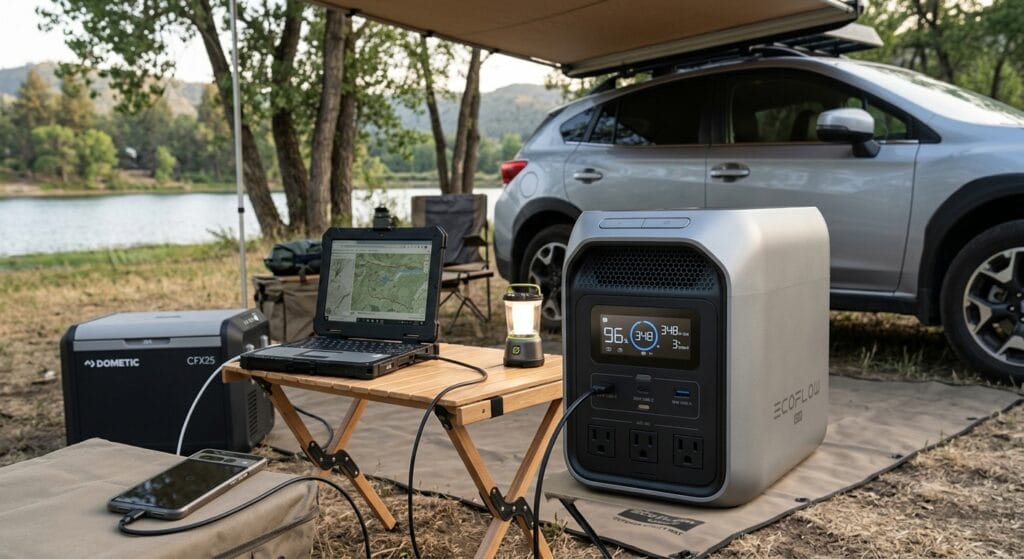
Choose a dry, stable, ventilated storage location before an outage. The C1000 Gen 2 vs EcoFlow DELTA 3 Classic choice should account for the complete carry path, not only the specification-sheet weight. Keep the station where it can be reached without improvising long cable runs, do not cover it while charging or supplying a substantial load, and secure it during vehicle transport.
Fixed capacity and ecosystem choice
Neither current U.S. product page lists an expansion-battery path for these exact models. The C1000 Gen 2 vs EcoFlow DELTA 3 Classic decision therefore compares two fixed 1,024Wh systems. That simplicity suits renters, campers, remote workers, and households with a narrow essential-load list. It is a poor fit for buyers who already expect their backup plan to grow into several days of refrigeration, sustained heating support, or several large appliances.
Fast charging does not remove the fixed-capacity limitation. During a long outage, the grid may remain unavailable, solar may underperform, and vehicle charging may not be practical. For C1000 Gen 2 vs EcoFlow DELTA 3 Classic, the relevant planning question is the longest realistic period between dependable charging opportunities. If the measured loads consume most of 1,024Wh in a few hours, begin with a larger or expandable platform.
The ecosystem decision focuses on controls and compatible accessories. Anker provides app monitoring, charging controls, and Time-of-Use functions. EcoFlow provides Wi-Fi and Bluetooth communication, energy monitoring, scheduled tasks, and Storm Guard functions. In C1000 Gen 2 vs EcoFlow DELTA 3 Classic, those controls can improve preparation and charging habits, but they do not increase capacity, guarantee remote access during an outage, or make an unsuitable device compatible.
Home outage and refrigerator fit
Both stations can support many household refrigerators when compressor startup demand and ordinary running load fit. The C1000 Gen 2 vs EcoFlow DELTA 3 Classic comparison cannot promise a universal refrigerator runtime. Room temperature, door openings, defrost cycles, appliance age, food temperature, inverter losses, reserve, and other connected devices change the result.
Anker’s higher continuous rating provides more headroom for another moderate load. EcoFlow’s higher listed surge figure may help some starts, but startup behavior remains device-specific. For C1000 Gen 2 vs EcoFlow DELTA 3 Classic, use a plug-in energy meter where appropriate, minimize door openings, cool food before expected severe weather, and preserve a shutdown reserve. Read the PowerLabPro refrigerator backup runtime guide before relying on either model for food preservation.
Neither product connects safely to home wiring through a homemade cord or a backfed receptacle. The C1000 Gen 2 vs EcoFlow DELTA 3 Classic models are portable 120V stations, not automatic whole-home systems. Plug approved appliances directly into the station, or use code-compliant transfer equipment designed and installed for the application. They do not supply 240V equipment such as many well pumps, electric ranges, dryers, or central air conditioners.
Who should choose Anker
Choose Anker in C1000 Gen 2 vs EcoFlow DELTA 3 Classic when the plan benefits from 2,000W continuous output, a 600W solar ceiling, a 49-minute full-charge mode under stated conditions, slightly lower weight, and multiple high-output USB-C connections. It is strongest for apartment outages, home-office continuity, refrigerator-plus-essentials planning, camping, and mobile work where a compact unit must recover quickly.
- Best for: buyers who want the strongest compact hardware specification in this pair.
- Not ideal for: buyers who need expansion, 240V, or long high-draw runtime.
- Main advantage: higher normal output, solar input, and stated full-charge speed.
- Main drawback: the same fixed 1,024Wh capacity as EcoFlow.
- Better alternative if: EcoFlow’s app ecosystem and selected-load features matter more than the hardware margin.
Read the connected Anker SOLIX C1000 Gen 2 Product reference and Anker SOLIX C1000 Gen 2 review for model-specific details, buyer trade-offs, and alternatives.
Who should choose EcoFlow
Choose EcoFlow in C1000 Gen 2 vs EcoFlow DELTA 3 Classic when a measured 1,800W continuous plan is enough and EcoFlow’s app controls, scheduled tasks, Storm Guard functions, selected-load X-Boost support, and stated five-year warranty path are priorities. It is a balanced fixed-capacity station for short outages, home-office continuity, measured refrigerator use, camping, and mobile work.
- Best for: buyers already comfortable with EcoFlow’s controls and accessory ecosystem.
- Not ideal for: buyers who need Anker’s extra normal-output and solar headroom.
- Main advantage: a balanced feature set with Wi-Fi and Bluetooth app control.
- Main drawback: lower continuous output and solar input at the same nominal battery size.
- Better alternative if: the load plan approaches 1,800W or faster full recovery is important.
Read the connected EcoFlow DELTA 3 Classic Product reference and EcoFlow DELTA 3 Classic review for the fixed-capacity trade-off, charging conditions, ports, app features, and buyer fit.
What to verify before purchase
Before finalizing C1000 Gen 2 vs EcoFlow DELTA 3 Classic, verify the exact retailer identities, the real load list, the startup behavior of motors or compressors, and every charging route. The comparison is only as reliable as the exact products and use case being evaluated.
| Verify | Why it matters |
|---|---|
| Exact ASIN and bundle | Retail selectors can switch to a solar kit, accessory package, multi-unit pack, or adjacent model. |
| Combined normal watts | The total sustained load must remain within 2,000W for Anker or 1,800W for EcoFlow. |
| Startup behavior | Refrigerators, pumps, compressors, and tools may briefly demand much more than their running labels. |
| Desired runtime | Include losses, cycling, temperature, standby use, and reserve. |
| Wall-circuit capacity | High-speed charging can place a substantial load on the circuit. |
| Solar compatibility | Check voltage, current, connector, wiring, and the 600W or 500W ceiling. |
| UPS tolerance | Test the exact electronics with the listed 10ms transfer. |
| Warranty registration | Confirm the current regional terms and any app-registration deadline. |
| Carry and storage path | Plan for weight, dry placement, ventilation, and secure transport. |
For general emergency preparation, review Ready.gov power-outage guidance. Never backfeed a household receptacle, use damaged cables, block ventilation, expose the station to water, or treat a portable battery as a substitute for required transfer equipment, professional electrical design, or dedicated life-safety backup.
FAQ
Which one has more battery capacity?
In C1000 Gen 2 vs EcoFlow DELTA 3 Classic, neither has more nameplate capacity. Both list 1,024Wh. Runtime differences depend on load behavior, conversion efficiency, temperature, settings, standby draw, and reserve rather than nominal capacity.
Which one has higher continuous output?
For C1000 Gen 2 vs EcoFlow DELTA 3 Classic, Anker lists the higher continuous output at 2,000W. EcoFlow lists 1,800W. EcoFlow’s surge and X-Boost figures do not replace its normal continuous rating.
Which one charges faster?
In C1000 Gen 2 vs EcoFlow DELTA 3 Classic, Anker has the faster stated full-charge figure: 49 minutes in app-enabled UltraFast mode under stated conditions. EcoFlow lists 0–80% in 45 minutes and a full charge in about 60 minutes under stated conditions.
Which one is better for solar?
For C1000 Gen 2 vs EcoFlow DELTA 3 Classic, Anker has the higher published solar ceiling at 600W, compared with EcoFlow’s 500W. Actual harvest depends on compatible panels, sunlight, shade, temperature, angle, wiring, and battery state.
Are either of these expandable?
The current U.S. product information does not list an expansion-battery path for either exact model in C1000 Gen 2 vs EcoFlow DELTA 3 Classic. Treat both as fixed 1,024Wh platforms unless current official documentation changes.
Can either run a refrigerator?
Both products in C1000 Gen 2 vs EcoFlow DELTA 3 Classic may run many refrigerators when compressor startup and normal demand fit. Runtime varies with cycling, room temperature, door openings, defrost behavior, appliance age, conversion losses, reserve, and other connected loads.
Final verdict
The final C1000 Gen 2 vs EcoFlow DELTA 3 Classic verdict favors Anker for the buyer who wants the most normal AC output, solar input, full-charge speed, and portability from these two fixed 1kWh stations. Its 2,000W continuous rating, 600W solar ceiling, 49-minute full-charge claim, and 24.9 lb weight create a meaningful hardware advantage.
EcoFlow remains a good C1000 Gen 2 vs EcoFlow DELTA 3 Classic choice when 1,800W is enough and its app ecosystem, selected-load X-Boost support, and warranty-registration path matter more. It matches Anker on nominal battery capacity and listed UPS transfer time, but it gives up some normal output, solar input, full-charge speed, and portability.
Choose neither until the load list, desired hours, startup behavior, recharge path, and storage plan are verified. The C1000 Gen 2 vs EcoFlow DELTA 3 Classic comparison covers two useful short-outage stations, but neither is expandable, neither supplies 240V, and neither turns 1,024Wh into long-runtime whole-home power.
Winners by Category
| Overall | Anker SOLIX C1000 Gen 2: Fast 1kWh Backup |
|---|---|
| Value | Tie |
| Portability | Tie |
| Output | Anker SOLIX C1000 Gen 2: Fast 1kWh Backup |
| Battery | Tie |
Final Verdict
Choose Anker for higher continuous output, more solar input, faster manufacturer-stated full charging, and slightly lower weight. Choose EcoFlow when 1,800W is enough and its app controls, selected-load X-Boost support, and warranty-registration path fit the buyer better. Both are fixed 1,024Wh systems, not 240V or whole-home solutions.