
Comparison
Anker SOLIX F3000 vs EcoFlow DELTA Pro 3: 120V Flexibility or Native 240V?
Anker SOLIX F3000 vs EcoFlow DELTA Pro 3 compares a lighter 3,072Wh 120V and TT-30 platform with a larger 4,096Wh native 120/240V system for home, RV, solar, and off-grid buyers.
Product Matchup
Side-by-side summary
Product A
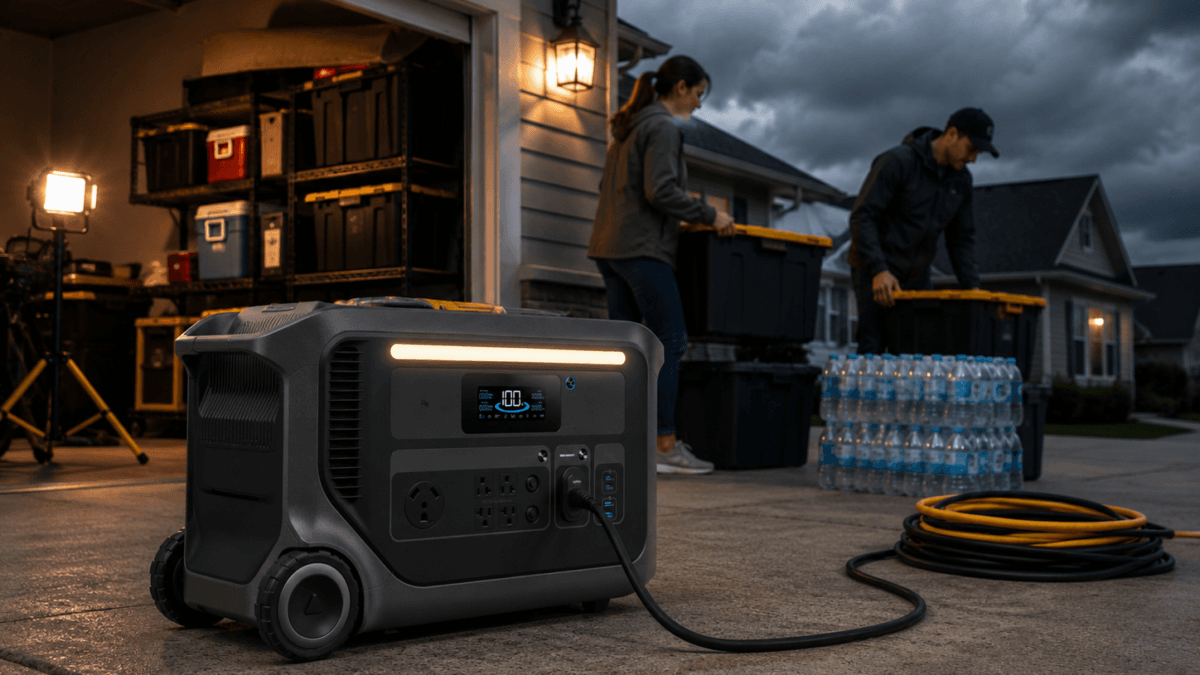
Anker SOLIX F3000 Portable Power Station
A 3,072Wh LFP rolling portable power station for essential home backup, RV power, solar charging, and expandable outage planning.
Product B
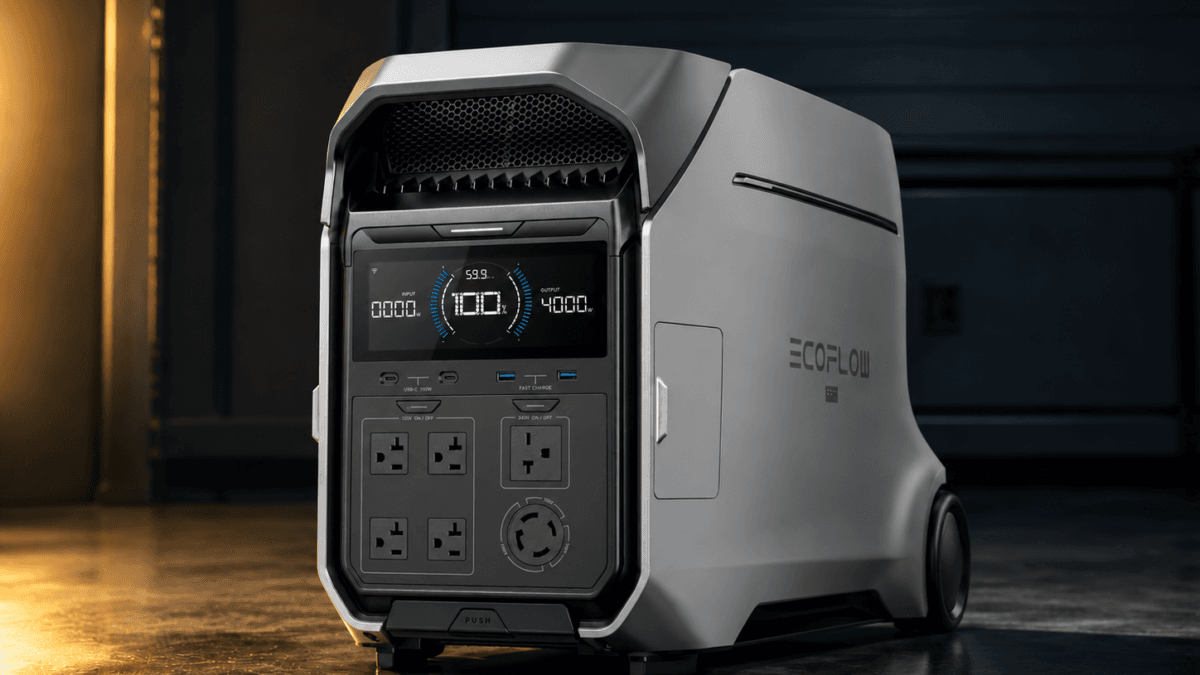
EcoFlow DELTA Pro 3
The EcoFlow DELTA Pro 3 power station delivers 4096Wh LiFePO4 capacity, 4000W output, and single-unit 120V/240V support with up to 2600W solar input. Built for whole-home essential backup, well pumps, and transfer switch setups, expandable to 48kWh.
Spec Comparison
Core numbers
| Spec | Anker SOLIX F3000 Portable Power Station | EcoFlow DELTA Pro 3 |
|---|---|---|
| Capacity | 3072 Wh | 4096 Wh |
| AC Output | 3600 W | 4000 W |
| Solar Input | 2400 W | 2600 W |
This article may contain affiliate links. If you buy through these links, PowerLabPro may earn a commission at no extra cost to you. As an Amazon Associate I earn from qualifying purchases.
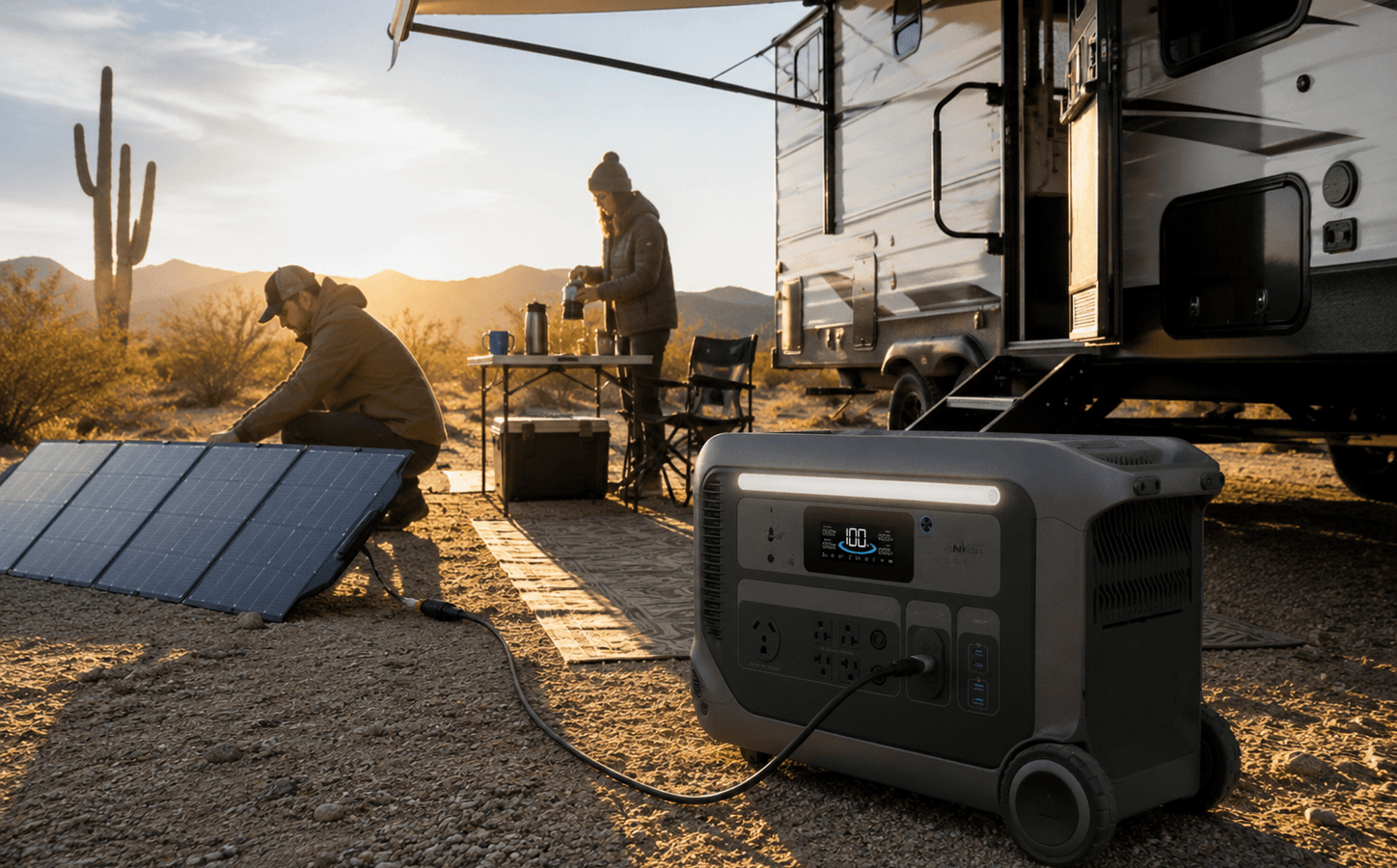
Anker SOLIX F3000 vs EcoFlow DELTA Pro 3 is a choice between a lighter 3kWh-class 120V platform and a larger native 120V/240V system. Anker starts with 3,072Wh, weighs 91.5 lb, provides a 3,600W TT-30R output path, and accepts up to 2,400W of solar input. EcoFlow starts with 4,096Wh, weighs 113.54 lb, provides 4,000W continuous output with native 120V and 240V connections, and accepts up to 2,600W of solar input.
The most important fact in Anker SOLIX F3000 vs EcoFlow DELTA Pro 3 is voltage architecture. A single Anker F3000 is a 120V station. Anker’s documented 240V configuration requires two F3000 units and the optional Double Voltage Hub. EcoFlow provides 240V output from one DELTA Pro 3. That distinction can decide the purchase before battery size, app features, or expansion enters the conversation.
This comparison is research-led and does not claim PowerLabPro hands-on testing. It uses current official manufacturer sources, verified central Product records, connected Reviews, and exact U.S. Amazon identities. Always confirm the current manuals, accessory requirements, outlet limits, charging configuration, solar voltage and current, and the electrical requirements of the actual appliance or circuit.


Table of Contents
Anker SOLIX F3000 vs EcoFlow DELTA Pro 3 quick verdict
The quick verdict in Anker SOLIX F3000 vs EcoFlow DELTA Pro 3 is straightforward when 240V is mandatory. Choose EcoFlow if you need native single-unit 240V. Choose Anker if your plan is primarily 120V and benefits from a lighter 91.5 lb chassis, a 3,600W TT-30R RV path, strong 2,400W solar input, and a 3,072Wh base battery. EcoFlow also wins base capacity at 4,096Wh and continuous total output at 4,000W.
Portability goes to Anker because it is roughly 22 lb lighter. Battery and output go to EcoFlow. Value remains a tie because current price, bundles, and accessory needs change, and a buyer who does not need single-unit 240V may rationally prefer the lighter F3000. Overall is also a tie because these products solve different electrical architectures rather than competing only on one specification.
Side-by-side specifications
| Buyer factor | Anker SOLIX F3000 | EcoFlow DELTA Pro 3 |
|---|---|---|
| Base capacity | 3,072Wh LiFePO4 | 4,096Wh LFP |
| Standard 120V output | NEMA 5-20R path up to 2,400W | 4,000W total system output, subject to outlet limits |
| RV output | TT-30R up to 3,600W | TT-30R available within 4,000W total output |
| Single-unit 240V | No | Yes |
| 240V system path | Two F3000 units plus Double Voltage Hub | Native 240V 6-20R and L14-30R connections |
| Solar input | Up to 2,400W total | Up to 2,600W total |
| Weight | 91.5 lb | 113.54 lb |
| Expansion | BP3000 expansion-battery ecosystem; larger paired systems possible | Two extra batteries per base unit; broader DELTA Pro system options |
| UPS | 20 ms listed | 10 ms listed |
The table shows why Anker SOLIX F3000 vs EcoFlow DELTA Pro 3 is not a simple bigger-number contest. The Anker can be the cleaner RV or 120V essential-load platform. EcoFlow is the cleaner single-box answer when 240V is part of the job. Start with voltage and connection type, then evaluate energy, output, solar, weight, and expansion in that order.
The single-unit 240V difference
The most important buyer distinction in Anker SOLIX F3000 vs EcoFlow DELTA Pro 3 is that one F3000 does not supply 240V. Anker’s official F3000 documentation states that a 240V configuration uses two F3000 stations and the optional Double Voltage Hub. EcoFlow’s DELTA Pro 3 provides 240V connections from a single unit. This matters for pumps, selected workshop equipment, some RV or home interfaces, and any buyer who wants one chassis rather than a paired system.
Do not treat the Anker paired 240V path as a small accessory detail. A second F3000 changes purchase cost, storage, weight, cable management, charging, and failure points. It may still be the right architecture for an Anker buyer who wants more capacity and output, but that is a different system from the single F3000 being compared here. Price and place the complete configuration before deciding that the base-unit comparison answers a 240V requirement.
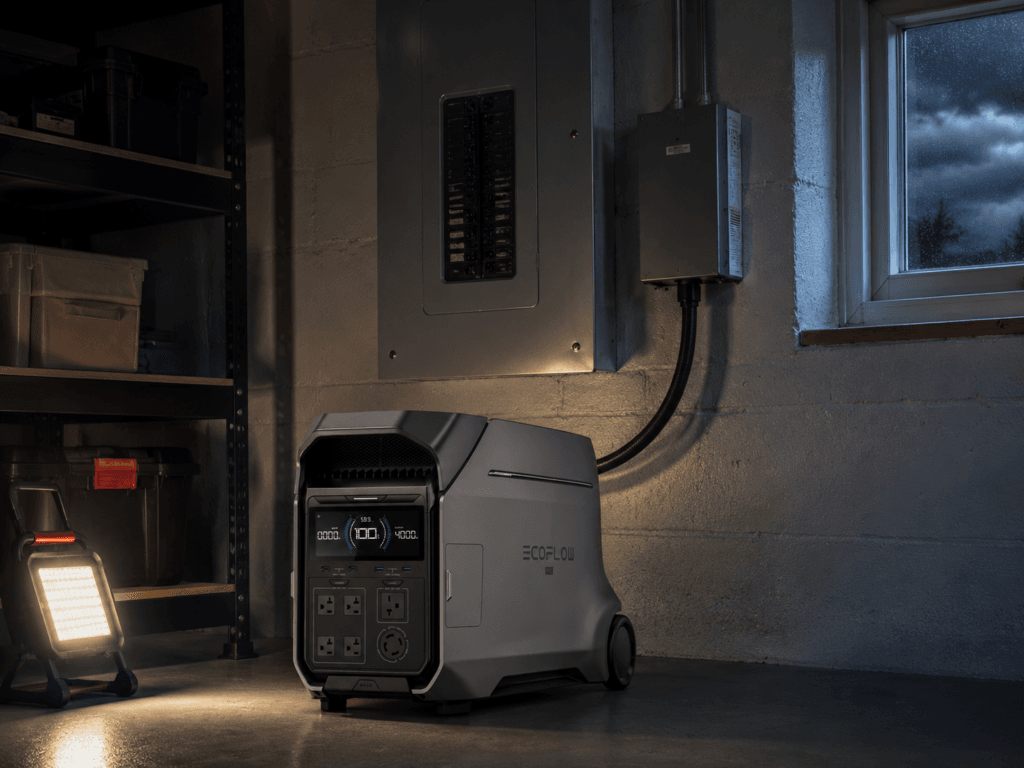
EcoFlow’s single-unit advantage does not authorize improvised household wiring. The 240V outlet, transfer equipment, cable, current, circuit design, grounding, and local electrical requirements still matter. A compatible plug is not proof that an appliance or home connection is safe. When Anker SOLIX F3000 vs EcoFlow DELTA Pro 3 reaches household wiring, use qualified electrical guidance and manufacturer-approved integration paths.
Capacity and runtime planning
EcoFlow wins base capacity in Anker SOLIX F3000 vs EcoFlow DELTA Pro 3. Its 4,096Wh battery provides 1,024Wh more nominal energy than Anker’s 3,072Wh battery. That can be a meaningful difference for overnight refrigeration, longer internet and office continuity, pumps that cycle, furnace controls, or a larger RV energy budget. It is not a fixed runtime advantage because every load and operating condition is different.
A 3,072Wh F3000 may still be the better-sized battery when the household or RV can recharge each day and does not need the extra reserve. Carrying and paying for unused energy has no buyer value. A 4,096Wh DELTA Pro 3 is stronger when the load list already proves that 3kWh is short. Both platforms can expand, so base capacity should be evaluated before assuming an extra battery is necessary.
Use the PowerLabPro sizing guide to convert the actual device list into running watts and watt-hours. In Anker SOLIX F3000 vs EcoFlow DELTA Pro 3, keep startup demand separate from daily energy. A motor may require high power briefly while consuming modest energy over a day. A resistance heater may be easy to start but consume battery energy continuously.
Continuous output and outlet limits
EcoFlow wins the output category because the DELTA Pro 3 provides 4,000W total continuous output and native 120V/240V connections. The F3000’s normal household-style NEMA 5-20R path is limited to 2,400W, while its TT-30R RV path is listed up to 3,600W. Anker also lists 7,200W surge, but surge is temporary headroom rather than a continuous rating or additional stored energy.
The outlet-specific limits are critical in Anker SOLIX F3000 vs EcoFlow DELTA Pro 3. A buyer may see 3,600W on the Anker headline and assume every household outlet can deliver it. That is not what the manufacturer specifies. Match the appliance to the exact receptacle and current limit. The EcoFlow also has outlet-specific current limits even though the overall system rating is 4,000W.
For compressors, pumps, air conditioners, power tools, or RV appliances, verify both running and startup demand. A published surge figure does not guarantee every motor will start or run normally. Some electronics also have power-quality or transfer-time requirements. Test noncritical loads before an outage and follow device-specific backup guidance for medical, life-safety, server, or data-critical equipment.
Portability and placement
Anker wins portability in Anker SOLIX F3000 vs EcoFlow DELTA Pro 3. At 91.5 lb, it is still a large rolling station, but it is meaningfully lighter than the 113.54 lb DELTA Pro 3. The difference matters when a station moves between a garage and RV, across a driveway, through a work trailer, or into a sheltered outdoor setup. Neither is appropriate for casual stair carrying.
Measure the storage and deployment path. Check ramp angle, thresholds, door width, cable reach, ventilation, and whether one person can safely position the unit. A power station that remains permanently staged can make weight less important. A product that must travel regularly may make the 22 lb Anker advantage more valuable than an extra 1,024Wh of EcoFlow battery.
Solar and charging recovery
Solar input is close in Anker SOLIX F3000 vs EcoFlow DELTA Pro 3. Anker lists up to 2,400W total solar input, split between a high-PV path up to 1,600W and a low-PV path up to 800W. EcoFlow lists up to 2,600W total, with high- and low-PV inputs. The 200W ceiling difference is less important than whether the actual array fits voltage, current, connector, and physical-space constraints.
Real solar harvest depends on shade, season, weather, panel temperature, angle, cable length, and array wiring. Never build a string from wattage alone. Open-circuit voltage can rise in cold weather, and exceeding a station’s voltage limit can damage equipment. Use the current manual and exact panel specifications. A buyer with a modest portable array may never approach either maximum input.
AC charging and generator-compatible recovery can matter more during storms. Anker documents several input paths, including standard AC and supported higher-input accessories. EcoFlow also offers multiple charging options within its ecosystem. The right Anker SOLIX F3000 vs EcoFlow DELTA Pro 3 recovery plan is the one that can restore the expected daily energy use before the next discharge period without overloading the available circuit.
Expansion and ecosystem planning
Both sides of Anker SOLIX F3000 vs EcoFlow DELTA Pro 3 can grow, but expansion should follow a measured runtime need. Anker uses the BP3000 expansion-battery ecosystem and can build larger configurations, including the paired-unit 240V system. EcoFlow supports two extra batteries on one DELTA Pro 3 and larger system configurations with additional EcoFlow components. Maximum ecosystem numbers should not be confused with the base products in this article.
Buy the base station first when it already fits the load and runtime. Expansion adds batteries, cables, floor space, charging time, transport weight, and cost. Extra capacity does not increase the inverter’s base continuous rating or change an incompatible outlet into a compatible one. In a 240V decision, the Anker second-unit requirement can be more important than expansion-battery capacity.
Home backup implications
For home backup, Anker SOLIX F3000 vs EcoFlow DELTA Pro 3 should begin with selected loads. A refrigerator, freezer, router, lights, laptop work, furnace controls, television, and verified small pump may fit a carefully planned system. Central HVAC, electric water heating, ranges, dryers, or multiple high-power loads can exceed the practical energy budget even if short-duration output is technically available.
The F3000 is strongest for 120V essentials when its 3,072Wh battery and outlet-specific limits fit. The DELTA Pro 3 is stronger when a single station must support 240V as part of a properly designed setup. Neither should be connected to household wiring with improvised adapters or backfeeding. Use the correct transfer equipment and qualified guidance for any code-governed connection.
For current product limits, review Anker’s F3000 product documentation and EcoFlow’s DELTA Pro 3 specifications. For broader outage preparation, use Ready.gov power-outage guidance.
RV and off-grid implications
Anker has a strong RV argument in Anker SOLIX F3000 vs EcoFlow DELTA Pro 3 because its TT-30R output is listed up to 3,600W and the station is lighter. That can suit a compatible 120V RV shore-power plan where the owner understands converter load, air-conditioning demand, microwave use, battery charging, and appliance sequencing. It does not provide unlimited 30A campground service from a finite battery.
EcoFlow also includes a TT-30R among its 120V outputs while offering native 240V connections and a larger battery. It can be better for a fixed off-grid base, work trailer, or larger RV system where weight matters less than capacity and expansion. Solar-roof space, vehicle alternator options, generator compatibility, and daily energy use should decide more than the product’s maximum advertised capacity.
Who should choose Anker SOLIX F3000
Choose Anker in Anker SOLIX F3000 vs EcoFlow DELTA Pro 3 when the plan is fundamentally 120V, 3,072Wh is enough at the base level, TT-30R RV use is important, and lower weight improves deployment. The F3000 is particularly attractive for a buyer who wants strong solar recovery and an expansion path but does not need native single-unit 240V.
- Best for: selected 120V home essentials, compatible TT-30 RV use, solar-supported outages, and buyers who value a lighter rolling chassis.
- Not ideal for: anyone requiring 240V from one station or more than 3,072Wh without expansion.
- Main advantage: lighter weight with a useful 120V/TT-30 and solar package.
- Main trade-off: single-unit 240V is unavailable.
Read the Anker SOLIX F3000 Product reference and Anker SOLIX F3000 Review for the exact model, ASIN, specifications, and deeper alternatives.
Who should choose EcoFlow DELTA Pro 3
Choose EcoFlow in Anker SOLIX F3000 vs EcoFlow DELTA Pro 3 when one unit must provide 240V, the extra 1,024Wh of base energy matters, or 4,000W continuous total output better fits the simultaneous-load plan. It is also the stronger fit when the buyer wants the DELTA Pro expansion ecosystem and can accept the heavier 113.54 lb chassis.
- Best for: native single-unit 240V, larger base energy, higher continuous output, modular home backup, and buyers who can stage a heavier station.
- Not ideal for: frequent movement where the 22 lb weight difference matters more than added capacity.
- Main advantage: native 240V and a larger base battery.
- Main trade-off: more weight and potentially more ecosystem complexity.
Read the EcoFlow DELTA Pro 3 Product reference and EcoFlow DELTA Pro 3 Review. If a larger Anker system is under consideration, the DELTA Pro 3 vs F3800 Plus comparison is a separate decision path.
Important limitations and mistakes
The biggest mistake in Anker SOLIX F3000 vs EcoFlow DELTA Pro 3 is overlooking voltage. Do not buy one F3000 for a native 240V requirement. The second mistake is treating TT-30R or L14-30R connector ratings as proof of unlimited output. The third is confusing surge or X-Boost-type load management with continuous inverter power. The fourth is assuming battery capacity guarantees runtime.
Also avoid buying expansion hardware before the base configuration is tested, sizing solar without voltage and current checks, or relying on a general UPS transfer-time claim for a device that requires dedicated backup. Keep the stations dry and ventilated, secure them in vehicles, inspect cables, and follow the current manuals. Do not use either as a substitute for a life-safety or medically approved backup system.
Final buyer-specific recommendation
The final Anker SOLIX F3000 vs EcoFlow DELTA Pro 3 recommendation is buyer-specific. Pick Anker when 120V is enough and lower weight, TT-30R RV output, 3,072Wh capacity, and 2,400W solar input form the cleaner system. Pick EcoFlow when a single unit must provide 240V or the larger 4,096Wh battery and 4,000W continuous output fit the load better.
Overall remains a tie because the better product changes with the voltage requirement. If 240V is mandatory, EcoFlow is the practical winner for a one-unit purchase. If the plan is 120V and mobility matters, Anker can be the smarter buy. Write down the exact voltage, outlet, running watts, startup demand, daily watt-hours, desired reserve, recharge source, and storage route before choosing.
FAQ
Does one F3000 provide 240V?
No. Anker states that one F3000 provides 120V. Its documented 240V configuration uses two F3000 units plus the Double Voltage Hub.
Which has more capacity?
EcoFlow DELTA Pro 3 has 4,096Wh versus 3,072Wh for Anker F3000, a 1,024Wh base-capacity advantage.
Which is better for RV use?
Anker is attractive for a compatible 120V TT-30 plan because it is lighter and lists up to 3,600W on that path. EcoFlow also has TT-30R and offers more battery capacity, so the better RV fit depends on load, recharge, storage, and whether native 240V is useful.
Winners by Category
| Overall | Tie |
|---|---|
| Value | Tie |
| Portability | Anker SOLIX F3000: Powerful 3kWh Backup |
| Output | EcoFlow DELTA Pro 3 Power Station |
| Battery | EcoFlow DELTA Pro 3 Power Station |
Final Verdict
Choose the Anker SOLIX F3000 when a lighter 91.5 lb 3,072Wh platform, TT-30R RV output, up to 2,400W solar input, and 120V-focused backup fit the plan. Choose the EcoFlow DELTA Pro 3 when a 4,096Wh base battery, 4,000W continuous native 120V/240V output, 2,600W solar input, and broader modular expansion matter more than the extra weight. A single F3000 does not provide 240V, so buyers who truly need 240V from one station should favor the EcoFlow.