
Comparison
DJI Power 2000 vs EcoFlow DELTA 2 Max: Higher Output or More Flexible Expansion?
DJI Power 2000 vs EcoFlow DELTA 2 Max compares two 2,048Wh LiFePO4 power stations for 3,000W vs 2,400W output, solar charging, expansion, portability, home backup, RV use, and mobile work.
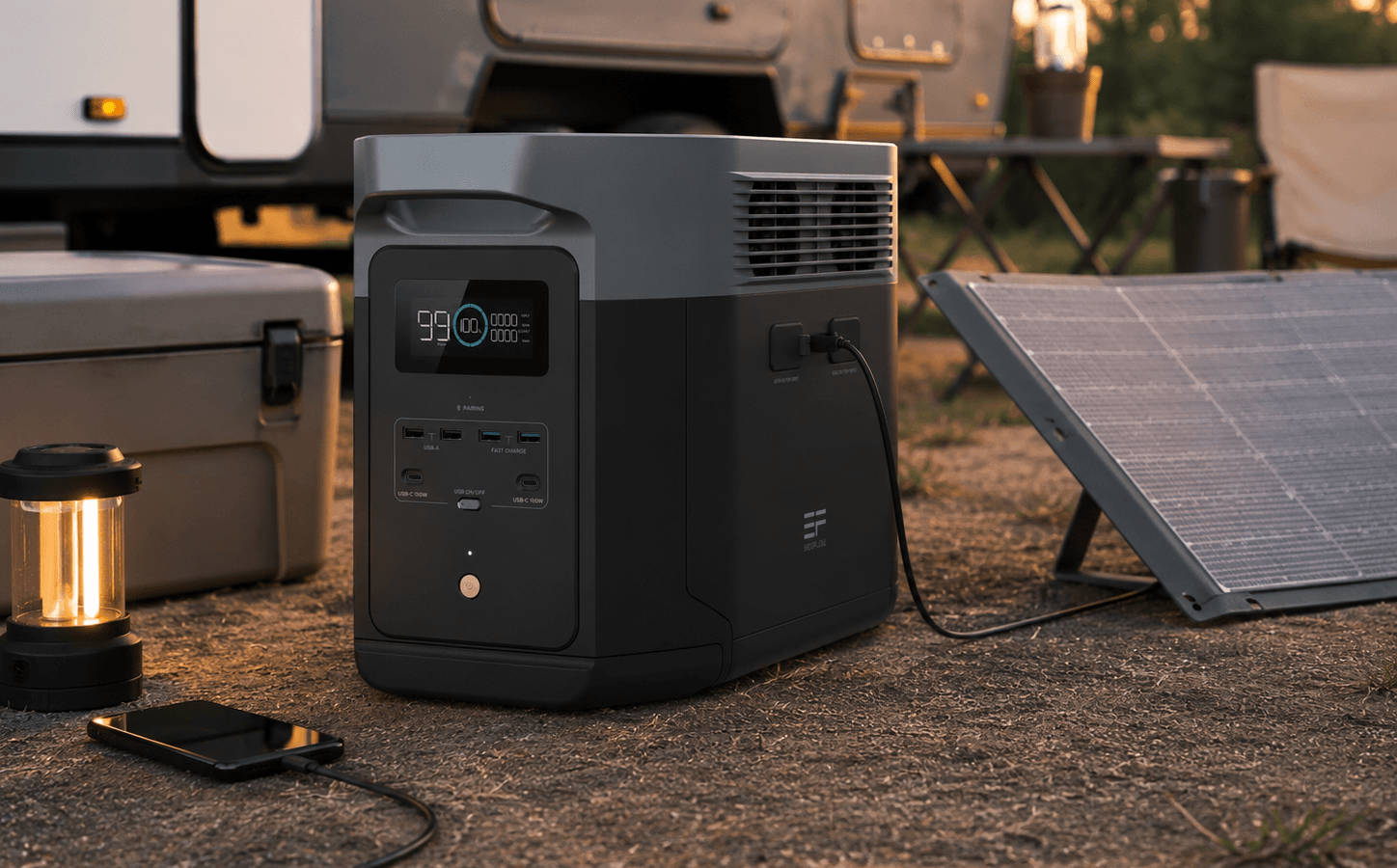
Product Matchup
Side-by-side summary
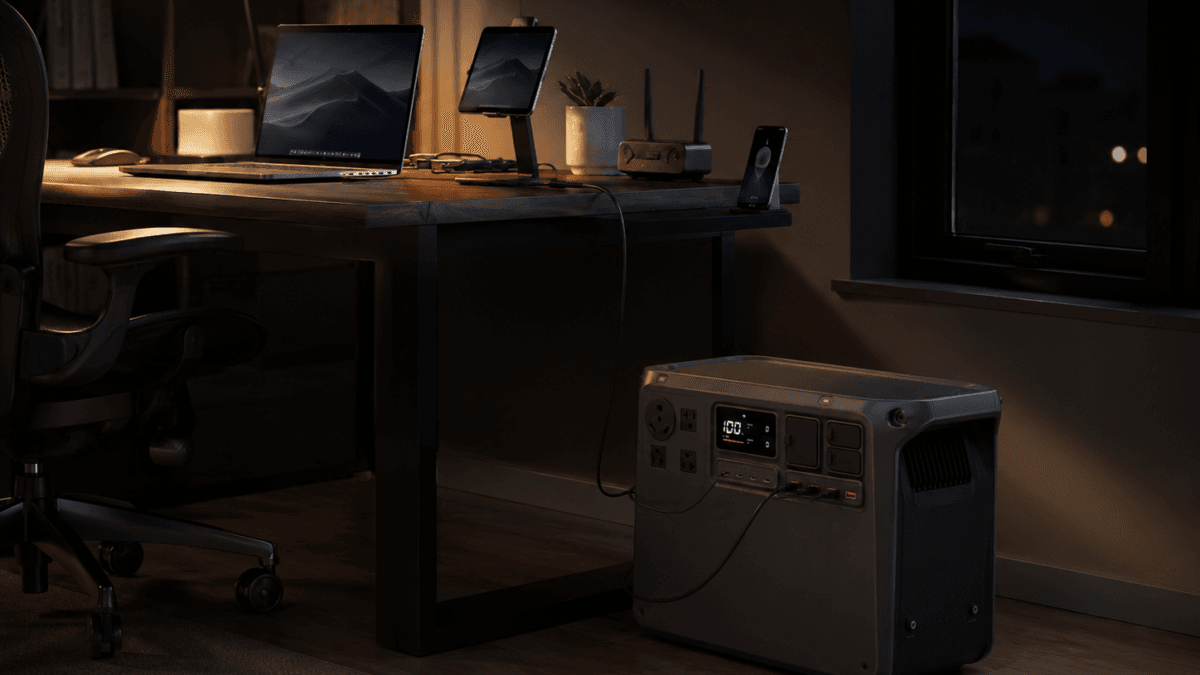
Product A
DJI Power 2000
A 2,048Wh LiFePO4 portable power station with 3,000W continuous AC output, four AC outlets, high-output USB-C ports, UPS capability, accessory-dependent solar and vehicle charging, and expansion up to 22,528Wh.
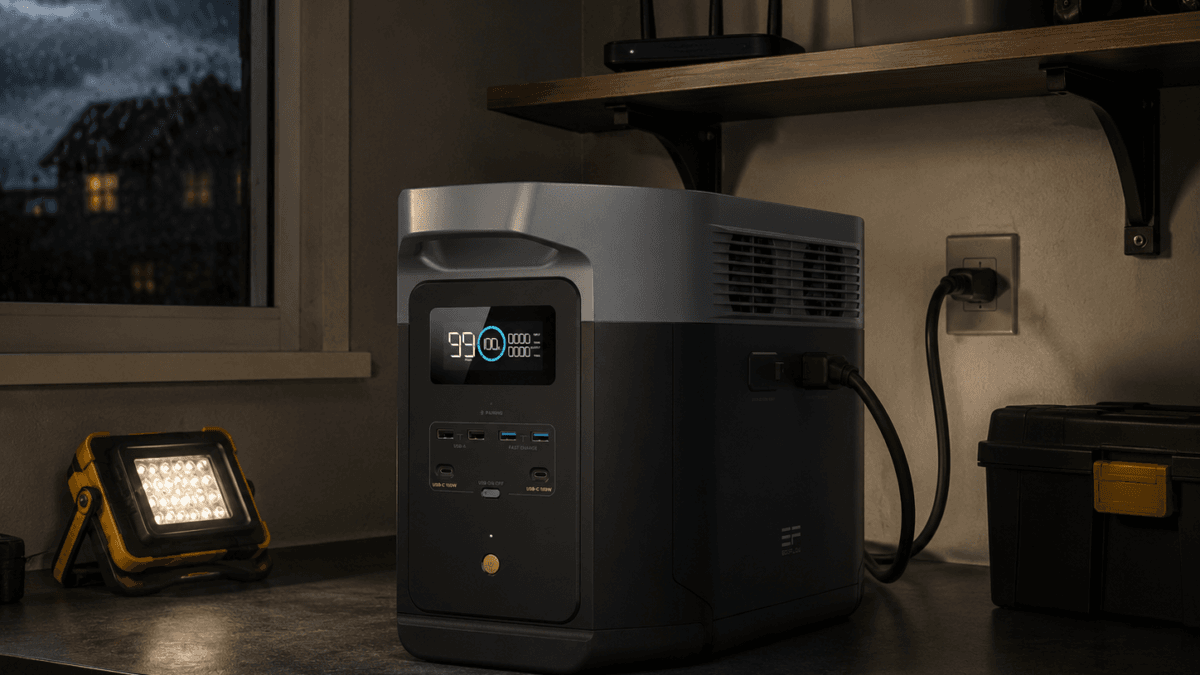
Product B
EcoFlow DELTA 2 Max
The EcoFlow DELTA 2 Max portable power station delivers 2048Wh LiFePO4 capacity, 2400W output, and fast 43-minute charging. Built for expandable home backup, RV solar use, and buyers who need room to grow.
Spec Comparison
Core numbers
| Spec | DJI Power 2000 | EcoFlow DELTA 2 Max |
|---|---|---|
| Capacity | 2048 Wh | 2048 Wh |
| AC Output | 3000 W | 2400 W |
| Solar Input | 1800 W | 1000 W |
This article may contain affiliate links. If you buy through these links, PowerLabPro may earn a commission at no extra cost to you. As an Amazon Associate I earn from qualifying purchases.
DJI Power 2000 vs EcoFlow DELTA 2 Max compares two 2,048Wh LiFePO4 power stations that look similar on battery capacity but separate quickly when output, charging accessories, expansion, and ecosystem fit are considered. DJI supplies 3,000W continuous AC output in a roughly 48.5 lb chassis. EcoFlow supplies 2,400W continuous output in a roughly 50 lb chassis and supports two compatible Smart Extra Batteries for up to 6,144Wh.
This DJI Power 2000 vs EcoFlow DELTA 2 Max article is a research-led buyer comparison, not a hands-on test. PowerLabPro used current manufacturer specifications, verified central Product records, connected Reviews, and the exact U.S. affiliate identities. The goal is to explain which 2kWh platform fits which buyer without manufacturing a universal winner from temporary prices, retailer ratings, or unsupported performance claims.


Table of Contents
DJI Power 2000 vs EcoFlow DELTA 2 Max quick verdict
The quick verdict in DJI Power 2000 vs EcoFlow DELTA 2 Max is that DJI wins continuous AC output while battery capacity and portability are effectively tied. Both start at 2,048Wh. DJI is listed at about 48.5 lb and EcoFlow at about 50 lb, too small a difference to call a meaningful portability win. DJI’s 3,000W continuous output gives it 600W more inverter headroom than EcoFlow’s 2,400W rating.
EcoFlow remains compelling for buyers who prefer its established app, solar, and extra-battery ecosystem. DJI is especially strong for creator, field-production, drone, and high-output mobile-work users who can make use of its SDC ports and compatible accessories. Overall remains a tie because a household or RV buyer may value EcoFlow’s ecosystem while a production or higher-output buyer may value DJI’s 3,000W inverter.
Side-by-side specifications
| Buyer factor | DJI Power 2000 | EcoFlow DELTA 2 Max |
|---|---|---|
| Battery capacity | 2,048Wh LFP | 2,048Wh LFP |
| Continuous AC output | 3,000W | 2,400W |
| Solar input | Accessory-dependent; up to 1,800W through compatible DJI solar/car charger path | Up to 1,000W dual-MPPT solar input |
| Weight | About 48.5 lb | About 50 lb |
| Expansion | DJI lists systems up to 22,528Wh with compatible Expansion Battery 2000 units | Up to 6,144Wh with two Smart Extra Batteries |
| USB-C | Four USB-C ports, including two up to 140W | Two USB-C ports up to 100W each |
| Special ecosystem | Two SDC ports for compatible DJI charging, expansion, solar, and vehicle accessories | EcoFlow app, Smart Extra Batteries, dual MPPT, broad DELTA ecosystem |
| Best fit | Higher-output mobile work and DJI-centric setups | Expandable 2kWh home, RV, and off-grid use |
The table makes DJI Power 2000 vs EcoFlow DELTA 2 Max unusually clean: battery size does not decide the purchase because it is equal. Instead, ask how much simultaneous AC output is needed, how the system will recharge, whether extra batteries are likely, which ports reduce adapter clutter, and whether the buyer will actually use the DJI or EcoFlow ecosystem.
Equal 2,048Wh capacity, different energy strategies
Battery capacity is a tie in DJI Power 2000 vs EcoFlow DELTA 2 Max. Both base units store 2,048Wh. That does not mean they will deliver identical runtime with every load. Inverter efficiency, standby draw, temperature, battery settings, DC versus AC conversion, cycling appliances, and connected accessories affect usable energy. A 2kWh nameplate should be treated as the starting energy budget, not a runtime guarantee.
For home backup, a disciplined 2kWh plan may cover a router, modem, phones, laptop work, LED lights, selected refrigerator or freezer operation after startup verification, and short appliance use. For an RV, the same battery may support a compressor fridge, electronics, lights, a fan, and controlled cooking or tool use. High-watt heating and cooking can deplete either battery quickly even though the inverter can technically run the load.
Use the PowerLabPro sizing guide before assuming a 2,048Wh battery is enough. In DJI Power 2000 vs EcoFlow DELTA 2 Max, calculate average watts and required hours separately from startup demand. If the base battery is short, then expansion becomes relevant. If it already meets the target, extra batteries may add cost and weight without solving a real problem.
Output and high-draw load planning
DJI wins continuous output in DJI Power 2000 vs EcoFlow DELTA 2 Max. Its 3,000W rating provides 600W more sustained inverter headroom than EcoFlow’s 2,400W rating. That can matter when several devices run together or when a buyer wants more space below the inverter ceiling for a microwave, coffee maker, tool, production light, battery charger, or other higher-draw equipment.
Higher output does not increase stored energy. A 2,000W appliance can fit under either inverter rating but may consume much of a 2,048Wh battery in a short period. The smartest system sequences high-draw loads and protects energy for refrigeration, communications, lighting, or work. Do not treat 3,000W as permission to run every connected device simultaneously for hours.
EcoFlow’s 2,400W rating remains sufficient for many home, RV, and off-grid plans. If the heaviest real combination stays below 2,400W, DJI’s extra inverter capacity may never produce buyer value. In DJI Power 2000 vs EcoFlow DELTA 2 Max, the output winner is DJI, but the better purchase still depends on whether that extra 600W solves an actual load constraint.
Portability and physical ownership
Portability is a tie in DJI Power 2000 vs EcoFlow DELTA 2 Max. DJI is about 48.5 lb and EcoFlow is about 50 lb. A difference around 1.5 lb is not enough to call a meaningful winner in a 2kWh station. Both require deliberate lifting, especially into a vehicle, storage shelf, RV compartment, or work cart.
Measure dimensions and the actual storage path rather than comparing weight alone. Handles, cable placement, ventilation, access to ports, and where extra batteries will sit can affect ownership more than a small weight difference. If stairs or frequent carrying are central to the use case, a lighter 1kWh-class station may be a better alternative than either product.
Charging and solar recovery
Charging is where ecosystem choices become important in DJI Power 2000 vs EcoFlow DELTA 2 Max. EcoFlow provides up to 1,000W dual-MPPT solar input in the DELTA 2 Max platform. DJI can support higher solar input through compatible SDC accessories, including an accessory path listed up to 1,800W. Those figures describe maximum compatible input, not guaranteed field production.
DJI’s faster and higher accessory paths are useful when the buyer is willing to select and carry the correct charger. EcoFlow’s dual-MPPT arrangement may be simpler for a conventional two-string solar setup. Panel voltage, current, connectors, shade, temperature, cable loss, and array orientation remain the real-world limits. Verify every panel and adapter combination before connection.
Wall charging is also fast on both platforms under manufacturer conditions, but the exact circuit and charging mode matter. Do not rely on one laboratory recharge time during an outage. A good DJI Power 2000 vs EcoFlow DELTA 2 Max recovery plan estimates daily energy use and checks whether wall, solar, vehicle, or generator-compatible charging can restore that amount before the next high-demand period.
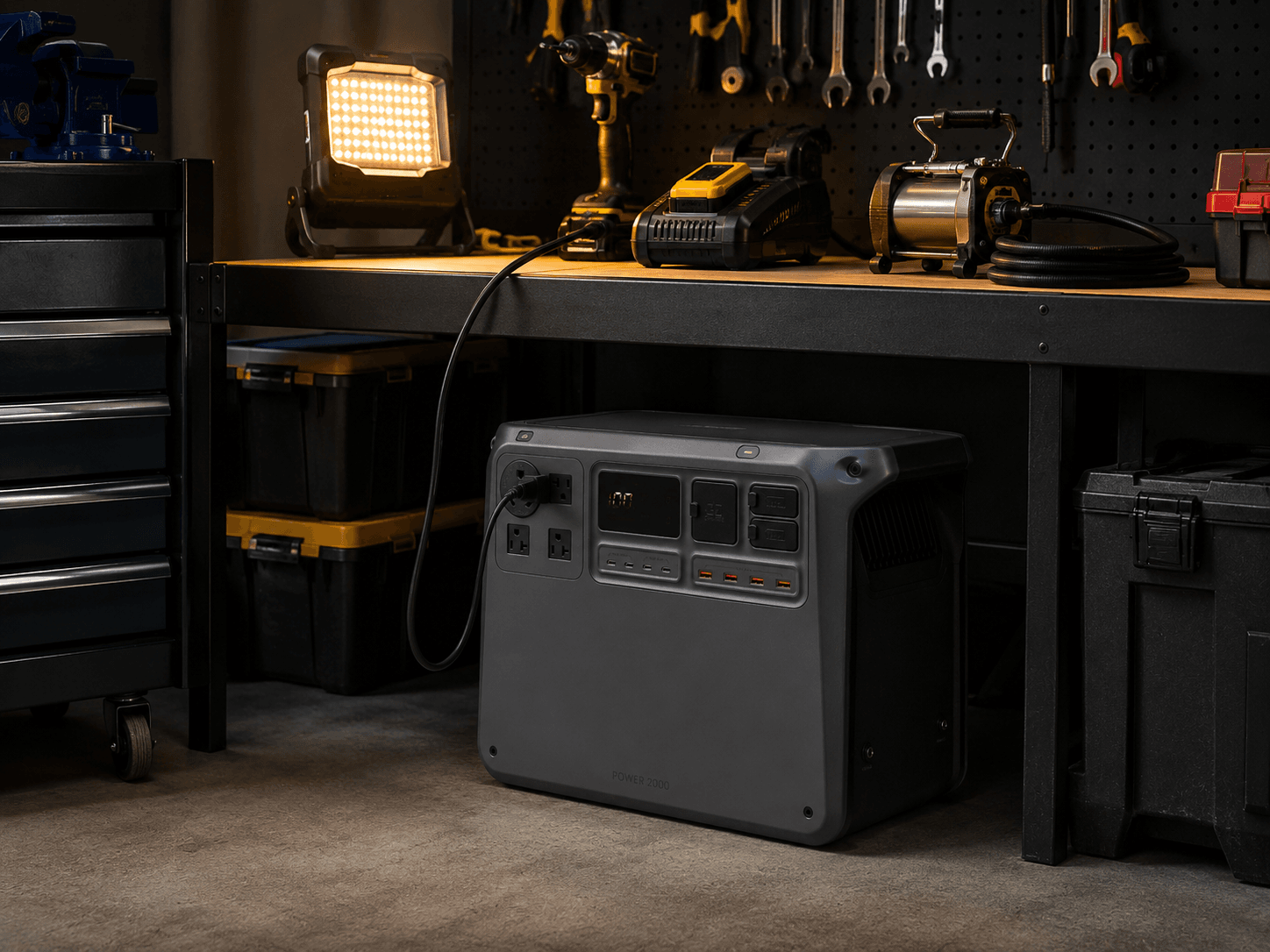
Expansion and ecosystem differences
Both products expand, but they target different scales. DJI lists compatibility with up to ten Power Expansion Battery 2000 units for a total system capacity up to 22,528Wh. EcoFlow DELTA 2 Max supports two Smart Extra Batteries for up to 6,144Wh. Maximum capacity does not make DJI automatically better; very large expansion changes cost, weight, storage, charging, and system purpose.
EcoFlow’s smaller expansion ceiling can be a strength for a buyer who simply wants to grow a 2kWh station to 4kWh or 6kWh. DJI’s larger path is useful when the same platform must grow much further. In DJI Power 2000 vs EcoFlow DELTA 2 Max, expansion is not assigned a simple winner because the better scale depends on the buyer’s measured runtime target and whether the ecosystem accessories are actually useful.
Buy expansion only after the base station proves insufficient. Extra battery capacity extends compatible-load runtime; it does not increase the base inverter’s continuous output or make an incompatible appliance safe. Plan floor space, transport, cable routing, recharge time, and the total system weight before turning a portable station into a large battery bank.
Ports, USB-C, app control, and DJI SDC
DJI has a distinctive port advantage for creator and field users. The Power 2000 provides four USB-C ports, including two up to 140W, four USB-A ports, four AC outlets, and two SDC ports. The SDC connections support compatible expansion, solar, vehicle charging, selected DJI battery fast-charge accessories, and other ecosystem hardware. That can reduce adapter clutter for a DJI-heavy workflow.
EcoFlow offers a broad conventional port mix and mature app control, with dual 100W USB-C, AC outlets, USB-A, DC outputs, and the EcoFlow app. In DJI Power 2000 vs EcoFlow DELTA 2 Max, a laptop-heavy or drone-production user may prefer DJI’s higher USB-C power and SDC ecosystem, while a buyer already invested in EcoFlow panels or extra batteries may prefer continuity with the DELTA platform.
Home backup implications
For home backup, DJI Power 2000 vs EcoFlow DELTA 2 Max works best as a selected-load comparison. Both can support communications, lights, work equipment, and carefully verified appliance loads. DJI’s 3,000W inverter gives more simultaneous-output headroom. EcoFlow’s familiar expansion ecosystem can be useful when the main limitation is runtime rather than inverter capacity.
Neither station is a whole-home replacement or a reason to improvise a panel connection. Directly connect compatible appliances unless the home uses properly designed transfer equipment. Verify refrigerator, freezer, pump, furnace, or other motor startup behavior before relying on the station. For medical, life-safety, or data-critical equipment, follow the device manufacturer’s backup requirements rather than assuming a general UPS feature is sufficient.
Use DJI Power 2000 official specifications and EcoFlow DELTA 2 Max product information for current product limits. For outage preparation beyond product selection, review Ready.gov power-outage guidance.
RV, camping, and mobile-work implications
In an RV or vehicle, the equal 2,048Wh capacity means DJI Power 2000 vs EcoFlow DELTA 2 Max is mostly about output, recharge, and ecosystem. DJI can better accommodate larger simultaneous loads within its 3,000W rating. EcoFlow may be easier to integrate with an existing DELTA solar and extra-battery setup. Neither should be treated as unlimited campground-style power.
For mobile production and field work, DJI has a stronger identity. High-power USB-C, SDC accessories, and 3,000W AC output can support laptops, chargers, lighting, camera batteries, and selected tools with fewer adapters. EcoFlow remains a capable work platform, but its clearest advantage is not production-specific; it is a flexible, established portable-energy ecosystem.
Who should choose DJI Power 2000
Choose DJI in DJI Power 2000 vs EcoFlow DELTA 2 Max when the 3,000W continuous inverter solves a real simultaneous-load problem or when DJI SDC accessories fit the workflow. It is particularly strong for mobile production, creator gear, drone charging, higher-output work setups, and buyers who may want a much larger compatible expansion path later.
- Best for: higher-output 2kWh use, creator and field equipment, DJI accessory users, and larger future expansion.
- Not ideal for: buyers who will not use the SDC ecosystem and whose loads stay comfortably below 2,400W.
- Main advantage: 3,000W continuous output with strong direct-device charging.
- Main trade-off: specialized accessories can add cost and complexity.
Read the DJI Power 2000 Product page and DJI Power 2000 Review for exact identity, current ASIN, specifications, and alternatives.
Who should choose EcoFlow DELTA 2 Max
Choose EcoFlow in DJI Power 2000 vs EcoFlow DELTA 2 Max when 2,400W continuous output is enough and the priority is a familiar 2kWh home, RV, or off-grid platform with up to 1,000W solar input and straightforward expansion to 6,144Wh. It also makes sense for a buyer who already owns compatible EcoFlow panels, batteries, or app-managed equipment.
- Best for: expandable home essentials, RV solar, off-grid use, and existing EcoFlow owners.
- Not ideal for: buyers who need more than 2,400W continuous from the base inverter.
- Main advantage: conventional modular ecosystem with dual-MPPT solar and Smart Extra Batteries.
- Main trade-off: lower continuous AC output than DJI.
Read the EcoFlow DELTA 2 Max Product page and EcoFlow DELTA 2 Max Review for the verified model and deeper decision analysis.
Decision checklist before checkout
Before closing the DJI Power 2000 vs EcoFlow DELTA 2 Max decision, list the heaviest simultaneous AC load, then identify which devices can move to direct USB-C or DC power. If the combined AC load regularly approaches 2,400W, DJI’s 3,000W inverter creates meaningful operating margin. If normal use remains well below 2,400W, that extra output is less important than the charging, solar, expansion, and accessories you will actually use.
Next, estimate daily watt-hours rather than assuming both 2,048Wh batteries will cover the same schedule. Decide whether expansion is likely, where extra batteries would be stored, and how the system will recharge during a long trip or outage. DJI’s SDC-based accessory paths and larger expansion scale can be powerful, but they are valuable only when the buyer needs them. EcoFlow’s smaller Smart Extra Battery path may be simpler for a conventional home or RV plan.
Finally, verify the current Amazon ASIN, seller, included cables, charging accessories, solar connectors, and warranty terms before purchase. Check the physical storage space and safe lifting route, because both units are roughly 50 lb. A strong decision is one where output, energy, recharge, expansion, ports, and handling all fit the same real use case rather than different hypothetical ones.
Important limitations and mistakes
The first mistake in DJI Power 2000 vs EcoFlow DELTA 2 Max is assuming equal battery capacity means equal usefulness. Output, ports, recharge, expansion, and accessory compatibility still differ. The second mistake is assuming DJI’s higher output means longer runtime. It does not. The third is buying expansion batteries before proving that runtime, rather than output or charging, is the real constraint.
Also avoid confusing manufacturer fast-charge claims with guaranteed home-circuit results, connecting unverified solar arrays, or treating a portable station as a life-safety UPS. Keep either unit dry, stable, and ventilated. Secure it during vehicle travel. Test the actual noncritical load before an outage and maintain a written charging and shutdown plan.
Final buyer-specific recommendation
The final DJI Power 2000 vs EcoFlow DELTA 2 Max recommendation is a tie overall. Choose DJI for 3,000W continuous output, high-power USB-C, SDC integration, creator and field-work fit, and a much larger potential expansion scale. Choose EcoFlow for a familiar modular 2kWh system, dual-MPPT solar, straightforward growth to 6,144Wh, and a well-established home/RV/off-grid ecosystem.
Because both start at 2,048Wh and are roughly 50 lb, the decision should not be framed as battery or portability. Write down the heaviest simultaneous load, daily energy requirement, solar or vehicle recharge method, desired expansion scale, and accessories already owned. The product that removes the actual constraint is the better choice.
FAQ
Which one has more battery capacity?
Neither. Both base units are rated at 2,048Wh, so battery capacity is a tie before expansion.
Which one has more continuous AC output?
DJI Power 2000. DJI lists 3,000W continuous output versus 2,400W for EcoFlow DELTA 2 Max.
Which one is better for expansion?
It depends on scale. EcoFlow expands simply to 6,144Wh with two Smart Extra Batteries. DJI supports a much larger compatible expansion path, but that larger system also adds more cost, weight, storage, and complexity.
Winners by Category
| Overall | Tie |
|---|---|
| Value | Tie |
| Portability | Tie |
| Output | DJI Power 2000 Portable Power Station |
| Battery | Tie |
Final Verdict
Choose DJI Power 2000 when 3,000W continuous output, high-power USB-C, the DJI SDC accessory ecosystem, and creator or field-work use matter most. Choose EcoFlow DELTA 2 Max when its familiar modular ecosystem, up to 1,000W solar input, and expansion to 6,144Wh better fit home, RV, or off-grid planning. Both start at 2,048Wh and weigh roughly 50 lb, so neither has a meaningful battery-capacity or portability win.