
Comparison
Jackery Explorer 5000 Plus vs EcoFlow DELTA Pro 3: Which 240V Backup Fits?
Jackery Explorer 5000 Plus vs EcoFlow DELTA Pro 3 compares two expandable 120/240V backup platforms for capacity, output, portability, solar recovery, home circuits, RV use, and long-outage planning.
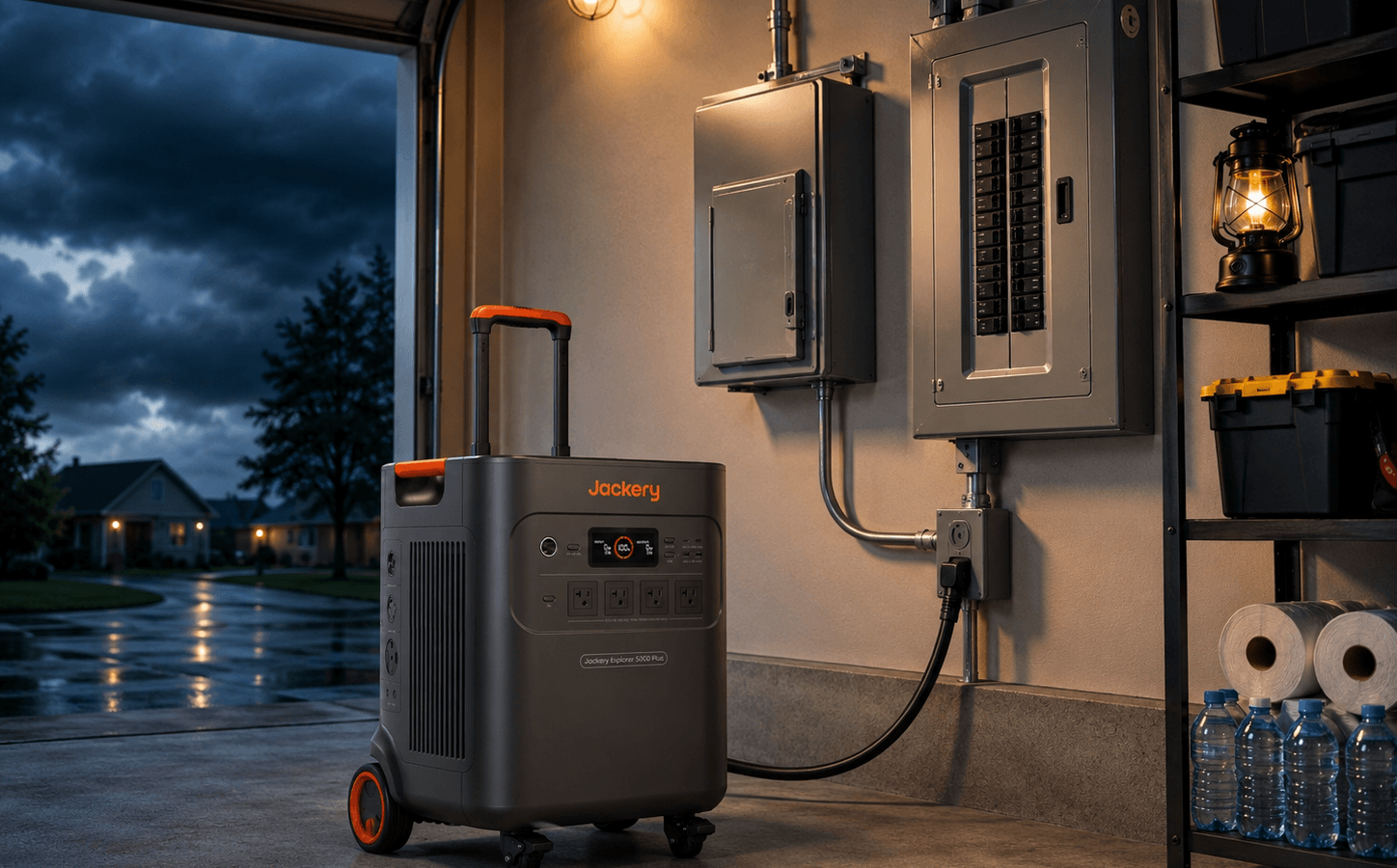
Product Matchup
Side-by-side summary
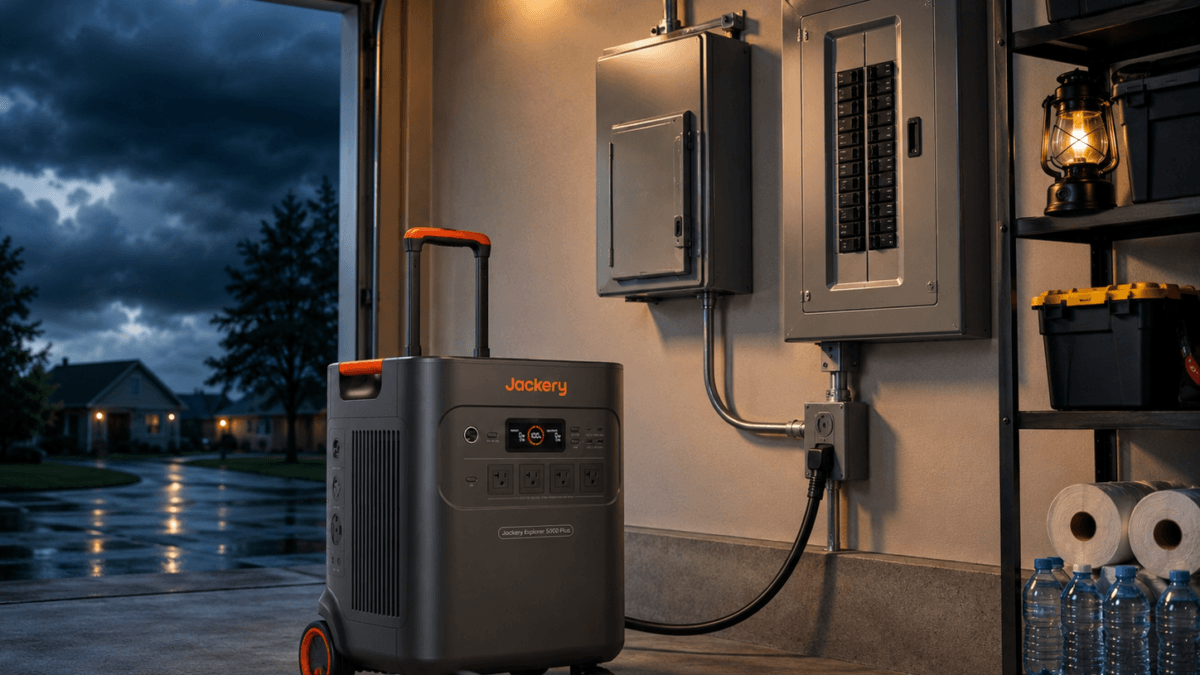
Product A
Jackery Explorer 5000 Plus
Large 5,040Wh LiFePO4 portable power station with 7,200W AC output, 14,400W surge, 120V/240V support, solar charging up to 4,000W, and expandable home-backup capacity.
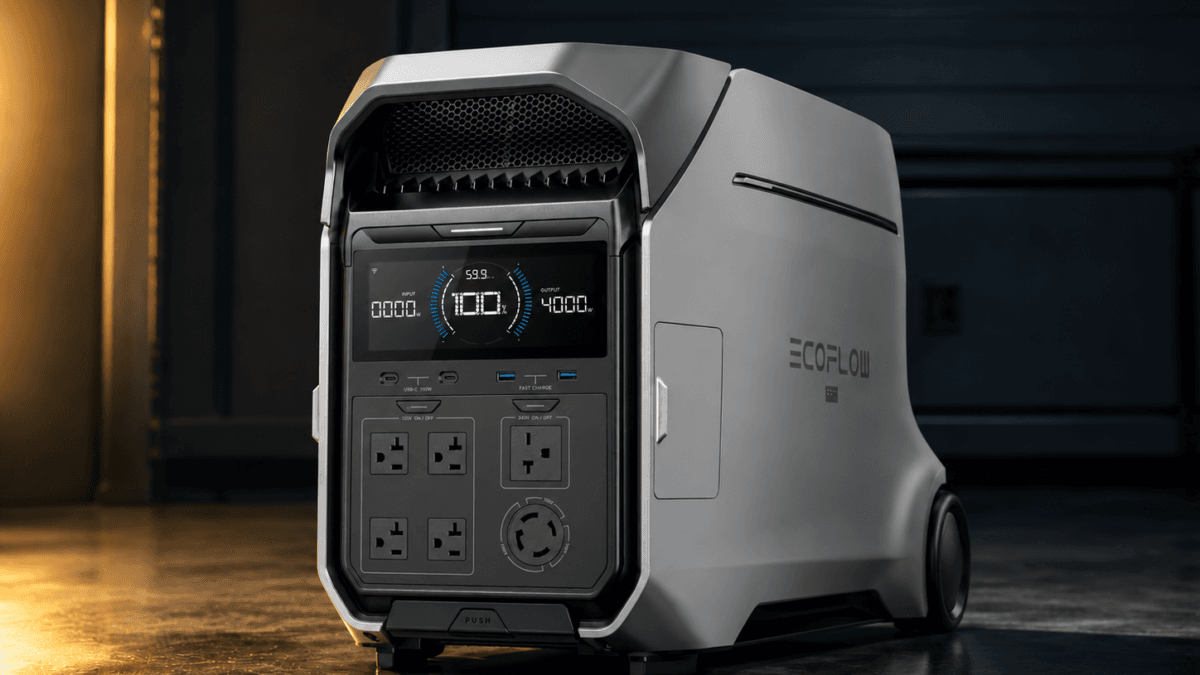
Product B
EcoFlow DELTA Pro 3
The EcoFlow DELTA Pro 3 power station delivers 4096Wh LiFePO4 capacity, 4000W output, and single-unit 120V/240V support with up to 2600W solar input. Built for whole-home essential backup, well pumps, and transfer switch setups, expandable to 48kWh.
Spec Comparison
Core numbers
| Spec | Jackery Explorer 5000 Plus | EcoFlow DELTA Pro 3 |
|---|---|---|
| Capacity | 5040 Wh | 4096 Wh |
| AC Output | 7200 W | 4000 W |
| Solar Input | 4000 W | 2600 W |
This article may contain affiliate links. If you buy through these links, PowerLabPro may earn a commission at no extra cost to you. As an Amazon Associate I earn from qualifying purchases.
Jackery Explorer 5000 Plus vs EcoFlow DELTA Pro 3 is a serious backup decision between two expandable LiFePO4 platforms that can support 120V and 240V loads, but they solve the problem from different starting points. Jackery begins with 5,040Wh and a 7,200W maximum 240V output path. EcoFlow begins with 4,096Wh and 4,000W continuous 120/240V output in a unit that is about 21 lb lighter. The right choice depends on whether your first priority is more base energy and output headroom or a lighter 4kWh platform with strong solar and modular expansion.
This Jackery Explorer 5000 Plus vs EcoFlow DELTA Pro 3 comparison is research-led. PowerLabPro has not performed hands-on or laboratory testing of these two units. The analysis uses current manufacturer support and specification pages, verified PowerLabPro Product records, connected Reviews, and the exact U.S. Amazon identities configured below. Always check the current manuals, outlet limits, accessories, transfer equipment, panel requirements, and the electrical needs of the devices you intend to protect.

Table of Contents
Jackery Explorer 5000 Plus vs EcoFlow DELTA Pro 3 quick verdict
The fast answer in Jackery Explorer 5000 Plus vs EcoFlow DELTA Pro 3 is that Jackery wins the base-capacity and maximum-output categories, while EcoFlow wins portability. The Explorer 5000 Plus stores 5,040Wh versus 4,096Wh and provides up to 7,200W on its documented 240V L14-30R path. The DELTA Pro 3 provides 4,000W continuous total output with native 120V/240V connections and weighs about 113.5 lb versus roughly 134.5 lb for the current Explorer 5000 Plus support specification.
There is no responsible universal overall winner. Choose Jackery when one base unit must carry more stored energy and greater 240V output headroom. Choose EcoFlow when the 4,096Wh starting point is enough and easier movement, up to 2,600W solar input, 10 ms UPS behavior, and the DELTA Pro ecosystem are more important. If the decision depends on a pump, air conditioner, well system, transfer equipment, or several circuits, use the PowerLabPro sizing guide before choosing either platform.
Side-by-side specifications that matter
| Buyer factor | Jackery Explorer 5000 Plus | EcoFlow DELTA Pro 3 |
|---|---|---|
| Base capacity | 5,040Wh LiFePO4 | 4,096Wh LFP |
| Continuous / documented AC path | Up to 7,200W on 240V L14-30R; outlet-specific 120V limits apply | 4,000W total continuous 120V/240V |
| Surge / temporary output | Use current Jackery outlet and manual limits; do not treat 7,200W as every-outlet output | 8,000W surge; X-Boost is load management, not added battery capacity |
| Solar input | High-voltage PV up to 4,000W; low-voltage path also supported under published limits | Up to 2,600W total, split between high- and low-PV inputs |
| Weight | About 134.5 lb in current Jackery support data | 113.54 lb |
| Single-unit expansion | Supports compatible Explorer 5000 Plus battery packs | Up to about 12kWh with two DELTA Pro 3 Extra Batteries |
| UPS | Online and Backup UPS modes; current Jackery support distinguishes 0 ms online and under-20 ms backup modes | 10 ms manufacturer-listed UPS |
| Best starting role | Higher-base-capacity, higher-output 240V backup | Lighter 4kWh modular 120V/240V backup |
The table is the core of the Jackery Explorer 5000 Plus vs EcoFlow DELTA Pro 3 decision, but it should not be read as a scorecard where the largest number automatically wins. An outage system has to fit the appliance plugs, voltage, running watts, startup demand, required hours, recovery method, storage location, and transfer equipment. A buyer can easily overpay for unused output or undersize runtime by focusing on only one column.
Capacity and runtime planning
Battery capacity is the clearest Jackery advantage in Jackery Explorer 5000 Plus vs EcoFlow DELTA Pro 3. The 5,040Wh Jackery battery starts with 944Wh more nominal energy than the 4,096Wh EcoFlow battery. That difference can matter when refrigeration, communications, lighting, a home office, or selected circulation equipment must operate through a longer outage. It does not create a fixed runtime because inverter losses, cycling loads, temperature, standby use, battery reserve, and device efficiency all reduce simple nameplate calculations.
Use a measured load list. If the average protected load is modest, both systems can provide a long practical bridge. If a high-watt heating element, large compressor, cooking appliance, or air conditioner runs for extended periods, either battery can drain quickly. The extra Jackery capacity is valuable when the additional energy is actually needed. The EcoFlow can be the smarter fit when 4,096Wh already meets the target and lower weight or a planned extra-battery path matters more than carrying unused reserve every day.
For refrigerator, freezer, pellet-stove, pump, or HVAC planning, capacity alone is incomplete. Verify startup behavior and continuous draw first, then estimate daily watt-hours. Keep a reserve for communications and lighting. The Jackery Explorer 5000 Plus vs EcoFlow DELTA Pro 3 capacity winner is Jackery, but the better system is the one whose total energy plan includes a credible recharge route before the battery reaches the minimum reserve you intend to keep.
120V and 240V output differences
Output is where Jackery Explorer 5000 Plus vs EcoFlow DELTA Pro 3 needs careful outlet-level reading. Current Jackery support data lists 7,200W maximum on the 240V NEMA L14-30R path and separate 120V limits for its 5-20 outlets. EcoFlow lists 4,000W total continuous output across its 120V/240V system, including 120V 5-20R and TT-30R connections plus 240V 6-20R and L14-30R outputs. Those numbers are not interchangeable with battery capacity.
Jackery therefore wins the output category for a buyer whose properly connected 240V load genuinely needs more than 4,000W continuous headroom. That may matter for certain high-demand tools, pumps, or carefully planned home circuits. It does not mean every Jackery receptacle can supply 7,200W, and it does not guarantee that a specific motor or compressor will start. Check the actual outlet, current limit, wiring method, plug, and equipment manual.
EcoFlow’s 4,000W continuous rating is still substantial and can be enough for many selected-circuit plans. A buyer who stays below that ceiling gains little from a larger output number unless it solves a real simultaneous-load or startup problem. In Jackery Explorer 5000 Plus vs EcoFlow DELTA Pro 3, output should be sized to the heaviest combination you really intend to run, not to an imagined maximum list of every appliance in the home.
Portability and placement
EcoFlow wins portability in Jackery Explorer 5000 Plus vs EcoFlow DELTA Pro 3. Current manufacturer figures put the DELTA Pro 3 at 113.54 lb and the Explorer 5000 Plus at around 61 kg, or roughly 134.5 lb. Both are wheeled large-system products, not casual carry batteries. The difference is still meaningful when the unit must cross a garage threshold, enter a trailer, move between storage and a transfer-inlet location, or be loaded with assistance.
Measure the route before purchase. Check door width, ramps, floor transitions, stairs, vehicle height, cable reach, ventilation, water exposure, and where expansion batteries would sit. A system that is technically ideal but difficult to deploy safely can be worse than a slightly smaller platform that is already staged near the intended connection point. Neither unit should be stored where emergency access depends on one person lifting more than they can safely manage.
Charging and solar recovery
Solar recovery changes the long-outage value of Jackery Explorer 5000 Plus vs EcoFlow DELTA Pro 3. Jackery’s current support article lists a high-voltage PV path up to 4,000W and a separate low-voltage input arrangement, while EcoFlow lists 2,600W total solar input with 1,600W high-PV and 1,000W low-PV inputs. These are maximum input ceilings under compatible configurations, not guarantees of real solar harvest.
Jackery can therefore accept more high-voltage solar on paper, which may matter to a buyer designing a large recovery system. EcoFlow’s 2,600W ceiling remains strong for a 4,096Wh base battery and may be easier to match to a smaller portable or fixed array. For either product, verify open-circuit voltage in cold conditions, current limits, connectors, series or parallel wiring, shade, cable length, and the safety instructions for the exact panels.
Wall charging also matters because storms do not always provide useful sun. Jackery currently lists around 3.5 hours for AC charging under its support conditions. EcoFlow advertises rapid AC recovery and multiple charging routes. Do not choose solely from a laboratory recharge headline. The practical question is whether your normal wall circuit, solar array, vehicle or generator-compatible accessory path can restore enough energy between periods of use.
Expansion and ecosystem differences
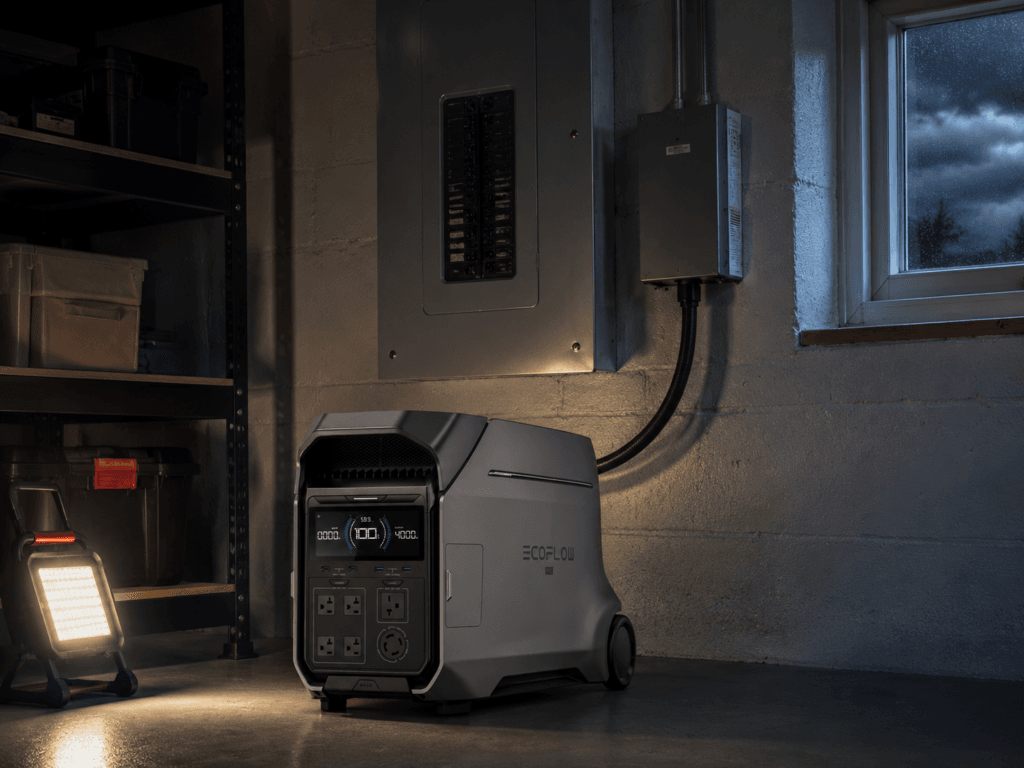
Both products are expandable, but expansion should solve a measured runtime problem. The Explorer 5000 Plus supports compatible battery packs, and Jackery’s current support documentation says up to five packs can be used simultaneously. EcoFlow lists a single DELTA Pro 3 at up to about 12kWh with two compatible extra batteries and larger multi-inverter configurations when paired with the appropriate Smart Home Panel and related system components.
This makes Jackery Explorer 5000 Plus vs EcoFlow DELTA Pro 3 less about a simple maximum-capacity contest and more about ecosystem fit. Expansion adds cost, weight, floor space, cables, charging time, and another set of components that must remain ready. Start with the smallest configuration that covers the measured load. Add batteries only after a controlled test shows that runtime, not inverter output or connection type, is the limiting factor.
Home backup implications
For home backup, Jackery Explorer 5000 Plus vs EcoFlow DELTA Pro 3 should begin with selected circuits, not whole-home marketing language. A practical plan may prioritize a refrigerator, freezer, internet, lights, a few outlets, a furnace blower or pellet stove after verification, and selected well or sump equipment if its voltage and startup demand fit. Large electric resistance loads and central HVAC can change the energy budget dramatically.
Both systems can participate in more integrated backup configurations when used with compatible equipment, but neither portable battery authorizes improvised panel connections. Never backfeed a receptacle. Use the proper inlet, transfer equipment, interlock or manufacturer system, and qualified electrical guidance where required. The portable power station is one component of a safe home-backup architecture, not a substitute for code-compliant installation.
For general outage planning, review Ready.gov power-outage guidance. For product-specific information, use Jackery’s current Explorer 5000 Plus support specifications and EcoFlow’s DELTA Pro 3 specifications. These current sources control over older screenshots or retailer summaries.
RV, off-grid, and mobile use
In RV and off-grid use, the Jackery Explorer 5000 Plus vs EcoFlow DELTA Pro 3 decision turns on transport, outlet requirements, and recharge. EcoFlow provides a TT-30R among its 120V outputs and is lighter to move. Jackery offers the larger battery and high-output 240V paths but imposes more handling burden. Neither should be assumed to provide full-hookup behavior indefinitely from a finite battery.
For a boondocking plan, list the refrigerator, inverter charger, lights, laptops, water pump, entertainment, cooking loads, and air conditioning separately. Decide what can be sequenced. A large solar array can help, but shade, winter sun, roof area, and setup time may keep production below the input ceiling. If the system lives in a vehicle, secure it for travel and protect vents and cables from cargo damage.
Who should choose the Jackery Explorer 5000 Plus
Choose the Jackery side of Jackery Explorer 5000 Plus vs EcoFlow DELTA Pro 3 when 5,040Wh base capacity solves a real runtime need and the 7,200W documented 240V output path provides useful headroom for the intended connection. It is especially compelling for a buyer who wants more energy before adding expansion batteries, has a safe rolling route, and can use a higher-voltage solar arrangement within Jackery’s published limits.
- Best for: higher-demand selected-circuit plans, longer base runtime, larger 240V loads within the documented outlet path, and buyers who can accommodate the heavier chassis.
- Not ideal for: frequent transport, upstairs use, light communications backup, or any household that does not need the extra capacity and output.
- Main trade-off: more base energy and output come with more weight and a larger deployment burden.
Read the Jackery Explorer 5000 Plus Product reference and the Jackery Explorer 5000 Plus Review before purchase. Those pages keep the model identity, current Amazon destination, product-specific limits, and deeper alternatives separate from this two-product decision.
Who should choose the EcoFlow DELTA Pro 3
Choose the EcoFlow side of Jackery Explorer 5000 Plus vs EcoFlow DELTA Pro 3 when 4,096Wh is enough for the base plan and lower weight, 4,000W native 120V/240V output, 2,600W solar input, and DELTA ecosystem expansion align better with the use case. The EcoFlow is still heavy, but the roughly 21 lb difference can materially improve deployment for some households and RV owners.
- Best for: buyers who want a lighter 4kWh starting point, substantial solar recovery, integrated 120V/240V outlets, and a modular EcoFlow path.
- Not ideal for: plans that genuinely require more than 4,000W continuous output from the base unit or need the extra 944Wh without expansion.
- Main trade-off: easier handling and a strong ecosystem come with lower base capacity and continuous output than the Jackery.
Read the EcoFlow DELTA Pro 3 Product reference and the EcoFlow DELTA Pro 3 Review. Buyers considering another 4kWh-class platform can also use the existing EcoFlow DELTA Pro 3 vs Anker SOLIX F3800 Plus comparison.
Important limitations and mistakes to avoid
The biggest mistake in Jackery Explorer 5000 Plus vs EcoFlow DELTA Pro 3 is assuming output equals runtime. A 7,200W connection does not mean a 5,040Wh battery can run a 7,200W load for long. Likewise, a 4,000W inverter does not make a 4,096Wh battery a whole-house energy supply. Separate watts from watt-hours, and keep a reserve instead of planning to drain the battery to zero during an outage.
A second mistake is treating 240V capability as permission to connect directly to household wiring. The electrical connection must be designed for the load and local requirements. A third mistake is buying expansion batteries before testing the base unit. A fourth is sizing solar from panel nameplates without checking voltage and current limits. A fifth is relying on UPS claims for medical, life-safety, server, or security equipment without validating the exact device manufacturer’s backup requirements.
Final buyer-specific recommendation
The final Jackery Explorer 5000 Plus vs EcoFlow DELTA Pro 3 recommendation is deliberately buyer-specific. Choose Jackery for the stronger base battery and higher maximum 240V output path when those advantages match measured loads. Choose EcoFlow when a lighter 4,096Wh base unit, 4,000W continuous 120V/240V output, strong solar recovery, and DELTA Pro expansion fit the plan more cleanly.
Call it a tie overall rather than manufacturing a winner. A homeowner with a demanding 240V load and long runtime target may rationally choose Jackery. An RV owner or household that can stay below 4,000W and values easier movement may rationally choose EcoFlow. Before spending money, write down voltage, running watts, startup demand, daily watt-hours, desired reserve, recharge opportunities, placement, and transfer-equipment requirements. Those facts decide this comparison more reliably than a generic badge.
FAQ
Which one has more battery capacity?
In Jackery Explorer 5000 Plus vs EcoFlow DELTA Pro 3, the Jackery has the larger base battery: 5,040Wh versus 4,096Wh. Real runtime still depends on conversion losses, load cycling, temperature, settings, and the reserve you keep.
Which one is easier to move?
EcoFlow is lighter at about 113.54 lb. Jackery’s current support data lists the Explorer 5000 Plus at around 61 kg, roughly 134.5 lb. Both are wheeled large stations, so the safe route and storage location still matter.
Can either replace a whole-home backup system?
No portable station should be treated as an automatic whole-home replacement. Either can support a serious selected-load system when the electrical connection, transfer equipment, capacity, voltage, output, and recharge plan are correct. Permanent or code-governed home wiring should use qualified guidance and the manufacturer’s approved system components.
Winners by Category
| Overall | Tie |
|---|---|
| Value | Tie |
| Portability | EcoFlow DELTA Pro 3 Power Station |
| Output | Jackery Explorer 5000 Plus Power Station: Powerful 5,040Wh Backup |
| Battery | Jackery Explorer 5000 Plus Power Station: Powerful 5,040Wh Backup |
Final Verdict
Choose the Jackery Explorer 5000 Plus when the priority is more base battery capacity and higher 240V output headroom. Choose the EcoFlow DELTA Pro 3 when lower weight, a 4kWh starting size, strong solar input, and a broader modular ecosystem fit the plan better. Neither is the universal winner because the correct choice depends on the actual 120V/240V loads, runtime target, recharge path, and installation scope.