
Product Intelligence
Serious Home Backup PickJackery Explorer 5000 Plus Power Station: Powerful 5,040Wh Backup
Large 5,040Wh LiFePO4 portable power station with 7,200W AC output, 14,400W surge, 120V/240V support, solar charging up to 4,000W, and expandable home-backup capacity.
Specifications
Key specs
Buyer Fit
Fit signals
Best for
Pros
- High output
- 120V/240V support
- LiFePO4 battery expansion
- High solar input
- Transfer-switch path
Cons
- Heavy
- Expensive category
- Overkill for small-device backup
- Transfer-switch setup requires planning
Spec table
| Capacity | 5040 Wh |
|---|---|
| AC Output | 7200 W |
| Surge Output | 14400 W |
| Solar Input | 4000 W |
| Weight | 134.5 lb |
| Battery | LiFePO4 |
| Warranty | 5 years for Explorer 5000 Plus series |
| Expandability | Up to 60kWh |
| UPS / EPS | Backup UPS under 20ms; online UPS 0ms with limitations |
| Recharge Time | About 2 hours via up to 4,000W solar input |
This article may contain affiliate links. If you buy through these links, PowerLabPro may earn a commission at no extra cost to you. As an Amazon Associate I earn from qualifying purchases.
This Jackery Explorer 5000 Plus power station is not about whether it has enough power on paper. It does. The real question is whether a 5,040Wh, 120V/240V-capable power station makes sense for your home backup plan, or whether it is more weight, cost, and setup than you actually need.
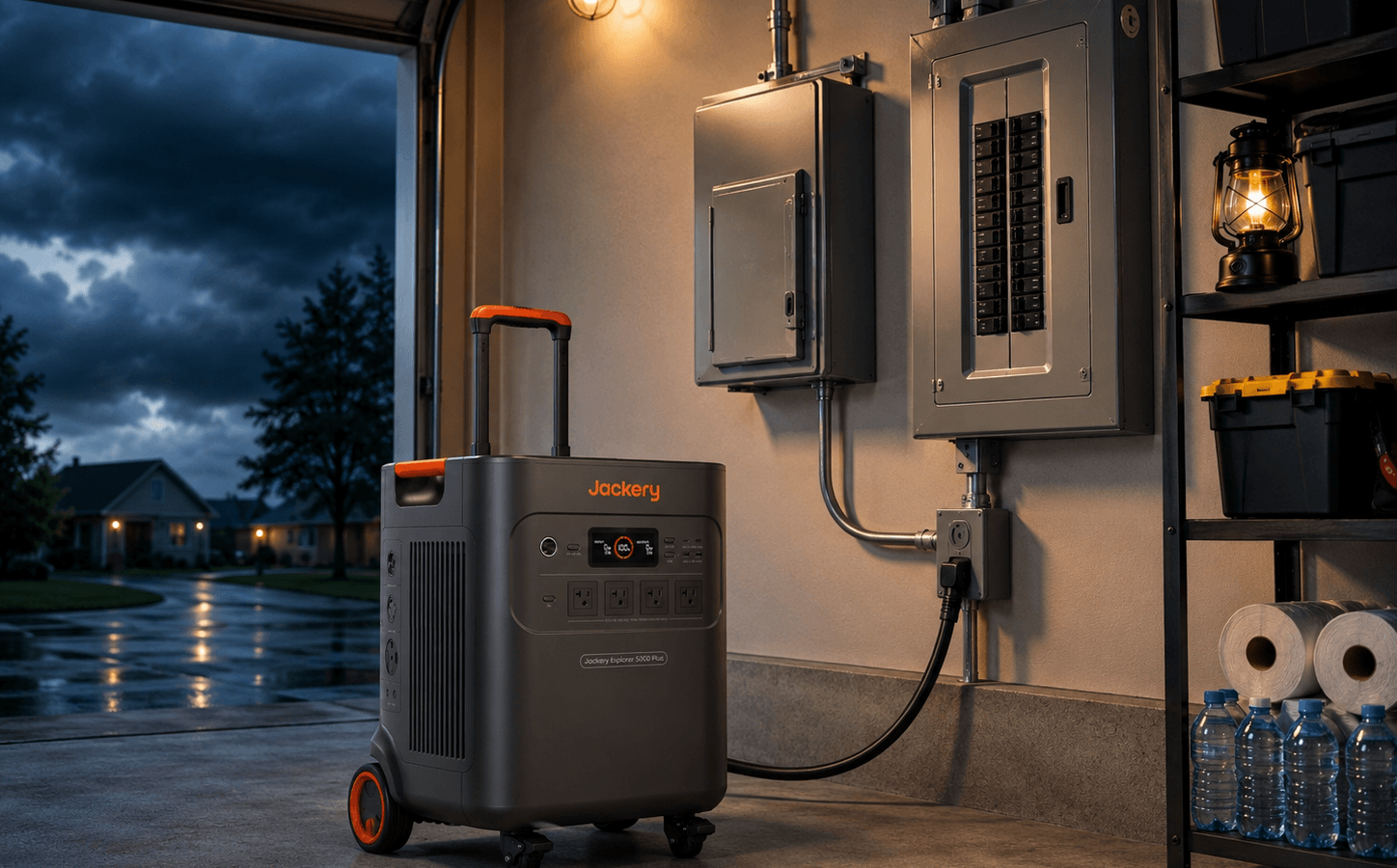
This is not a small camping power bank. The Explorer 5000 Plus is built for serious outage planning, selected home circuits, RV power, and buyers who want a quiet battery backup path with solar charging potential. It can look very attractive if you are comparing it against a gas generator, a fixed home battery, or other large portable power stations.
The trade-off is obvious. At about 134.5 lb, this is a rolling backup system, not something most people will casually carry around. It also makes the most sense when you plan your loads, understand your circuits, and know whether you need 120V only or 120V/240V support.
Quick Verdict
The Jackery Explorer 5000 Plus is best for homeowners and RV owners who need a high-output battery backup system with 5,040Wh of base capacity, 120V/240V output support, strong solar input, and room to expand. It is most compelling for selected-circuit backup, garage-based emergency power, storm preparation, and large RV setups.
Skip it if your backup plan is mainly phones, lights, Wi-Fi, laptops, or a CPAP. A smaller 1kWh or 2kWh power station will be easier to store, easier to move, and cheaper to own. The Explorer 5000 Plus belongs in a heavier backup category.
PowerLabPro Verdict
- Best for: serious home backup, selected circuits, large RV power, solar-heavy outage planning
- Not ideal for: apartment backup, light camping, small-device charging, low-budget emergency kits
- Main strength: high AC output with 120V/240V support
- Main weakness: weight, cost, and setup planning
The main focus here is buyer fit: who should consider this large home-backup power station, who should skip it, and what must be verified before connecting it to a serious outage setup.
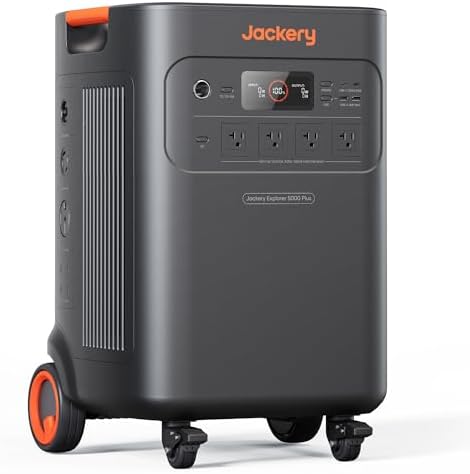
- Handles Even the Big Appliances: Run major home appliances with 7200W of rated power (14,400W surge). Supports both 120V…
- Backup That Lasts for 13 Days: A 5040Wh capacity, expandable up to 60kWh — enough to keep your home running through an e…
- More Power From the Sun: Compatible with both high-and low-voltage solar panels, recharge in about 2 hours with up to 40…
Jackery Explorer 5000 Plus Power Station: Specs
The headline specs matter because they explain why the unit belongs in the serious home-backup category. Still, specs should be treated as a backup-planning starting point, not a runtime promise.
| Spec | Jackery Explorer 5000 Plus | Buyer Meaning |
|---|---|---|
| Battery Capacity | 5,040Wh | Large enough for serious essential-load backup planning. |
| Battery Chemistry | LiFePO4 | Good fit for long-term backup use and high cycle expectations. |
| AC Output | 7,200W max | Enough inverter headroom for heavier home-backup scenarios when used correctly. |
| Surge Output | 14,400W surge | Useful for startup loads, but appliance compatibility still needs load planning. |
| Voltage Support | 120V / 240V | More serious than standard 120V-only portable stations. |
| Solar Input | Up to 4,000W | High solar ceiling if you build a compatible panel setup. |
| Weight | About 134.5 lb | Moveable with wheels, but not lightweight. |
| UPS Support | Backup UPS under 20ms; online UPS 0ms with limits | Useful for backup planning, but the exact UPS mode matters. |
| Warranty | 5 years for Explorer 5000 Plus series | Verify terms by purchase channel before buying. |
For official product details, check Jackery’s Explorer 5000 Plus product page. For sizing your actual loads, use PowerLabPro’s portable power station sizing guide before buying a large system.
Who Should Buy the Jackery Explorer 5000 Plus?
The strongest fit is buyers whose outage plan is bigger than keeping a few small electronics alive. This is the product class for people thinking in circuits, high-output appliances, solar recharge, and multi-day emergency planning.
Good fit
- Homeowners who want serious battery backup for selected circuits.
- RV owners who need more than a weekend battery box.
- Preparedness buyers planning around storm outages and longer grid failures.
- Garage or utility-room users who want a cleaner backup option than running a gas generator all night.
- Buyers comparing Jackery against Anker SOLIX F3800 Plus or Goal Zero Yeti PRO 4000.
Who Should Skip the Jackery Explorer 5000 Plus?
Most buyers do not need a 5kWh-class system. Buying too much capacity creates a different problem: more money tied up, more weight to move, more accessories to understand, and more setup work before the system gives you its full value.
Bad fit
- Apartment buyers who mainly need Wi-Fi, phones, lights, and laptops.
- Campers who want a compact battery that fits easily in a car trunk.
- Buyers who do not want to calculate wattage, runtime, or circuit priorities.
- Anyone expecting plug-and-play whole-home backup without planning the installation path.
- Budget shoppers who only need a basic emergency power station.
The simplest rule: if you do not know what you need to power during an outage, calculate that first. A large power station should solve a defined backup problem, not replace basic planning.
Home Backup Fit: Where the Jackery Explorer 5000 Plus Makes Sense
From a home-backup perspective, this comes down to selected-load planning. The unit is strongest when you choose the circuits or devices that matter most instead of assuming one battery should run everything in the house.
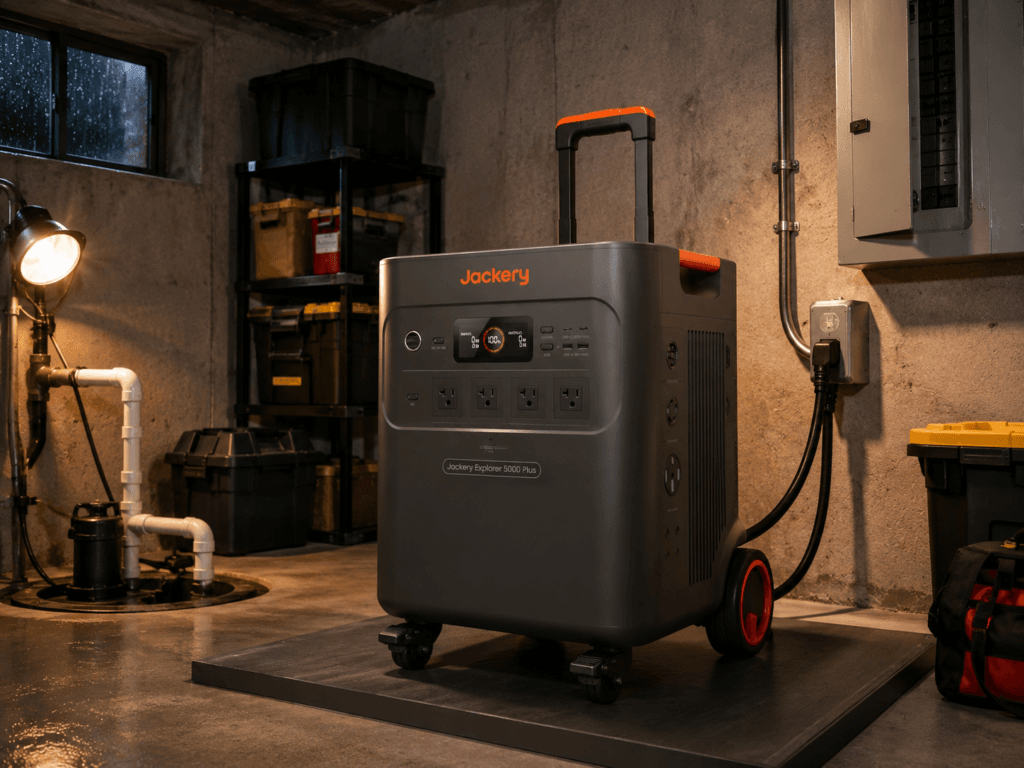
Good candidates include refrigeration, lighting, communication gear, office essentials, a sump pump scenario that has been checked for surge requirements, and selected appliances within the system’s output limits. Heavy electric heating, central air conditioning, electric ovens, and hardwired loads need much more caution.
The real value is not just the 5,040Wh battery. It is the combination of high inverter output, 120V/240V support, solar input headroom, and expansion. That combination gives the Jackery Explorer 5000 Plus a more serious backup profile than compact 1kWh units.
120V/240V and Transfer Switch Notes
The Explorer 5000 Plus supports both 120V and 240V output. That matters for buyers who are looking beyond basic extension-cord backup and thinking about selected home circuits.
Do not treat that as permission to improvise wiring. Any transfer-switch or panel-connected setup should be planned safely and installed according to local code. If a home circuit setup is part of the buying plan, verify the exact Jackery transfer-switch accessory, installation requirements, local electrical rules, and electrician requirements before relying on it.
The UPS claim also needs precision. The manual separates backup UPS behavior from online UPS behavior. Treat the 0ms UPS claim as mode-dependent, not a blanket promise for every outlet and every setup.
Runtime Reality: Do Not Buy by Capacity Alone
A 5,040Wh battery sounds simple until real loads are connected. Runtime changes with appliance wattage, surge behavior, inverter losses, ambient temperature, battery reserve, and how many devices run at the same time.
A refrigerator does not pull the same power every minute. A sump pump may sit idle, then surge hard. A microwave or kettle can use a lot of power for a short time. A router and phone charger barely matter compared with larger appliances.
This is why the Jackery Explorer 5000 Plus is best for buyers who are willing to make a load list. Write down each essential device, its running watts, its startup surge if relevant, and how many hours it needs to run. Then compare that plan against battery capacity and inverter output. Do not pay for this much system unless the runtime math supports it.
Solar Charging and Expansion
The Explorer 5000 Plus has a high solar input ceiling, which matters because large batteries can feel slow to recharge if the solar side is weak. A serious backup battery deserves a serious charging plan.
Solar is not automatic backup security. It depends on sunlight, panel placement, safe wiring, compatible voltage ranges, weather, and how much roof, yard, driveway, or campsite space you actually have. Treat solar as a system, not an accessory.
Expansion is another major reason to consider this model. Jackery positions the platform as expandable up to 60kWh. That makes the product more interesting for long outages, but it also raises total cost and setup complexity. Expansion only makes sense when the buyer has a defined backup goal.
What to Verify Before Buying the Jackery Explorer 5000 Plus Power Station
| Check | Why it matters |
|---|---|
| Your essential-circuit wattage | 7,200W is the normal simultaneous AC-output ceiling for this power station. |
| Transfer-switch compatibility | Confirm the exact Jackery accessory and installation path before any home-circuit connection. |
| Solar panel compatibility | The 4,000W max solar input requires matching voltage and connector specifications. |
| Expansion cost | Confirm current expansion battery pricing if you plan to grow past 5,040Wh. |
| Carry and storage space | At about 134.5 lb, plan a stable location and moving path in advance. |
| Warranty seller eligibility | Confirm the current 5-year warranty terms apply to your specific purchase channel. |
The Jackery Explorer 5000 Plus power station is one of the few models in its class that pairs 120V/240V output with a genuinely expandable battery platform. That combination is why it keeps coming up next to the Anker SOLIX F3800 Plus and the Goal Zero Yeti PRO 4000 in serious home-backup comparisons, even though each system fits a slightly different buyer.
Pros and Cons
| Pros | Cons |
|---|---|
| Large 5,040Wh base capacity | Heavy at about 134.5 lb |
| 7,200W AC output with 14,400W surge rating | Overkill for light backup needs |
| 120V/240V support for more serious backup planning | Transfer-switch use requires proper setup |
| LiFePO4 battery chemistry | Higher-cost category than 1kWh and 2kWh units |
| Up to 4,000W solar input | Solar value depends on panel investment and sunlight access |
| Expandable platform | Expansion can become expensive fast |
Alternatives to Compare Before Buying
The Jackery Explorer 5000 Plus should not be judged in isolation. It belongs in the same decision set as other large home-backup systems, especially if the buyer is comparing capacity, inverter output, transfer-switch support, weight, solar input, and expansion cost.
Anker SOLIX F3800 Plus
Compare the Explorer 5000 Plus with the Anker SOLIX F3800 Plus if you want another 120V/240V-capable heavy-duty backup option. The buying decision will come down to capacity, output, ecosystem, solar setup, price, and how each system handles home circuit backup.
Goal Zero Yeti PRO 4000
Compare it with the Goal Zero Yeti PRO 4000 if you want a premium 4kWh-class platform with strong home-backup positioning. Goal Zero may appeal to buyers who like its ecosystem, while Jackery pushes harder into the 5kWh and expandable 120V/240V category.
Jackery HomePower 3600 Plus
Compare it with the Jackery HomePower 3600 Plus if you want a smaller Jackery home-backup option. The HomePower 3600 Plus may fit buyers who want a more manageable system, while the Explorer 5000 Plus is the heavier backup choice.
FAQ
Is the Jackery Explorer 5000 Plus good for home backup?
Yes, the Jackery Explorer 5000 Plus power station can be a strong fit for serious home backup when the buyer needs high output, 120V/240V support, expansion, and selected-circuit planning. It is not necessary for basic phone, laptop, and Wi-Fi backup.
Can the Jackery Explorer 5000 Plus run a whole house?
It should be treated as a selected-load backup system unless the full home setup has been professionally planned. Some homes may use it for critical circuits through compatible transfer-switch equipment, but that is different from casually powering every household load without limits.
How heavy is the Jackery Explorer 5000 Plus?
The listed weight is about 134.5 lb. That makes it moveable with its wheels and handle, but it is not a lightweight portable power station.
Does the Jackery Explorer 5000 Plus support 240V?
Yes. The product supports 120V/240V output, which is one of the reasons it belongs in the serious home-backup category.
Is the Jackery Explorer 5000 Plus worth it?
It is worth considering if your backup plan needs large capacity, high AC output, 120V/240V support, solar input headroom, and expansion. It is not worth the cost or weight if your outage plan is limited to small electronics and short emergency use.
Final Verdict: Should You Buy the Jackery Explorer 5000 Plus?
This is a serious home-backup power station for buyers who already know they need more than a compact emergency battery. It gives you large capacity, high output, 120V/240V support, solar charging headroom, and expansion potential. That does not make it the right choice for everyone. Its weight and cost put it firmly in the heavy backup category.
Choose the Explorer 5000 Plus if your priority is serious selected-circuit home backup or large RV power. Choose a smaller product if you only need phones, internet, lights, or a light emergency kit. Do not buy more capacity than you need unless runtime, expansion, 120V/240V support, or high-watt appliances justify the cost and weight. Read the connected Jackery Explorer 5000 Plus review for deeper buyer analysis and alternatives.