
This article may contain affiliate links. If you buy through these links, PowerLabPro may earn a commission at no extra cost to you. Product recommendations are editorially selected and are not paid rankings.
Battery reconditioning for backup power can be useful if you already own older lead-acid batteries, garage batteries, RV batteries, or small rechargeable batteries. It is not a magic fix, and it is not a replacement for choosing the right portable power station.
The smart way to look at battery reconditioning for backup power is simple: it may help some older batteries recover useful life, but damaged, swollen, leaking, overheated, or lithium power-station batteries should not be treated as DIY repair projects.
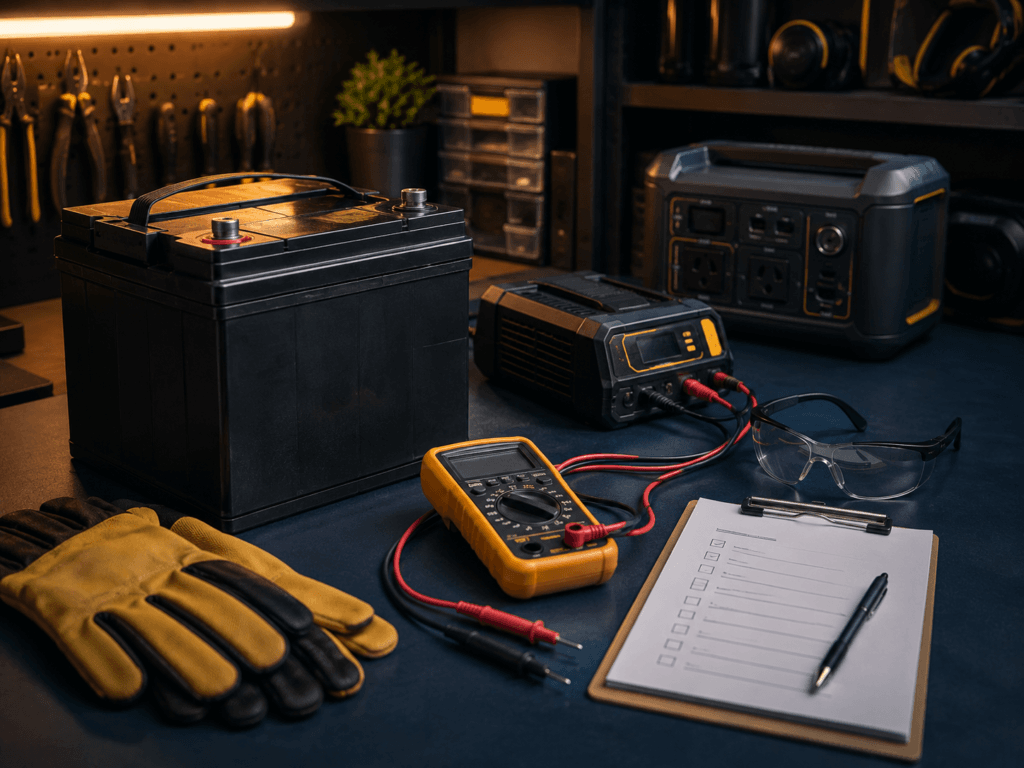
What Battery Reconditioning Means
Battery reconditioning usually means using a process to recover some usable capacity from an older battery. In many cases, people use the term for lead-acid batteries, car batteries, deep-cycle batteries, or small rechargeable batteries that have lost performance over time.
This is different from repairing a modern portable power station. Most portable power stations use sealed lithium battery packs, battery management systems, inverters, charging circuits, and safety electronics. Those systems should not be opened or modified unless handled by qualified service support.
When Battery Reconditioning for Backup Power Makes Sense
Battery reconditioning for backup power may make sense if you already own older batteries and want to learn basic maintenance, testing, and recovery methods before replacing everything.
It is most relevant for buyers who have:
- older lead-acid batteries in a garage or workshop
- RV or marine batteries that are losing runtime
- small rechargeable batteries used around the home
- backup batteries that need basic inspection before reuse
The best use case is education. You learn how batteries fail, what warning signs matter, and when replacement is safer than repair. Battery reconditioning for backup power should be treated as a maintenance topic, not a guarantee that every old battery can become reliable again.
When Not to Use Battery Reconditioning
Do not treat battery reconditioning as a guaranteed fix. Some batteries are too old, too damaged, or too risky to recover safely.
Avoid DIY reconditioning if the battery is:
- swollen or cracked
- leaking fluid
- overheating
- smelling unusual
- physically damaged
- part of a sealed lithium portable power station
- used for medical backup or critical safety needs
For emergency backup power, reliability matters more than squeezing extra life from a questionable battery. If a battery is needed for CPAP support, sump pump planning, refrigerator backup, or storm outages, replacement or a properly sized portable power station is usually the safer path.
Battery Reconditioning vs Portable Power Stations
Battery reconditioning and portable power stations solve different problems.
| Option | Best For | Main Limitation |
|---|---|---|
| Battery reconditioning | Learning battery care and possibly recovering older batteries | Not reliable enough for critical outage planning |
| Portable power station | Cleaner home backup, apartment outages, RV use, and emergency devices | Costs more upfront and must be sized correctly |
If your goal is to power a refrigerator, router, lights, laptop, fan, or CPAP machine during an outage, start with proper battery sizing. Read our guide on what size power station do I need before buying anything.
Battery reconditioning for backup power may help with older standalone batteries, but it should not replace a clear plan for capacity, output, runtime, and safe charging.
Safety Rules Before You Try It
Battery work can be dangerous. The wrong battery, tool, charger, or method can cause acid exposure, sparks, overheating, fire, or permanent damage.
Follow these basic rules:
- Do not open sealed lithium battery packs.
- Do not modify a portable power station battery pack.
- Do not work near flames, sparks, or poor ventilation.
- Do not handle leaking or swollen batteries.
- Do not rely on a reconditioned battery for critical medical backup.
- Recycle batteries that show damage or unsafe behavior.
For unsafe or damaged batteries, follow official recycling guidance instead of trying to reuse them. The U.S. Environmental Protection Agency explains that lithium-ion batteries and devices containing them should be taken to separate recycling or household hazardous waste collection points, not placed in household trash or regular recycling bins. Read the EPA lithium-ion battery recycling guidance.
Battery reconditioning should be treated as a learning and maintenance topic, not a shortcut around safe backup planning.
Recommended Battery Reconditioning Resource
For readers who want a structured introduction to battery maintenance, the New Battery Reconditioning Course is the first ClickBank resource we are testing on PowerLabPro.
Use it only as an educational resource. Do not treat any course as a guarantee that every battery can be restored.
Battery reconditioning for backup power is most useful when it helps you understand battery condition, safety limits, and replacement timing.
Learn more about battery reconditioning
FAQ
Is battery reconditioning for backup power worth it?
It can be worth learning if you already own older batteries and want to understand maintenance, testing, and safe limits. It is not a guaranteed way to build a reliable emergency backup system.
Can I recondition a portable power station battery?
No. Do not open or modify a portable power station battery pack. Modern portable power stations use sealed battery systems and safety electronics that should be handled only by qualified support or the manufacturer.
Can battery reconditioning replace buying a power station?
No. A portable power station is usually the better option if you need clean, predictable backup power for phones, Wi-Fi, lights, laptops, small appliances, or outage planning.
What batteries are unsafe to recondition?
Do not attempt to recondition swollen, leaking, cracked, overheated, burned, or physically damaged batteries. Recycle them through a proper battery recycling channel.
Final Verdict
For most readers, battery reconditioning for backup power is best treated as a maintenance skill, while a portable power station is still the better choice for dependable outage backup.
Battery reconditioning for backup power is useful as a learning topic, not as a guaranteed emergency solution. If you already own older batteries, it can help you understand maintenance and failure signs. If you need dependable outage backup, choose a properly sized portable power station instead.