
Review
Jackery HomePower 3000 Review: Compact 3kWh Backup Power for Short Outages
The Jackery HomePower 3000 is a compact 3kWh LiFePO4 portable power station built for essential home backup, not full whole-home power. Its 3,072Wh capacity, 3,600W output, 7,200W surge rating, about 20ms UPS support, and manual transfer switch compatibility make it a strong fit for refrigerators, Wi-Fi, lights, fans, short outages, and RV/camping support. The main trade-offs are weight, non-expandable capacity, and the need to size appliances carefully before relying on it for longer outages.
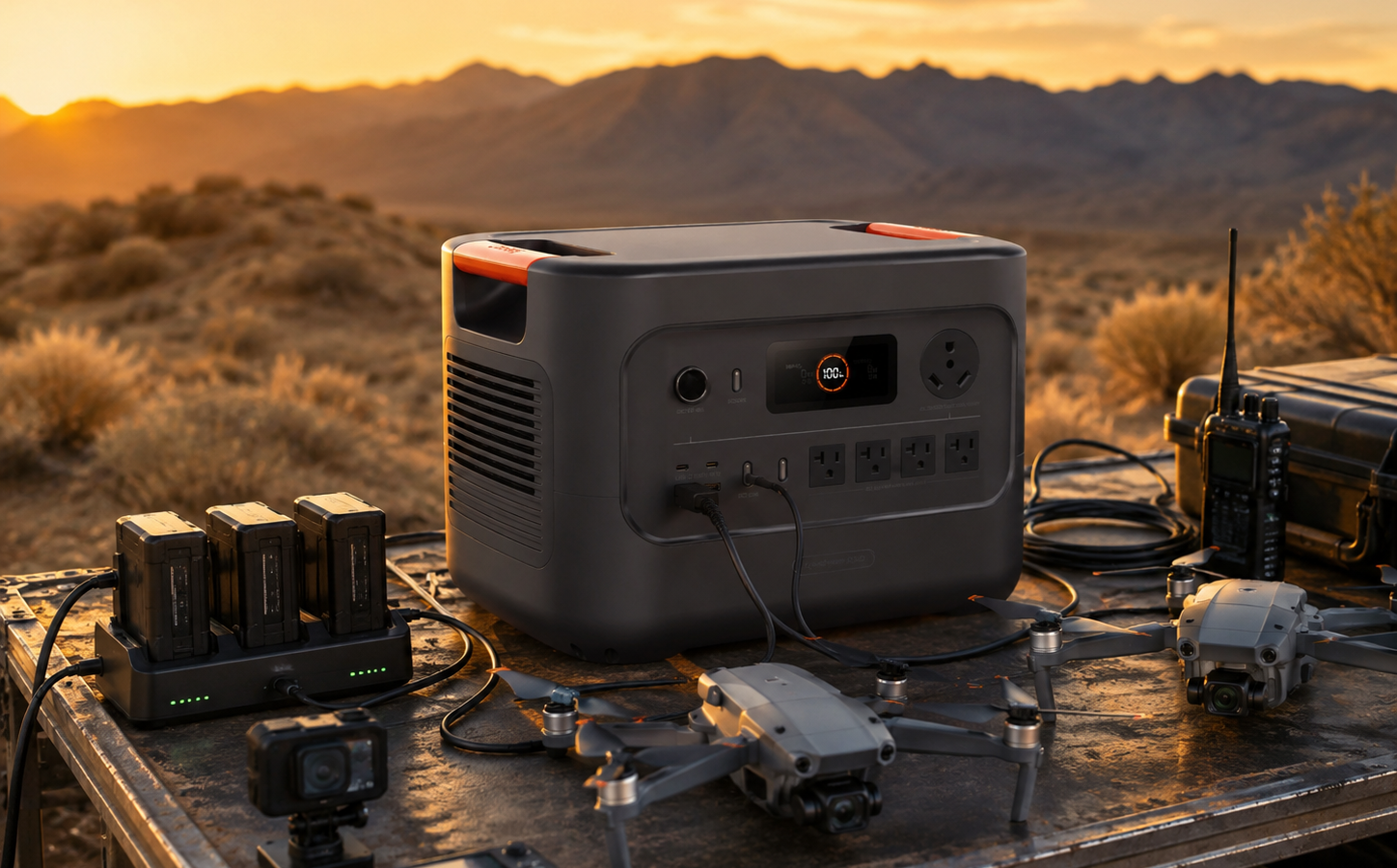
Linked Product Snapshot
Core specs
Buyer Fit
Pros and tradeoffs
Strengths
Pros
- 3,072Wh LiFePO4 battery capacity
- 3,600W continuous output and 7,200W surge output
- About 20ms UPS support for selected essentials
- Manual transfer switch support for up to six essential circuits
- TT-30 RV port for plug-and-play RV support
- Compact design for a 3kWh-class backup station
- 4,000+ cycles to 70% capacity
- ZeroDrain storage claim helps long-term readiness
Tradeoffs
Cons
- Not expandable with extra batteries
- Heavy at about 60 lb
- Not a full whole-home backup solution
- Transfer-switch use requires proper setup
- Solar panel setup requires compatibility attention
- Runtime depends heavily on appliance wattage and usage
- Not ideal for heavy HVAC loads or multi-day whole-home backup
This article may contain affiliate links. If you buy through these links, PowerLabPro may earn a commission at no extra cost to you. As an Amazon Associate I earn from qualifying purchases.
Research note: This Jackery HomePower 3000 review is based on manufacturer specifications, product documentation, and retailer product-identity information. PowerLabPro has not performed hands-on laboratory testing. Confirm current availability, included accessories, and compatibility before purchase.
The Jackery HomePower 3000 is for buyers who have outgrown compact 1kWh backup batteries but do not need an installed whole-home battery system. Its 3,072Wh LiFePO4 battery and 3,600W AC output put it in a useful middle class for a refrigerator, Wi-Fi, phones, laptops, lights, fans, and selected essentials.
The main question in this Jackery HomePower 3000 review is not whether the unit can power something for a few minutes. It is whether a fixed 3kWh battery fits your real outage plan better than a smaller station or a larger expandable platform.
Jackery HomePower 3000 Review: Quick Verdict
Best for: refrigerator-plus-essentials backup, remote-work coverage, short home outages, and buyers who want more reserve than the 1kWh class.
Buy it when: you want a single portable unit with serious output and do not need extra expansion batteries later.
Skip it when: you need 240V whole-home coverage, central AC, heavy electric heating, major pump loads, or long multi-day runtime.
This Jackery HomePower 3000 review recommends it for selected essential loads, not unlimited household power.
For broader outage preparation, read Ready.gov’s power outage guidance.
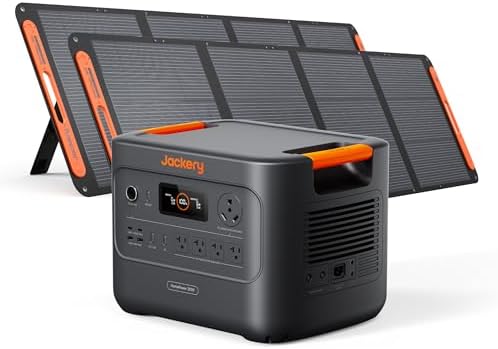
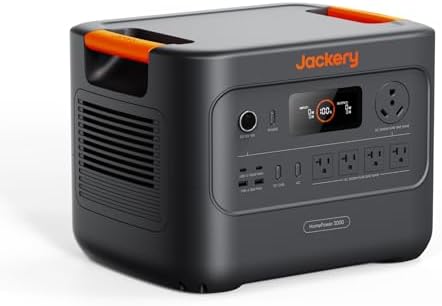
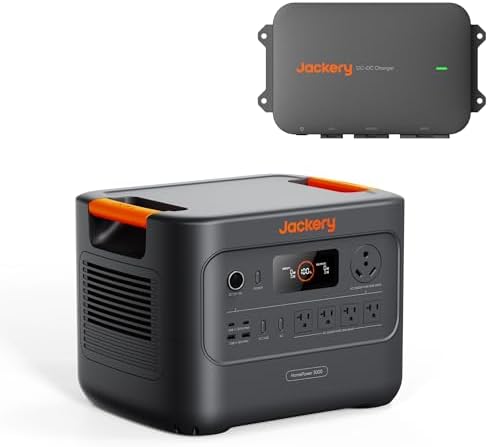
Jackery HomePower 3000 Review: Key Specs That Matter
A useful Jackery HomePower 3000 review needs to separate the headline numbers from their practical meaning. This is a 3kWh-class power station with enough inverter headroom for many home essentials, but it remains a portable battery system with a finite energy reserve.
| Feature | HomePower 3000 | Buyer Meaning |
|---|---|---|
| Battery capacity | 3,072Wh | More reserve for refrigerator-plus-essentials planning than a 1kWh station. |
| Battery chemistry | LiFePO4 | Designed for repeated backup use and long service life. |
| AC output | 3,600W maximum | Useful inverter headroom for essential devices and selected appliances. |
| Surge output | 7,200W peak | Helps with brief startup demand; it does not add runtime. |
| Weight | About 59.5 lb | Portable for the class, but best stored in one planned location. |
| Solar input | Up to 1,000W total | Can help recharge a compatible setup in good conditions. |
| UPS mode | About 20 ms switchover | Useful for selected everyday electronics, not zero-ms server protection. |
| Expansion | No current add-on battery path listed | Important limitation for buyers planning longer outages. |
For the source specifications used in this review, see Jackery’s official HomePower 3000 product page.
Who the Jackery HomePower 3000 Is Best For
This Jackery HomePower 3000 review is most positive for buyers with a clear essential-load list rather than an expectation of full-home power.
Homeowners who need selected essentials
This is a practical fit when the priority list is a refrigerator, Wi-Fi router, lights, phones, laptop work, fans, and small loads used carefully. It gives more room than a 1kWh station without the size and complexity of a much larger home system.
Refrigerator-plus-essentials planning
A 3,072Wh battery gives more useful reserve for a refrigerator plan than a smaller portable station. Refrigerator runtime still depends on running demand, compressor startup, temperature, door openings, and every other device connected. Use the refrigerator backup guide to calculate around your actual appliance.
Remote work and communications backup
Router, modem, laptop, phone, and LED lighting loads are modest compared with heating or kitchen appliances. In this Jackery HomePower 3000 review, that is one of the strongest use cases because it keeps essential communications running without wasting energy on nonessential loads.
Buyers who prefer one self-contained unit
Some buyers do not want extra modules or a complex installed energy system. The HomePower 3000 is a clear one-unit choice when its capacity, output, and fixed battery design match the plan from the beginning.
Who Should Skip It
A candid Jackery HomePower 3000 review has to be clear about the limit: this is selected-essential backup, not a substitute for every circuit and appliance in a house.
- Whole-home buyers: do not expect one portable station to power major circuits, HVAC, laundry, and every room at once.
- Expansion-first buyers: Jackery does not currently list an add-on battery path for this model.
- Heavy heating or cooling users: space heaters, portable AC, and similar loads can drain a 3kWh battery quickly.
- Buyers unable to move 60 lb: plan a stable storage location instead of frequent carrying.
- Multi-day outage planners: compare larger expandable systems when long runtime is a requirement.
For a wider shortlist by outage goal, compare the best portable power stations for home backup.
What 3,072Wh Really Means
Capacity is the main reason to step up from a 1kWh station. About three times the stored energy gives more margin for a refrigerator, router, lights, phones, laptops, and fans. It does not create unlimited runtime.
Watts tell you what the inverter can run at once. Watt-hours tell you how long the plan may last. Heavy heating, cooking, pumps, and continuous high-watt equipment can drain the battery quickly even when the output rating is sufficient.
The capacity lesson in this Jackery HomePower 3000 review is simple: list the must-run loads, calculate runtime, then choose the smallest system that can safely carry them. Use the power station sizing guide before purchasing.
Why 3,600W Output Matters
The 3,600W maximum AC output gives this unit more flexibility than lower-output portable stations. It provides useful headroom for selected household loads and short startup demands from refrigerators, fans, compressors, and similar appliances.
Output is not runtime. A high-output inverter can start a device, but the battery still determines how long the setup can operate. Keep high-draw heating, cooking, and cooling equipment separate from an essential-load plan unless you have calculated both watts and watt-hours.
For this Jackery HomePower 3000 review, output versus runtime is the key distinction. The inverter rating matters, but it cannot make a 3kWh battery behave like an expandable multi-battery system.
Home Backup and Refrigerator Use
This Jackery HomePower 3000 review treats the unit as a stronger refrigerator-backup candidate than a 500Wh or 1kWh battery because it has more stored energy and output headroom. It still cannot promise a fixed refrigerator runtime.
For a practical outage setup, prioritize the refrigerator, router, phone charging, a few LED lights, and perhaps a fan. Avoid adding a microwave, electric kettle, coffee maker, space heater, or other high-draw load to the same plan unless you have calculated the total demand.
Apartment buyers should also read the portable power station for apartment outages guide, where storage, carrying weight, and indoor-ready backup are major factors.
Jackery says the unit can be paired with a manual transfer switch for up to six essential circuits. Treat that as an electrical project: use compatible equipment, follow the manufacturer instructions, and use a qualified electrician when the installation or local code requires it.
Charging, Solar, and UPS Mode
For routine readiness, AC charging is the simplest approach. Charge the station in advance, store it in an accessible location, and check its state of charge before severe weather or planned travel.
The HomePower 3000 accepts up to 1,000W of solar input. Real solar recovery depends on compatible panels, sunlight, shade, panel angle, temperature, cable losses, and the station’s own input limits. Solar can extend a backup plan; it is not a guarantee of unlimited power.
The charging section of this Jackery HomePower 3000 review matters most for longer outages: treat solar as recovery capacity, not as a replacement for a conservative load plan.
UPS mode switches to battery in about 20 ms during an outage. That can help with many everyday electronics, but it is not designed as zero-ms protection for sensitive data servers.
Jackery HomePower 3000 Review: Pros and Cons
The pros and cons in this Jackery HomePower 3000 review are mostly about buyer fit: useful capacity and inverter strength in one unit, but no listed battery-expansion path.
Pros
- 3,072Wh capacity is a meaningful step up from compact 1kWh backup.
- 3,600W output and 7,200W surge provide useful inverter headroom.
- LiFePO4 chemistry suits repeated backup use.
- About 59.5 lb is manageable for a 3kWh-class unit when stored in one location.
- UPS mode and solar input add useful flexibility.
- Manual-transfer-switch compatibility can support selected circuits when installed correctly.
Cons
- No current add-on battery expansion path is listed.
- Still heavy for frequent lifting.
- Not a full whole-home or central-AC backup system.
- Heavy appliances can drain the battery quickly.
- Solar performance depends heavily on the panel setup and real conditions.
- Availability, bundles, and retailer listings can change.
Alternatives to Compare
A complete Jackery HomePower 3000 review should compare options that solve different problems: a smaller refrigerator-plus-essentials plan, a larger long-outage plan, or an expandable home-backup ecosystem.
| Alternative | Better When You Need | Trade-Off |
|---|---|---|
| Jackery HomePower 3600 Plus | More capacity in a larger Jackery home-backup direction | Higher cost and a more involved system |
| Jackery Explorer 5000 Plus | Longer outages and 120V/240V home-backup capability | Less portable and much more expensive |
| BLUETTI AC200L | A smaller 2kWh-class refrigerator-plus-essentials plan | Less stored energy |
| Anker SOLIX F3800 Plus | A more serious 120V/240V backup ecosystem | Heavier and more complex |
The best alternative depends on whether you need less capacity, more runtime, or expandability. Do not compare models by battery size alone.
Jackery HomePower 3000 Review FAQ
Is the Jackery HomePower 3000 good for home backup?
This Jackery HomePower 3000 review finds it a strong fit for selected essential loads during short outages. It is not a complete replacement for a whole-home battery system.
Can the Jackery HomePower 3000 run a refrigerator?
It can support many refrigerator-backup situations, but results depend on running demand, compressor startup, temperature, door openings, and the other devices connected.
Is the Jackery HomePower 3000 expandable?
Jackery does not currently list an add-on battery expansion path for this model. Buyers who need more capacity later should compare expandable systems first.
Can it power household circuits?
Jackery says it can support up to six essential circuits with a compatible manual transfer switch. That type of setup needs proper equipment, planning, and safe installation.
Is this a hands-on review?
No. This is a researched buyer-fit review based on manufacturer information and product documentation. PowerLabPro does not claim hands-on laboratory testing.
Final Verdict: Is the Jackery HomePower 3000 Worth It?
This Jackery HomePower 3000 review comes down to fit. It is a practical 3kWh-class station for buyers who want stronger backup for a refrigerator, Wi-Fi, lighting, phones, laptops, and selected essentials without moving into a much larger home-energy system.
It is not the right endpoint for central air, full-home coverage, long multi-day outages, or buyers who know they will need expansion batteries. For those jobs, compare a larger expandable system before buying.
The final takeaway from this Jackery HomePower 3000 review is to measure first and buy second. Confirm the load list, desired runtime, current availability, and whether a fixed-capacity 3kWh unit matches your long-term backup plan.
Testing Notes
- Research-based review using Jackery official product data, Amazon listing data, and product manual information.
- No hands-on lab testing was performed for this article.
- Do not add runtime claims beyond manufacturer estimates unless direct testing, watt-meter readings, or user-provided measurements are available.