
Review
Anker SOLIX F3000 Review
The Anker SOLIX F3000 is a heavy-duty rolling LiFePO4 power station built for home backup, RV power, solar charging, and expandable outage planning. It offers 3,072Wh capacity, strong TT-30R output, 2,400W solar input, 20ms UPS support, and expansion with BP3000 batteries, but it is heavy and 240V output requires two F3000 units plus the Double Voltage Hub.
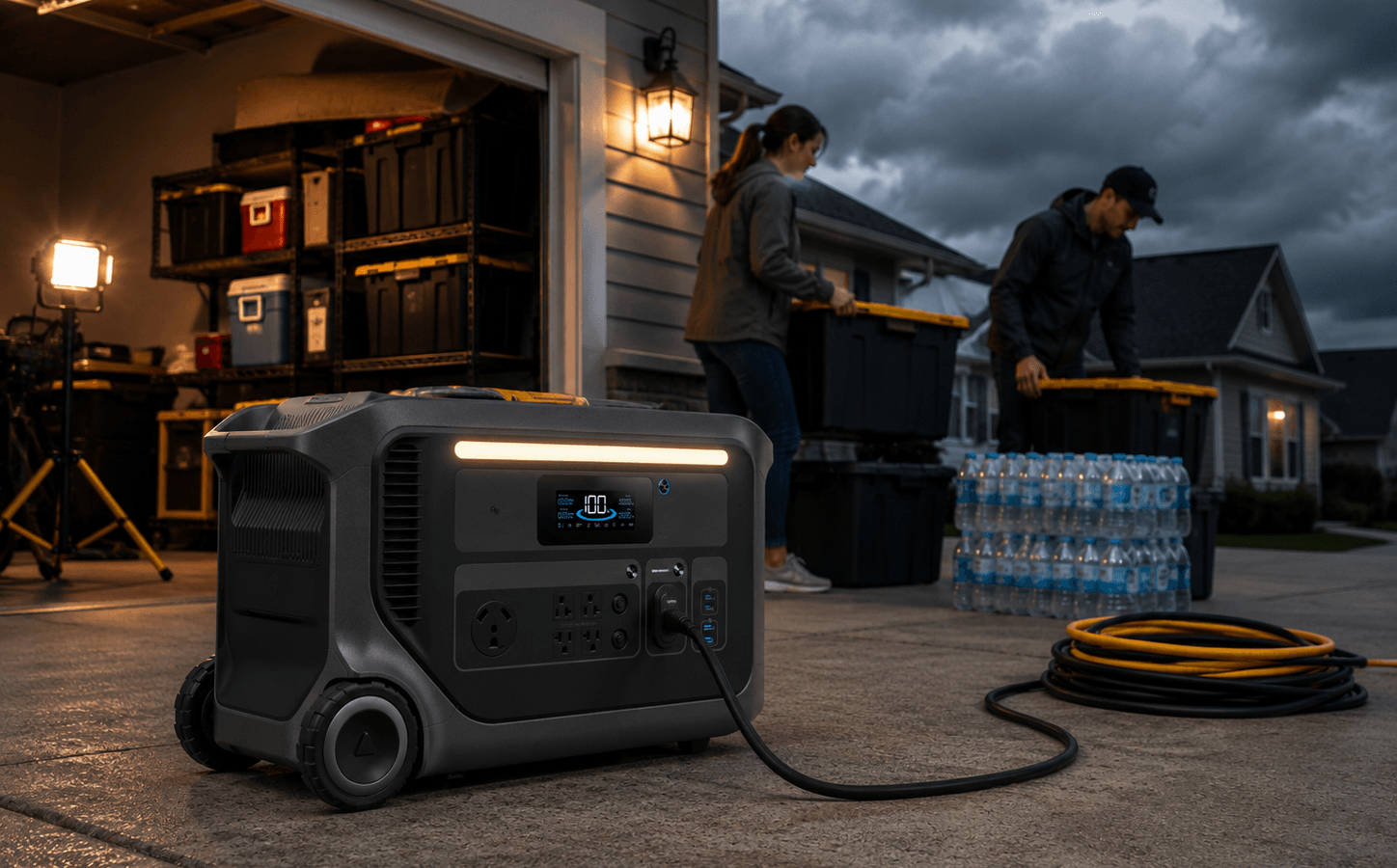
Linked Product Snapshot
Core specs
Buyer Fit
Pros and tradeoffs
Strengths
Pros
- Large 3,072Wh LiFePO4 battery
- Rolling design with wheels and pull handle
- 2,400W max output from NEMA 5-20R
- 3,600W max output from TT-30R
- 7,200W listed surge output
- Up to 2,400W total solar input
- 20ms listed UPS support
- Expandable with up to 3 BP3000 batteries
- 5-year listed warranty
Tradeoffs
Cons
- Heavy at 91.5 lb
- 240V support requires two F3000 units plus Double Voltage Hub
- Full 3,600W output depends on the correct outlet/use case
- Expansion batteries add cost and weight
- Not ideal for lightweight portable use
- Home-panel or 240V use needs careful setup planning
The Anker SOLIX F3000 review question is not whether this is a powerful battery. It is. The real question is whether this rolling 3kWh-class power station fits your home backup, RV, or outage plan better than a smaller portable unit or a larger whole-home battery setup.
This Anker SOLIX F3000 review looks at the buyer-fit details that matter before publishing: capacity, AC output, solar input, UPS support, expansion, 240V requirements, weight, and who should avoid it.
The Anker SOLIX F3000 Portable Power Station is built around a 3,072Wh LFP battery, a rolling suitcase-style body, strong AC output, dual solar input, expansion support, and a 20ms listed UPS mode. It is not a small camping power bank. It is a heavy backup unit for buyers who want serious stored energy without moving straight into a permanent home battery system.
The main trade-off is weight and system complexity. At 91.5 lb, the F3000 is movable because it has wheels and a pull handle, but it is not something most buyers will casually lift or move upstairs. Its best features also depend on using the right outlet, solar setup, expansion battery, or 240V accessory configuration.
QUICK VERDICT
The Anker SOLIX F3000 is best for buyers who want a rolling 3,072Wh LiFePO4 power station for home backup, RV use, solar charging, and expandable outage planning. Skip it if you need lightweight portability, simple USB-only backup, or true 240V support from a single unit.
Anker SOLIX F3000 Review: Quick Specs
This Anker SOLIX F3000 review uses the verified product data available for the F3000 model and avoids unsupported runtime, price, or hands-on testing claims.
| Product | Anker SOLIX F3000 Portable Power Station |
|---|---|
| Capacity | 3,072Wh |
| Battery chemistry | LFP / LiFePO4 |
| AC output | 2,400W max from NEMA 5-20R; 3,600W max from TT-30R |
| Surge output | 7,200W listed |
| Solar input | Up to 2,400W total from dual PV inputs |
| UPS support | 20ms listed |
| Expansion | Up to 3 × BP3000 expansion batteries listed in provided data |
| 240V support | Requires two F3000 units plus Double Voltage Hub |
| Car socket | 12V / 10A |
| Weight | 91.5 lb |
| Warranty | 5 years listed |

- 𝗠𝗮𝘀𝘀𝗶𝘃𝗲 𝟯,𝟲𝟬𝟬𝗪 𝗣𝗮𝘀𝘀-𝗧𝗵𝗿𝗼𝘂𝗴𝗵 𝗖𝗵𝗮𝗿𝗴𝗶𝗻𝗴: No more interruptions during outages. Recharge with a 120V generator and run appli…
- 𝗟𝗲𝘀𝘀 𝗣𝗼𝘄𝗲𝗿 𝗪𝗮𝘀𝘁𝗲, 𝗟𝗼𝗻𝗴𝗲𝗿 𝗕𝗮𝗰𝗸𝘂𝗽 𝗧𝗶𝗺𝗲: With ultra-low idle power consumption, F3000 achieves 125 hours of AC idle standby…
- 𝗨𝗹𝘁𝗿𝗮 𝟮,𝟰𝟬𝟬𝗪 𝗦𝗼𝗹𝗮𝗿 𝗥𝗲𝗰𝗵𝗮𝗿𝗴𝗶𝗻𝗴: Charge fast outdoors with portable and rigid solar panel compatibility. Just plug into th…
Who the Anker SOLIX F3000 Is Best For
The Anker SOLIX F3000 is best for buyers who want a serious portable power station for planned backup, not casual carry-around use. Its 3,072Wh battery, rolling design, TT-30R output, dual solar input, and expansion support make it a better fit for home outage planning, RV setups, garages, workshops, and off-grid support.
This Anker SOLIX F3000 review is strongest for readers comparing the F3000 against smaller 1kWh or 2kWh units and larger home-backup systems. The F3000 sits in the middle: more capable than a compact power station, but not as permanent as a professionally installed battery system.
- Best for home backup: refrigerators, routers, LED lights, laptops, small appliances, and selected heavier loads within outlet limits.
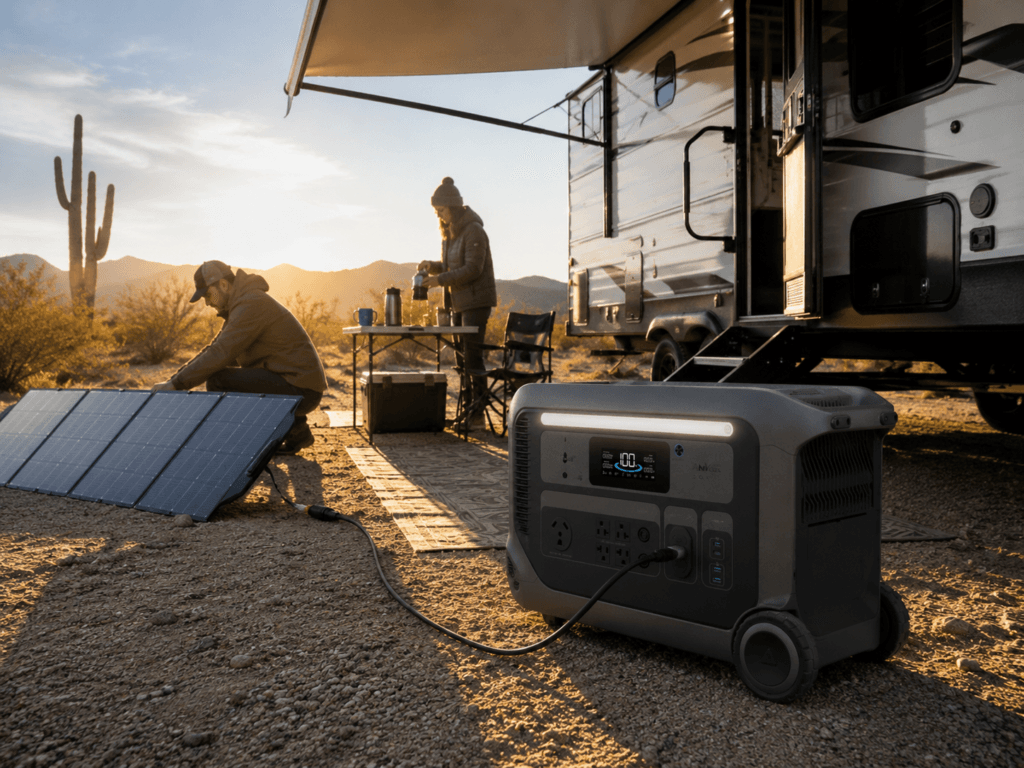
- Best for RV users: buyers who need TT-30R output, solar charging, and a rolling design.
- Best for solar-supported outages: users who can take advantage of dual PV inputs up to 2,400W total.
- Best for expandable planning: buyers who may add BP3000 batteries later for longer runtime.
Who Should Skip the Anker SOLIX F3000
This Anker SOLIX F3000 review is not a blanket recommendation. The F3000 is powerful, but it is not the right choice if your needs are simple.
Skip it if you only need to charge phones, run a Wi-Fi router, power a laptop, or keep a few LED lights on. A smaller LiFePO4 power station will usually be easier to store, easier to lift, and less expensive for basic emergency use.
- Not ideal for: apartment buyers who need a compact backup battery.
- Not ideal for: users who need lightweight portability.
- Not ideal for: buyers expecting single-unit 240V output.
- Not ideal for: anyone who does not want to manage accessories, expansion batteries, or solar input limits.
Power Output and Capacity
The F3000 has enough capacity and output to sit above mid-size portable power stations. Its 3,072Wh battery gives it a practical base for emergency runtime, while its AC output depends on which outlet you use.
The NEMA 5-20R output is listed up to 2,400W max. The TT-30R output is listed up to 3,600W max. That distinction matters. Do not assume every outlet on the unit delivers the same maximum power.
For this Anker SOLIX F3000 review, the outlet-specific output is one of the most important buyer details. The F3000 can support heavier loads than many smaller units, but the correct outlet and setup still matter.
The 7,200W listed surge output also helps with startup loads, but surge capacity does not mean unlimited runtime. High-draw appliances will drain a 3,072Wh battery quickly. The F3000 is strongest when used for prioritized essentials instead of trying to run everything in the house.
Buyer note: Capacity tells you how much energy is stored. Output tells you what the power station can run at one time. For backup planning, use both numbers.
For sizing your real appliances, use the PowerLabPro guide: what size power station do I need?
Solar Charging and Recharge Speed
The Anker SOLIX F3000 supports up to 2,400W total solar input from dual PV inputs. That is one of the strongest reasons to consider it for long outages, RV use, and off-grid setups.
The official spec structure separates the solar input into a high-voltage PV input and a low-voltage PV input. This gives buyers more flexibility, but it also means panel planning matters. Voltage range, series or parallel wiring, connector compatibility, shading, and weather can all affect real solar charging performance.
From a practical Anker SOLIX F3000 review perspective, solar input is a major advantage only if the buyer has enough panel capacity, safe cable routing, and realistic sun exposure. Without that, the F3000 is still useful, but its solar potential will not be fully used.
Do not plan around perfect solar numbers. A 2,400W input rating is useful, but real-world solar output depends on sunlight, panel angle, temperature, and cable setup. For emergency backup, plan conservatively.
Expansion, UPS, and 240V Support
Expansion is one of the F3000’s strongest buying arguments. The provided product data lists support for up to 3 BP3000 expansion batteries. That makes the Anker SOLIX F3000 more flexible than a fixed-capacity power station.
The F3000 also supports a 20ms listed UPS mode. That can help bridge short interruptions for selected devices, but it should not be treated as a universal replacement for a dedicated UPS in every sensitive setup. Verify the exact UPS behavior before using it with medical devices, servers, or critical electronics.
The 240V support also needs careful reading. A single F3000 is a 120V unit. For 240V output, Anker says you need two F3000 units connected with the Double Voltage Hub. That makes 240V possible, but it also means buying into a larger and more expensive system.
This Anker SOLIX F3000 review treats 240V support as an upgrade path, not a built-in single-unit feature. Buyers planning to support larger 240V appliances should check the full two-unit setup before buying.
For home-panel integration, transfer-switch planning, 240V appliances, or high-demand circuits, use qualified electrical help. Do not backfeed a home panel through a wall outlet.
Anker SOLIX F3000 Review: Pros and Cons
Pros
- Large 3,072Wh LiFePO4 battery capacity.
- Rolling design with wheels and pull handle.
- 2,400W max output from NEMA 5-20R.
- 3,600W max output from TT-30R.
- 7,200W listed surge output.
- Up to 2,400W total solar input.
- 20ms listed UPS support.
- Expansion support with BP3000 batteries.
- 5-year listed warranty.
Cons
- Heavy at 91.5 lb.
- Not ideal for frequent lifting or stairs.
- 240V output requires two F3000 units plus Double Voltage Hub.
- Full 3,600W output depends on the correct outlet.
- Expansion batteries add cost and weight.
- Overkill for basic phones, lights, and router backup.
Buying Advice: Should You Buy the Anker SOLIX F3000?
Buy the Anker SOLIX F3000 if you want a rolling 3kWh-class power station for home backup, RV power, solar charging, and future expansion. It makes the most sense when your backup plan includes more than small electronics.
This Anker SOLIX F3000 review points to one clear buying rule: choose it when you need real backup headroom and can use the rolling design, TT-30R output, solar input, or expansion path. Do not buy it only because the numbers look strong.
If your real emergency load is a router, phones, laptops, LED lights, and a small fan, a smaller power station may be a cleaner fit. The F3000 becomes more convincing when you need higher output, TT-30R support, solar input, and expansion capacity.
Best buying fit
Choose the Anker SOLIX F3000 if you want a rolling LiFePO4 power station for home backup, RV power, and solar-supported outages, and you understand that 240V support requires a two-unit setup.
Safety and Setup Notes
Large portable power stations are cleaner and quieter than gas generators, but they still need careful setup. Keep the F3000 dry, avoid overloaded circuits, use properly rated cables, and follow Anker’s setup guidance for solar input, expansion batteries, generator charging, and 240V accessories.
Ready.gov advises using generators only outdoors and away from windows and warns against using a gas stove or oven to heat a home during a power outage. Battery power stations avoid exhaust, but home-backup wiring still needs safe electrical planning.
Read the external safety guidance here: Ready.gov power outage safety guidance.
For transfer switches, inlet boxes, RV integration, 240V appliances, or panel-level backup, use qualified electrical help. Do not backfeed a home panel through an outlet.
Alternatives to Consider
The best alternative depends on why the F3000 does or does not fit your plan. A good Anker SOLIX F3000 review should not end with “buy it” for every reader. The right choice depends on load size, portability, solar needs, 240V plans, and budget.
- Choose Anker SOLIX F3800 Plus if you need a stronger platform for serious 120V/240V home backup.
- Choose BLUETTI Apex 300 if you want another expandable high-output LiFePO4 system to compare against Anker.
- Choose Jackery Explorer 5000 Plus if you want a larger home-backup-focused system with more stored energy potential.
- Choose a smaller power station if you only need phones, lights, Wi-Fi, laptops, and short emergency runtime.
Anker SOLIX F3000 Review FAQ
Is the Anker SOLIX F3000 good for home backup?
Yes, the Anker SOLIX F3000 can be a strong home-backup option for selected essentials because it has 3,072Wh capacity, high AC output, solar input, expansion support, and a rolling design. It is not automatically a whole-home solution by itself.
Can the Anker SOLIX F3000 run a refrigerator?
It should be suitable for many refrigerators within the listed output limits, but runtime depends on the refrigerator’s wattage, compressor cycling, ambient temperature, and what else is connected. Measure or estimate your real load before buying.
Does the Anker SOLIX F3000 support 240V?
Yes, but not from one unit alone. Anker says 240V output requires two F3000 units connected with the Double Voltage Hub.
How much solar input does the Anker SOLIX F3000 support?
The Anker SOLIX F3000 supports up to 2,400W total solar input through dual PV inputs. Real charging speed depends on panel wattage, wiring, sunlight, angle, temperature, and shading.
Is the Anker SOLIX F3000 portable?
It is movable because it has wheels and a pull handle, but it is heavy at 91.5 lb. Treat it as a rolling backup power station, not a lightweight camping battery.
Is the Anker SOLIX F3000 worth it?
The Anker SOLIX F3000 is worth considering if you need a rolling 3kWh-class LiFePO4 system with strong AC output, solar input, expansion support, and RV/home-backup flexibility. It is not worth overbuying if your power needs are basic.
Final Verdict: Anker SOLIX F3000 Review
The Anker SOLIX F3000 is a strong fit for buyers who want a rolling LiFePO4 power station with real backup capacity, flexible output, solar charging, expansion support, and RV-friendly power options.
The main limitations are weight, outlet-specific output limits, accessory-dependent 240V support, and the cost of building a larger expanded system. This is not a small emergency battery. It is a serious portable backup platform.
This Anker SOLIX F3000 review comes down to buyer fit. Choose it if you need a rolling 3,072Wh power station for home backup, RV power, solar-supported outages, or expandable emergency planning. Skip it if you need lightweight portability or simple small-device backup.
Final CTA
Check the current bundle, warranty terms, accessory requirements, and availability before buying.
Testing Notes
- No hands-on testing is claimed.
- Review is based on manufacturer-listed specifications, Amazon listing data, and editorial buyer-fit analysis.
- 120V/240V setup should be verified before use with high-demand appliances.
- UPS support is listed at 20ms but should be verified before using with sensitive electronics, medical equipment, or critical devices.
- Solar performance depends on panel setup, sun conditions, wiring, and input limits.