
Buying Guide
Portable Power Station for DJ Setup: 3 Practical Picks
Portable power station for DJ setup guide comparing DJI Power 1000, Anker C1000 Gen 2, and DJI Power 2000 for powered speakers, controllers, laptops, lighting, mobile gigs, cable safety, and energy planning.
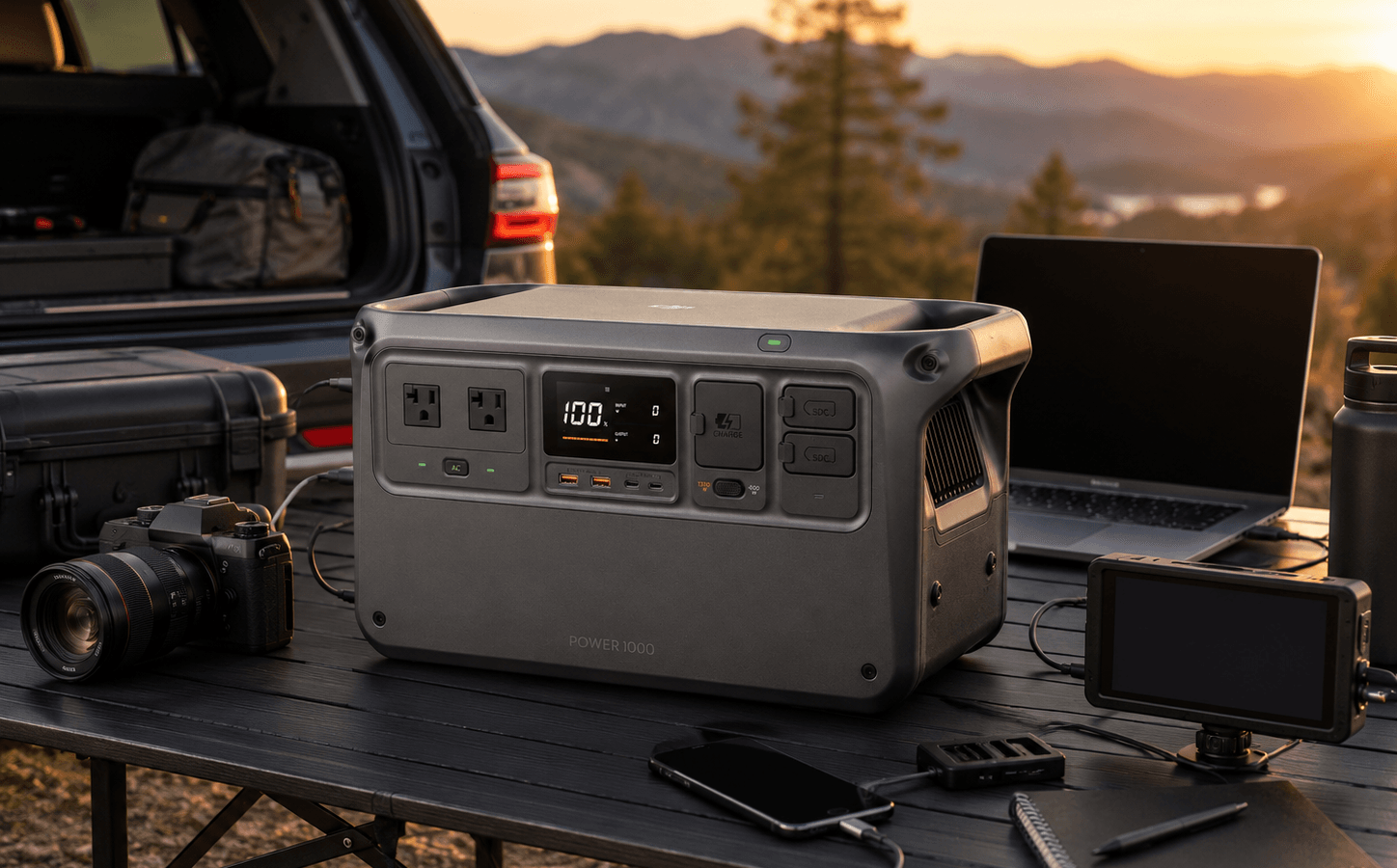
Product Shortlist
Featured products
Product
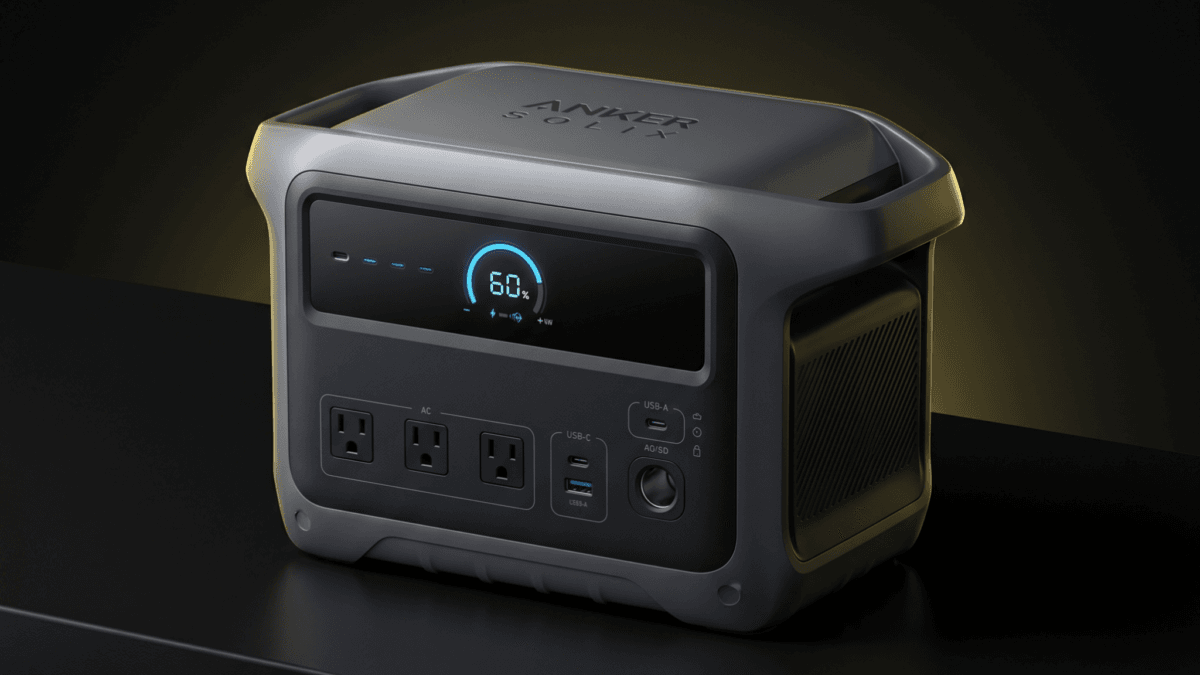
Anker SOLIX C1000 Gen 2 Portable Power Station
Compact 1,024Wh portable power station with 2,000W output, 3,000W peak, 49-minute fast AC recharge, 600W solar input, and 10 ms UPS support for home backup, camping, and RV use.
Product
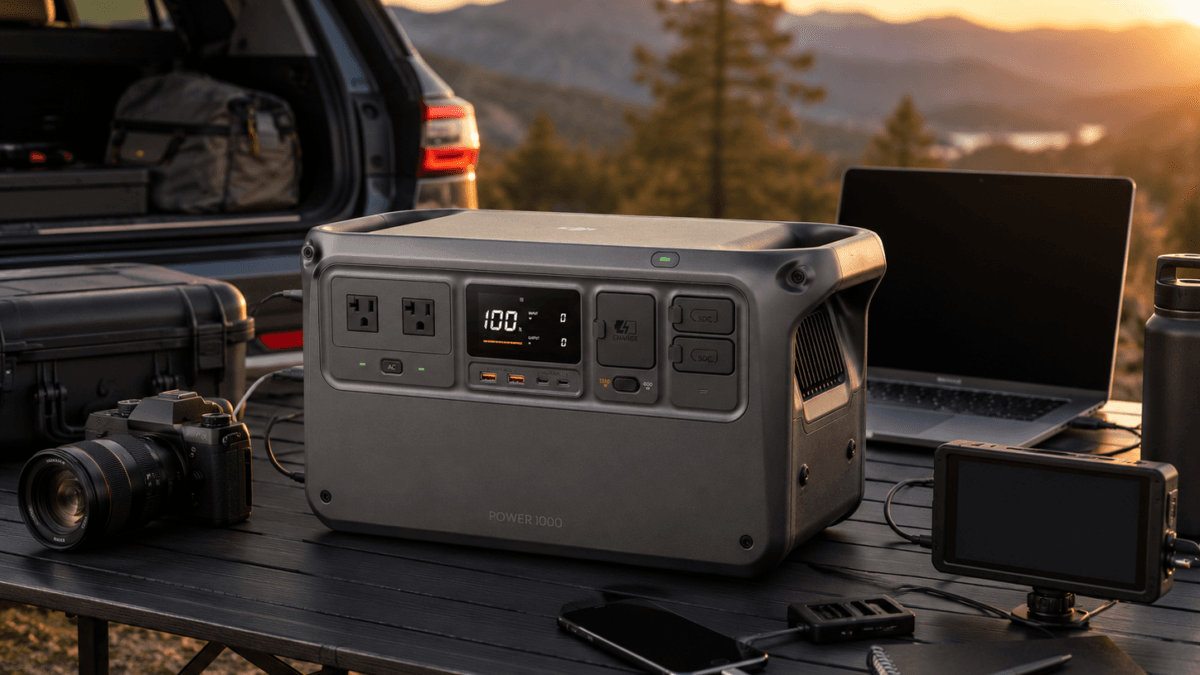
DJI Power 1000 Portable Power Station
A compact 1,024Wh LiFePO4 station for DJI users, creators, mobile work, RV travel, and controlled backup plans. Its standout strengths are 2,200W continuous AC output for DYM1000L, dual 140W USB-C, DJI SDC accessory connectivity, and up to 800W solar input with the required accessories. Its trade-off is limited 1kWh runtime for high-draw loads.
Product
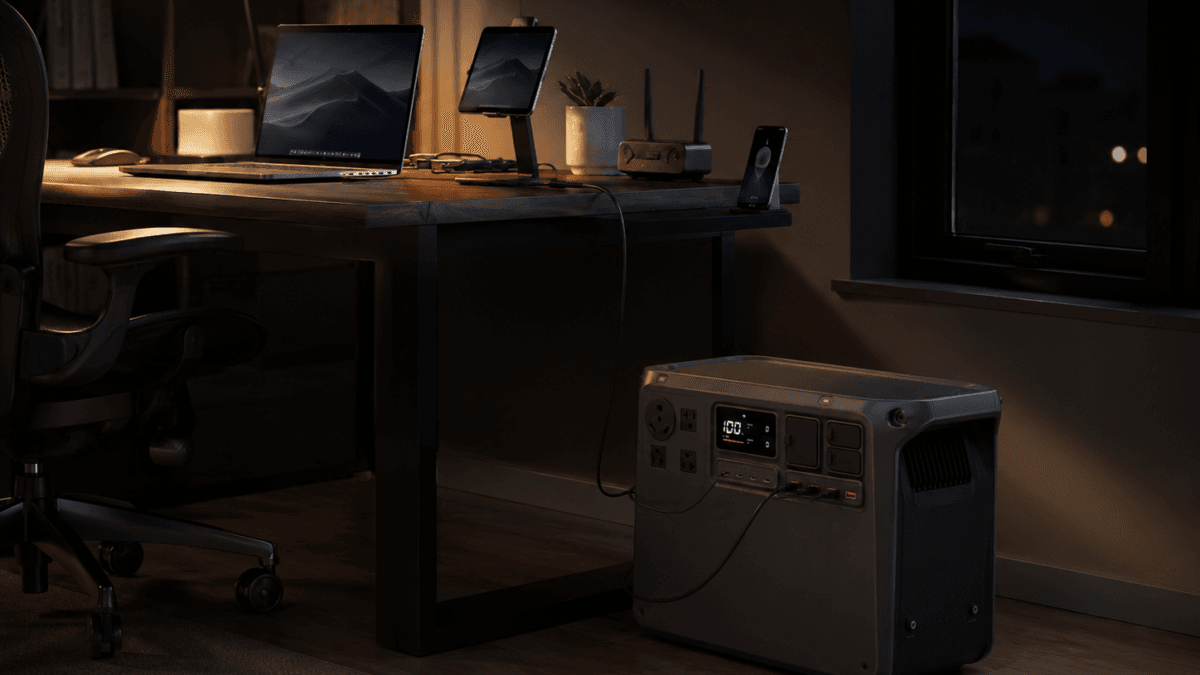
DJI Power 2000
A 2,048Wh LiFePO4 portable power station with 3,000W continuous AC output, four AC outlets, high-output USB-C ports, UPS capability, accessory-dependent solar and vehicle charging, and expansion up to 22,528Wh.
This article may contain affiliate links. If you buy through these links, PowerLabPro may earn a commission at no extra cost to you. As an Amazon Associate I earn from qualifying purchases.
A portable power station for DJ setup can make a mobile rig independent of a nearby wall outlet, but only when it is sized from the equipment’s real electrical draw. Powered speakers, a subwoofer, mixer or controller, laptop, wireless receivers, lighting, networking, and charging gear all compete for the same inverter and battery reserve. The correct station is therefore not simply the one with the largest watt number.
This guide compares three verified PowerLabPro Product records with distinct event roles. DJI Power 1000 is the best overall 1kWh creator-focused choice. Anker SOLIX C1000 Gen 2 is the lighter all-round 1kWh alternative. DJI Power 2000 is the larger 2kWh, 3,000W option for more equipment, longer events, or a mobile production rig that also powers lighting and charging.
PowerLabPro has not performed hands-on DJ-event testing with these stations. Recommendations use current manufacturer specifications, verified central Product records, connected Reviews, and buyer-fit analysis. Speaker peak or program ratings are not treated as wall-power draw, and this guide does not promise a fixed number of event hours.
- Best overall mobile rig: DJI Power 1000 for 1,024Wh, 2,200W continuous output, dual 140W USB-C, and a creator-oriented SDC ecosystem.
- Best lighter all-rounder: Anker SOLIX C1000 Gen 2 for 1,024Wh and 2,000W continuous output at about 24.9 lb.
- Best larger event reserve: DJI Power 2000 for 2,048Wh, 3,000W continuous output, four AC outlets, four USB-C ports, and expansion when the rig grows.
- Look elsewhere: your venue already provides a professionally distributed circuit, the event requires permanent or code-governed electrical distribution, the rig depends on loads above the station’s continuous rating, or weather and crowd conditions do not allow a dry protected battery location.
Table of Contents
How to choose a portable power station for DJ setup
Start with the rig, not the battery. Write down every device that can draw power during the event: powered tops, powered subwoofers, outboard amplifiers if used, mixer or DJ controller, laptop, audio interface, wireless microphone receivers, router or hotspot, monitor speaker, lighting, phone chargers, camera gear, and any other production equipment. Continuous AC output must cover the equipment operating at the same time.
Then separate output from energy. A 2,200W inverter may be able to operate a rig whose average wall draw is only a few hundred watts, but the battery still determines how many hours the event can run. Conversely, a large battery with insufficient inverter output can fail when the complete rig hits a higher-demand moment. Both numbers matter.
Finally, plan the physical event. A portable power station for DJ setup has to stay dry, ventilated, protected from guests and equipment cases, close enough to reduce cable clutter, and accessible if the load must be reduced. Portability is not just battery weight; it includes cable runs, stairs, vehicle loading, and how fast the system can be deployed during soundcheck.
Quick comparison of the three DJ power picks
| Pick | Verified key specs | Distinct DJ role | Main trade-off |
|---|---|---|---|
| DJI Power 1000 | 1,024Wh, 2,200W continuous, 4,400W peak, dual 140W USB-C, about 28.7 lb | Best overall creator and mobile DJ 1kWh choice | Less energy than a 2kWh base |
| Anker SOLIX C1000 Gen 2 | 1,024Wh, 2,000W continuous, 3,000W peak, 600W solar, about 24.9 lb | Best lighter all-round 1kWh station | Less creator-specific connectivity |
| DJI Power 2000 | 2,048Wh, 3,000W continuous, four AC, four USB-C, about 48.5 lb | Best larger mobile rig and production reserve | Heavier to transport and stage |
The shortlist is intentionally compact. DJI Power 1000 is the strongest overall portable power station for DJ setup when one 1kWh unit must serve audio and digital gear. Anker is slightly lighter and simpler. DJI Power 2000 doubles nominal energy and raises continuous output for a larger rig, but it should be purchased because measured event demand justifies it.
1. DJI Power 1000: best overall mobile DJ choice
DJI Power 1000 is the most distinctive 1kWh option in this guide. Current DJI specifications list model DYM1000L for the U.S. voltage range, 1,024Wh capacity, 2,200W maximum continuous output, 2,600W temporary maximum output under stated conditions, and 4,400W peak output. It also provides two 140W USB-C ports, two AC outlets, USB-A, SDC, and SDC Lite ports.
For a DJ, the dual 140W USB-C ports can reduce dependence on AC power bricks for compatible high-performance laptops and creator devices. That does not increase battery capacity, but it can simplify the rig and free AC outlets for powered audio. The 2,200W continuous inverter also gives a compact system substantial headroom when the measured wall draw is below that level.
Best for: mobile DJs, wedding or corporate rigs, laptop-heavy setups, creator gear, and a measured 1kWh event load that benefits from high-output USB-C.
Not ideal for: a large multi-subwoofer or lighting-heavy rig whose measured energy demand clearly exceeds 1kWh.
Main advantage: 2,200W continuous output plus two 140W USB-C ports in a 1,024Wh, roughly 28.7 lb platform.
Main trade-off: the battery reserve remains 1,024Wh even though the inverter can support much higher instantaneous load than many small gigs actually use.
Why it belongs in this guide: its combination of high continuous output, creator-focused ports, and manageable size makes it the clearest purpose-fit mobile DJ choice.
Better alternative if: choose Anker when lower weight and conventional simplicity matter more, or DJI Power 2000 when a measured event needs roughly twice the base energy.
Related Review: DJI Power 1000 Review. See the DJI Power 1000 Product page.
Official source: DJI Power 1000 specifications.
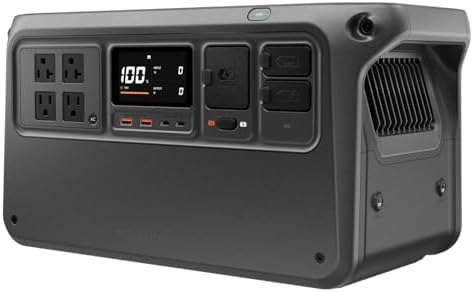
- Power More Than Ever – DJI Power 1000 V2 is a high-capacity solar generator that powers 99% [11] of appliances like kett…
- Charge Fast, Go Far – DJI Power 1000 V2 portable power station recharges to 80% in just 37 minutes [3], so you’re always…
- Uncompromising Safety, Anywhere – This power station features a 1024Wh LFP battery, intelligent BMS, sub-nano coating, a…
2. Anker SOLIX C1000 Gen 2: best lighter all-rounder
Anker SOLIX C1000 Gen 2 is the simpler all-round 1kWh alternative. Its verified central Product record lists 1,024Wh LFP capacity, 2,000W continuous AC output, 3,000W peak output, up to 600W solar input, and about 24.9 lb weight. That is enough inverter headroom for many measured mobile DJ rigs without moving into a 2kWh chassis.
The Anker makes particular sense when the rig uses ordinary AC connections and the buyer does not need DJI’s SDC ecosystem or dual 140W USB-C. The slightly lower weight can also matter when a DJ already carries speakers, stands, cases, cables, a controller, and lighting. A battery that saves a few pounds on every load-in can create more value than a port that remains unused.
Best for: compact mobile DJ rigs, smaller weddings or parties, straightforward AC-powered audio, and users who want a lighter 1kWh all-rounder.
Not ideal for: a rig that benefits heavily from dual 140W USB-C or needs more than a 1kWh event reserve.
Main advantage: 1,024Wh and 2,000W continuous output at about 24.9 lb.
Main trade-off: less creator-specific direct-device connectivity than DJI Power 1000.
Why it belongs in this guide: it is the practical conventional choice for a DJ who wants strong 1kWh performance without paying for or carrying a larger system.
Better alternative if: choose DJI Power 1000 for high-output USB-C and creator workflows, or DJI Power 2000 when energy reserve is the actual constraint.
Related Review: Anker SOLIX C1000 Gen 2 Review. See the Anker SOLIX C1000 Gen 2 Product page.
Official source: Anker SOLIX C1000 Gen 2 product information.
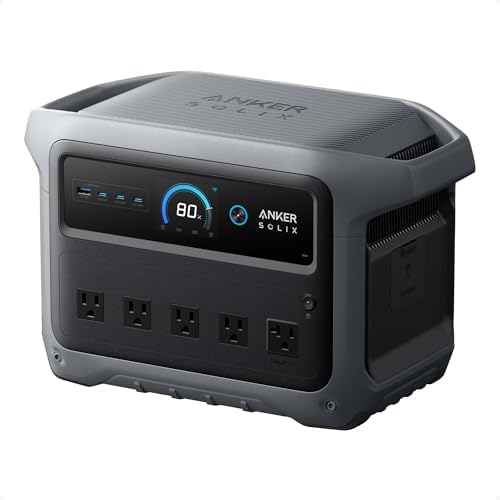
- 49 Min UltraFast Recharging: With upgraded HyperFlash tech, fully recharge at 1,600W—for outage prepping, camping trips,…
- 2,000W Output via 10 Ports: Delivers 2,000W (3,000W peak) and 1,024Wh capacity. Power up to 10 devices—ideal for emergen…
- Compact and Portable: Easily carry, store, and move from room to room, your RV, or even on beach and park outings. C1000…
3. DJI Power 2000: best larger event reserve
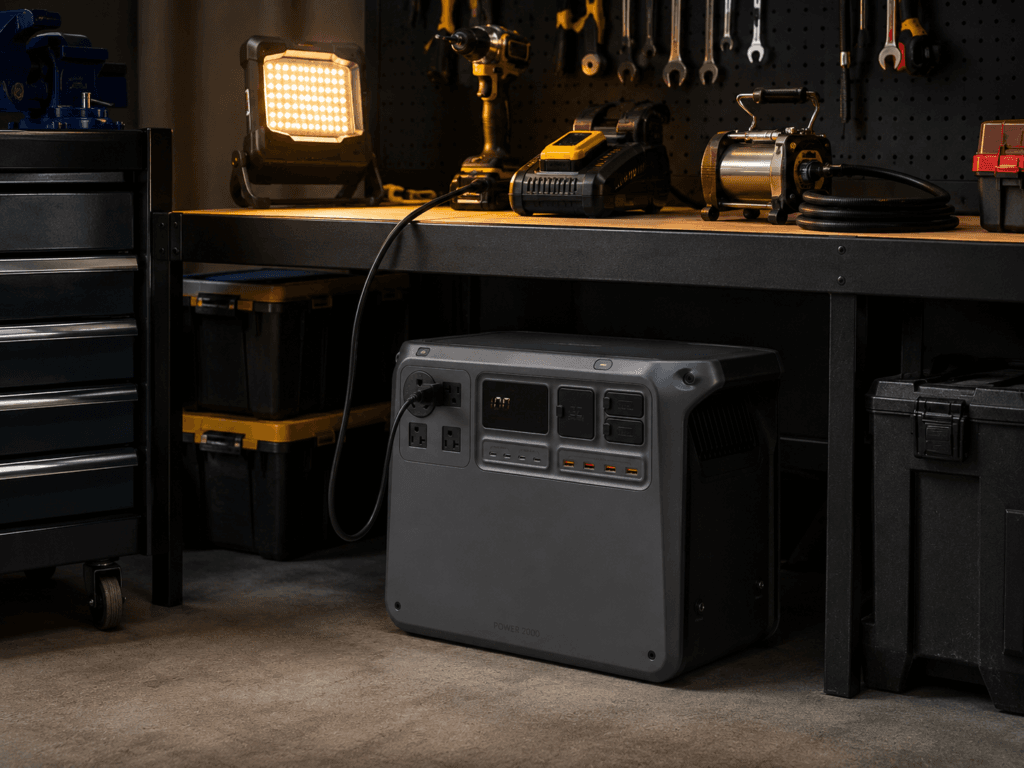
DJI Power 2000 moves the decision into a larger event class. Current DJI information lists 2,048Wh LFP capacity, 3,000W continuous output, about 48.5 lb weight, four AC outputs, four USB-C ports, four USB-A ports, and two SDC ports. DJI also documents expansion up to 22,528Wh with compatible Power Expansion Battery 2000 units.
That combination is useful when a portable power station for DJ setup must serve more than the core controller-and-speaker rig. Larger powered audio, a subwoofer, stage or uplighting, laptops, wireless, cameras, battery chargers, a production monitor, or other event equipment can create an energy budget that makes a 2kWh base more comfortable.
Best for: larger mobile rigs, longer receptions, multi-speaker setups, event production that combines audio and lighting, and buyers who may need expansion later.
Not ideal for: a compact two-speaker rig whose measured energy use fits comfortably in 1kWh, or frequent solo load-ins where 48.5 lb is unnecessary.
Main advantage: 2,048Wh and 3,000W continuous output with four AC outlets, four USB-C ports, and a substantial expansion path.
Main trade-off: almost twice the weight of the 1kWh picks and a larger physical footprint.
Why it belongs in this guide: it is the correct step up when event duration and simultaneous equipment, rather than one dramatic peak-load number, justify more battery and inverter capacity.
Better alternative if: choose DJI Power 1000 when the measured rig fits 1kWh and portability matters, or Anker when you want a lighter conventional platform.
Related Review: DJI Power 2000 Review. See the DJI Power 2000 Product page.
Official source: DJI Power 2000 product information.

- Power More Than Ever – DJI Power 2000 Solar Generator runs 99% of appliances [1] like kettles, cookers, projectors, elec…
- Fast Charge Portable Power Station, Go Far – DJI Power 2000 recharges to 80% in just 55 minutes, so you’re always ready …
- Uncompromising Safety, Anywhere – DJI Outdoor Generator features a 2048Wh LFP battery, smart BMS, sub-nano coating, and …
Measure the complete DJ rig, not speaker marketing watts
A powered speaker may advertise a very large peak, program, or amplifier number. That is not automatically the same as constant AC wall draw. Music is dynamic, amplifier efficiency varies, DSP and limiters affect behavior, and actual consumption changes with volume, bass content, and the connected speaker system. Size the station from measured or manufacturer-listed AC input whenever possible.
A plug-in power meter can be useful during a controlled rehearsal when it is properly rated for the rig. Run the same powered speakers, subwoofer, controller, laptop, wireless receivers, and lighting you expect to use. Observe idle demand, typical program demand, louder passages, and any startup event. Do not defeat grounding, bypass protection, or open equipment to measure it.
The goal is not to chase the highest split-second number. The goal is to know whether the complete rig stays comfortably within the station’s continuous output and how many watt-hours it uses during a representative hour. That one measurement makes the portable power station for DJ setup decision far more reliable.
Convert the gig schedule into an energy budget
Count more than performance time. A mobile DJ may power the rig during load-in, soundcheck, guest arrival, the full event, breaks, announcements, teardown, and pack-out. A four-hour reception can therefore become six or seven hours of battery use if the equipment remains on continuously.
Estimate average watts during each stage and multiply by hours. Keep a reserve instead of planning to reach zero as the final song ends. The battery may still need to power lights, a laptop, wireless microphones, or communication while the room is being cleared. A controlled shutdown is easier than an unexpected low-battery cutoff during an event.
Use the PowerLabPro sizing guide to separate continuous watts, startup demand, and watt-hours. A portable power station for DJ setup should be sized to the complete schedule, not only the advertised set length.
Powered speakers, subwoofers, and amplifier behavior
Powered speakers and subwoofers are often the largest audio loads in a mobile rig, but their real wall consumption may be much lower than the peak amplifier number printed in marketing material. Use the manufacturer input specification or measure the full system at realistic levels. A pair of tops without a subwoofer creates a different load profile from multiple tops, a large subwoofer, stage monitors, and separate amplification.
Bass-heavy music can change average demand. So can outdoor use, where a system may be driven harder because there are fewer reflective boundaries and more ambient noise. Do not assume one indoor rehearsal predicts every outdoor event. Leave inverter margin rather than operating a station near its continuous ceiling for hours.
If the measured audio system already approaches 2,000W continuous, a 1kWh-class station may be the wrong platform even before lighting and digital gear are added. The larger DJI Power 2000 provides 3,000W continuous output, but the event still needs an energy calculation because higher output does not create more runtime by itself.
Laptop, controller, mixer, wireless, and USB-C planning
Digital DJ equipment often draws far less power than the speakers, but it is operationally critical. The laptop, controller or mixer, audio interface, wireless receivers, hotspot, phone, and backup playback device should remain on even if decorative lighting is switched off. Put these devices on the priority list.
DJI Power 1000’s dual 140W USB-C ports can directly support compatible high-power laptops when the device and EPR-rated cable support the required USB Power Delivery profile. That may free AC outlets and eliminate one or two power bricks. Anker C1000 Gen 2 also supports useful direct-device charging, while DJI Power 2000 provides a much larger total port set.
Do not create a single point of failure unnecessarily. A laptop with its own charged internal battery can ride through a cable problem. A controller that is bus powered from the laptop may change the laptop’s demand. A wireless receiver or router may need its own stable supply. Test the exact combination before a paid event.
Stage lighting can change the battery class
LED uplights and compact fixtures can be relatively efficient, but a large lighting package adds up. Moving heads, wash fixtures, effect lights, haze or fog machines, projectors, photo-booth equipment, and decorative installations can move a small audio rig into a much larger energy class. Fog and haze equipment can also contain heating elements that draw substantial power.
Separate essential from optional lighting. The audio rig and safe work light may be priorities. Decorative effects can be reduced when the battery reserve falls faster than expected. This makes a portable power station for DJ setup more resilient because the owner has a planned load-shedding order instead of discovering the problem during the final hour.
When lighting alone becomes a large sustained load, it may deserve a separate properly designed circuit or power source rather than forcing the entire event through one portable battery. Buyer-first planning can mean deciding not to put every device on the same station.
Power strips, extension cords, and distribution safety
Use factory-made, properly rated cords and distribution equipment that match the load and environment. Do not daisy-chain power strips to create more outlets. Do not use damaged insulation, loose plugs, crushed cords, or improvised adapters. Keep audio power and signal routing organized so a guest, road case, door, or vehicle cannot damage the connection.
OSHA guidance for its own workplaces says extension cords should be kept in good repair, positioned so they do not create trip or slip hazards, and protected from damage such as being closed in a doorway. Commercial event requirements can vary by venue and jurisdiction, so venue rules and qualified production practice control where they are stricter. See OSHA electrical and extension-cord guidance for general context.
A portable power station for DJ setup is not a substitute for a venue’s electrical distribution plan. Large public events, rented stages, temporary wiring systems, or equipment that requires dedicated circuits should be handled through appropriate event-power practices rather than treated as an oversized version of a household power strip.
Outdoor gigs, weather, and placement
Keep the station, AC receptacles, power strips, and plugs dry. Do not assume an outdoor marketing photo means a battery is rainproof. Shelter must preserve ventilation and should not trap heat. Keep the station away from standing water, wet grass, drinks, catering traffic, direct stage heat, and places where guests can kick or sit on it.
Outdoor audio may also draw differently because a DJ can push the speakers harder. Wind and open space can encourage higher levels, while sun and ambient temperature can affect battery and inverter behavior. Include those conditions in the rehearsal and reserve plan instead of assuming indoor measurements will transfer perfectly.
Place the battery where the operator can see its state of charge and output without leaving the booth for long. A portable power station for DJ setup should make power easier to supervise, not disappear under a table where ventilation is blocked and the display cannot be checked.
Recharge planning between events
A weekend DJ may have events on consecutive days. Fast AC charging can matter more than solar when the station returns home or to a venue between jobs. DJI Power 1000 and DJI Power 2000 both support fast grid charging under manufacturer conditions, while Anker C1000 Gen 2 is also designed around rapid AC recovery. Verify the available circuit before using the highest charging mode.
Solar is more useful for outdoor festivals, camping-style events, or production days with long daylight gaps than for a typical evening wedding. Do not deploy panels where they create trip hazards or occupy public circulation space. Vehicle charging can supplement travel, but ordinary accessory charging may be too slow to restore a 1kWh or 2kWh station during a short drive.
When the next event starts before the battery can be fully restored, reduce nonessential loads or use a different power plan. A reliable portable power station for DJ setup workflow includes the recharge window, not just the event itself.
DJ event preflight checklist
- Charge the station and the laptop, controller backup device, wireless gear, and phones before leaving.
- Measure or verify the complete rig’s AC draw at a realistic performance level.
- Confirm the station’s continuous output leaves margin above the measured simultaneous load.
- Estimate watt-hours for setup, performance, breaks, and pack-out, then keep reserve.
- Label and inspect extension cords, power strips, USB-C cables, and proprietary charging cables.
- Choose a dry, ventilated battery location protected from guests and equipment cases.
- Decide which lights or nonessential loads will be shut down first if energy use is higher than expected.
- Confirm the venue allows the planned battery, cord routing, and temporary power setup.
Common DJ power-station mistakes
- Sizing from speaker peak watts: use real AC input or measured wall draw instead of a marketing amplifier number.
- Ignoring event setup and teardown: the rig often stays on longer than the advertised performance time.
- Adding lighting late: a larger lighting package can change both output and energy requirements.
- Buying inverter watts instead of watt-hours: more output does not automatically provide a longer event.
- Daisy-chaining power strips: use appropriate distribution instead of multiplying outlets carelessly.
- Hiding the station where it cannot breathe: ventilation and monitoring must remain accessible.
- Assuming an outdoor battery is rainproof: follow the exact environmental limits.
Final recommendation by rig size
Choose DJI Power 1000 for the best overall portable power station for DJ setup when a measured 1kWh-class rig benefits from 2,200W continuous output, dual 140W USB-C, and creator-oriented connectivity. It is the strongest fit for a mobile DJ who wants one compact station to cover audio plus digital equipment without moving to a 2kWh battery.
Choose Anker SOLIX C1000 Gen 2 when lower weight, conventional ports, and a straightforward 1,024Wh/2,000W platform fit the event better. Choose DJI Power 2000 when a larger rig, more lighting, longer hours, or more simultaneous production equipment justify 2,048Wh and 3,000W continuous output. The best portable power station for DJ setup is the smallest verified system that covers the measured rig with output margin, energy reserve, safe cable routing, and a practical recharge plan.
FAQ
What size power station is good for a DJ setup?
Start with the measured or manufacturer-listed AC input of all equipment that can operate together, then estimate watt-hours for the complete event schedule. A 1kWh station can suit many compact rigs, while a 2kWh station is more appropriate when audio, lighting, and event duration are substantially larger.
Can it run powered speakers and a DJ controller?
Yes, when the combined continuous wall draw stays within the station’s inverter limit and enough battery energy remains for the planned hours. Do not size from speaker peak or program wattage alone.
Is 1000Wh enough for a mobile DJ?
It can be enough for many smaller mobile setups, especially when average draw is modest and lighting is controlled. There is no universal event runtime, so measure the complete rig and include setup, performance, breaks, and pack-out.
Can I use a power station outdoors for a DJ event?
Only within the product’s environmental limits. Keep the station, outlets, plugs, and distribution equipment dry, ventilated, protected from crowd traffic, and away from heat. Venue and local electrical requirements may be stricter than a general portable-power setup.
Final Recommendation
DJI Power 1000 is the best overall portable power station for DJ setup when a mobile rig benefits from 2,200W continuous output, dual 140W USB-C, and a 1,024Wh battery in a roughly 28.7 lb chassis. Choose Anker SOLIX C1000 Gen 2 when lower weight and a straightforward 1kWh all-rounder matter more than DJI-specific ports. Choose DJI Power 2000 when a larger mobile rig, more simultaneous equipment, or a longer event justifies a 2,048Wh battery and 3,000W continuous output.
Frequently Asked Questions
What size portable power station is good for a DJ setup?
Start with the actual wall draw of the powered speakers or amplifiers, mixer or controller, laptop, wireless receivers, lighting, and other devices that can operate at the same time. Then size watt-hours from the hours you need and keep reserve for shutdown and pack-out. A 1kWh station can suit many compact mobile rigs, while a larger 2kWh station makes more sense when audio, lighting, and event duration are substantially larger.
Can a power station run powered speakers and a DJ controller?
Yes, when the combined continuous AC draw stays within the station's inverter limit and the battery has enough energy for the event. Do not size from the speaker's marketing peak or program wattage alone; use measured or manufacturer-listed AC input when possible.
Is 1000Wh enough for a mobile DJ?
It can be enough for many smaller mobile setups, especially when the actual average draw is modest and lighting is controlled, but there is no universal event runtime. Measure the complete rig and include setup, performance, breaks, and pack-out time.
Can I use a portable power station outdoors for a DJ event?
Only within the product's environmental limits. Keep the station, outlets, plugs, power strips, and cable connections dry, ventilated, protected from crowd traffic, and away from heat. Use properly rated cords and avoid damaged or improvised distribution equipment.