
Review
EcoFlow DELTA 2 Review: 1024Wh Backup Power With Real Limits
A balanced 1kWh portable power station for apartment outages, remote work, camping, and carefully managed home essentials; too small for whole-home or long refrigerator backup.
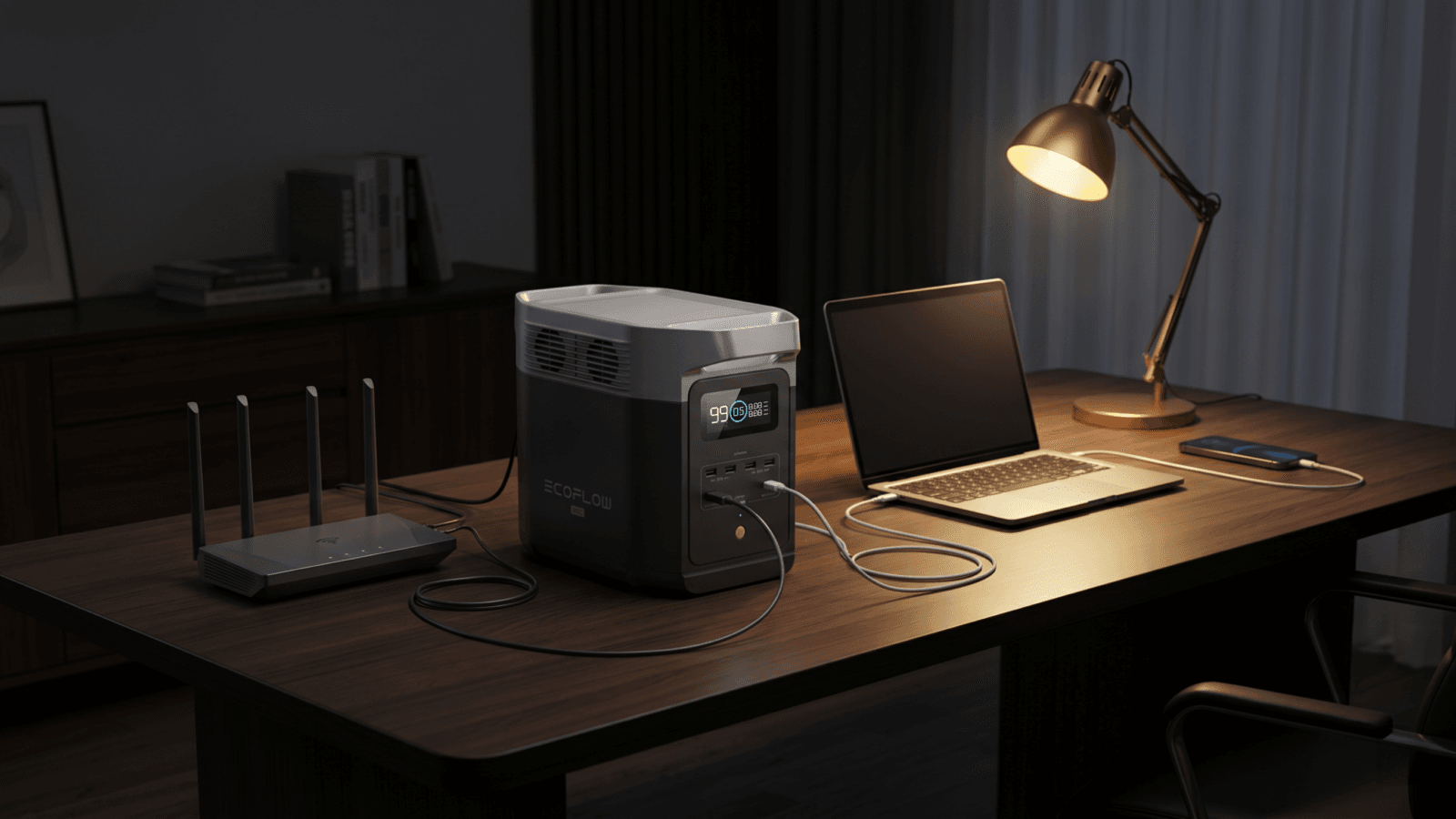
Linked Product Snapshot
Core specs
Buyer Fit
Pros and tradeoffs
Strengths
Pros
- 1,024Wh LiFePO4 capacity
- 1,800W AC output
- Up to 500W solar input
- Fast AC charging
- One compatible extra-battery path
- Wi-Fi and Bluetooth app control
- 27 lb portable class
Tradeoffs
Cons
- Limited for long refrigerator backup and multi-day outages
- X-Boost is not continuous 2,200W output
- Not whole-home backup
- Solar results depend on conditions
- One extra-battery path is less flexible than larger modular platforms
- EPS is not a universal medical-device UPS guarantee
This article may contain affiliate links. If you buy through these links, PowerLabPro may earn a commission at no extra cost to you. As an Amazon Associate I earn from qualifying purchases.
Research note: This EcoFlow DELTA 2 review is based on current manufacturer specifications, product documentation, and retailer product identity information. PowerLabPro has not performed hands-on laboratory testing. Confirm current availability, bundles, and compatibility before purchase.
The EcoFlow DELTA 2 is a practical 1kWh-class power station for buyers who want more than phone charging but do not need a much larger rolling home-backup system. Its 1,024Wh LiFePO4 battery, 1,800W AC output, 500W solar input, and 27 lb weight make it a useful middle ground for apartment outages, home essentials, camping, and RV support.
The key question in this EcoFlow DELTA 2 review is whether that middle ground matches your real outage plan. It is strong for selected essentials. It is not a whole-home battery, a long-duration refrigerator solution without careful load planning, or a substitute for a larger system when multi-day runtime is the goal.
EcoFlow DELTA 2 Review: Quick Verdict
Best for: apartment outages, short home outages, Wi-Fi, lights, phones, laptops, small fans, camping, and limited refrigerator support after checking the appliance draw.
Buy it when: you want a portable 1kWh power station with 1,800W AC output, solar charging, app control, and one compatible extra-battery expansion path.
Skip it when: you need long refrigerator runtime, multiple high-draw appliances, central AC, pump-heavy backup, or a true whole-home system.
This EcoFlow DELTA 2 review is positive for buyers who plan around essentials first and stay realistic about runtime.
For general outage preparation, read Ready.gov’s power outage guidance. For current product specifications, see EcoFlow’s official DELTA 2 product page.

- Full Charge in 56 Min. With DELTA3’s upgraded technology combining 500W solar input and 1500W max AC input, a full charg…
- Flexible Expansion up to 5kWh. The DELTA 3 Series integrates with EcoFlow’s ecosystem, allowing expansion up to 5kWh wit…
- Durable and Reliable for 10 Years. Powered by LiFePO4 (LFP) cells, with 4000 cycles to 80%, offering 25% more durability…
EcoFlow DELTA 2 Review: Key Specs That Matter
A useful EcoFlow DELTA 2 review should separate headline numbers from what they mean for a buyer. The capacity controls runtime. The inverter controls the types of loads you can run at once. Solar input and expansion affect how flexible the station is after the first outage.
| Feature | EcoFlow DELTA 2 | Buyer Meaning |
|---|---|---|
| Battery capacity | 1,024Wh | Useful for targeted essentials; limited for long appliance-heavy outages. |
| Battery chemistry | LiFePO4 / LFP | EcoFlow lists 3,000 cycles to 80%+ capacity. |
| AC output | 1,800W total across 6 outlets | Enough for many home and travel loads when the total draw stays within the rating. |
| Surge output | 2,700W | Useful for brief startup demand; it does not create extra runtime. |
| X-Boost | Up to 2,200W max device power | Load management for selected appliances, not a 2,200W continuous inverter. |
| Solar input | 500W max | Can help recharge during longer outages when panels and weather cooperate. |
| AC charging | Up to 1,200W X-Stream charging | Fast wall charging makes it easier to keep ready before an outage. |
| Expansion | One compatible extra battery | EcoFlow lists a 1–3kWh expansion range depending on the compatible battery chosen. |
| Connectivity | Wi-Fi and Bluetooth | Supports app monitoring and settings control. |
| Weight | 27 lb | Manageable for many people, but not as light as a compact electronics-only station. |
Who the EcoFlow DELTA 2 Is Best For
This EcoFlow DELTA 2 review is most favorable for buyers who want one portable unit for emergency readiness and normal use, without committing to a larger 2kWh or 3kWh platform.
Apartment and condo buyers
The DELTA 2 is a strong apartment-backup fit when the priority is internet, phones, lights, laptop work, a small fan, and carefully selected appliances. It is battery powered, quiet in use, and easier to store than a larger wheeled system. Read the apartment outage guide for a renter-specific comparison.
First-time home-backup buyers
For homeowners who need selected essentials rather than whole-house coverage, the 1kWh class is often the logical starting point. This EcoFlow DELTA 2 review works best for people whose essential list is realistic: router, lights, phones, laptops, fans, and limited short-duration appliance use.
Camping and light RV support
At 27 lb, the DELTA 2 is more portable than larger home-backup units while still offering enough output for many travel loads. It is useful for lighting, charging, small devices, and selected AC equipment when you manage the total draw.
Who Should Skip It
A clear EcoFlow DELTA 2 review also needs to say when the model is too small.
- Long refrigerator-runtime buyers: a 1kWh battery may help, but it is not the best starting point when fridge backup is the main goal.
- Whole-home buyers: this is not designed to power every room, major appliance, HVAC system, or hardwired circuit at once.
- Heavy-load users: space heaters, large cooking appliances, portable AC, and similar loads can drain the battery quickly.
- Multi-day outage planners: choose a larger or expandable system when extended runtime is non-negotiable.
- Buyers who need confirmed UPS-style fast transfer: EcoFlow positions this model as EPS backup; do not treat it as a zero-ms or medical-device guarantee.
Before stepping up to a larger battery, compare your actual loads with the power station sizing guide.
What 1,024Wh Really Means
Capacity is the main limitation of every 1kWh-class station. The DELTA 2 can support a useful set of low-to-moderate loads, but it cannot make a high-watt appliance run for a long time simply because the inverter is rated at 1,800W.
Watts tell you what the station can power at once. Watt-hours tell you how long it may run. This EcoFlow DELTA 2 review recommends starting with an essential-load list instead of a wish list. Put communications, lighting, device charging, and food protection first. Add heavy loads only after you understand the runtime cost.
For buyers who want a larger essentials plan, see the home backup power-station guide.
Why 1,800W Output Matters
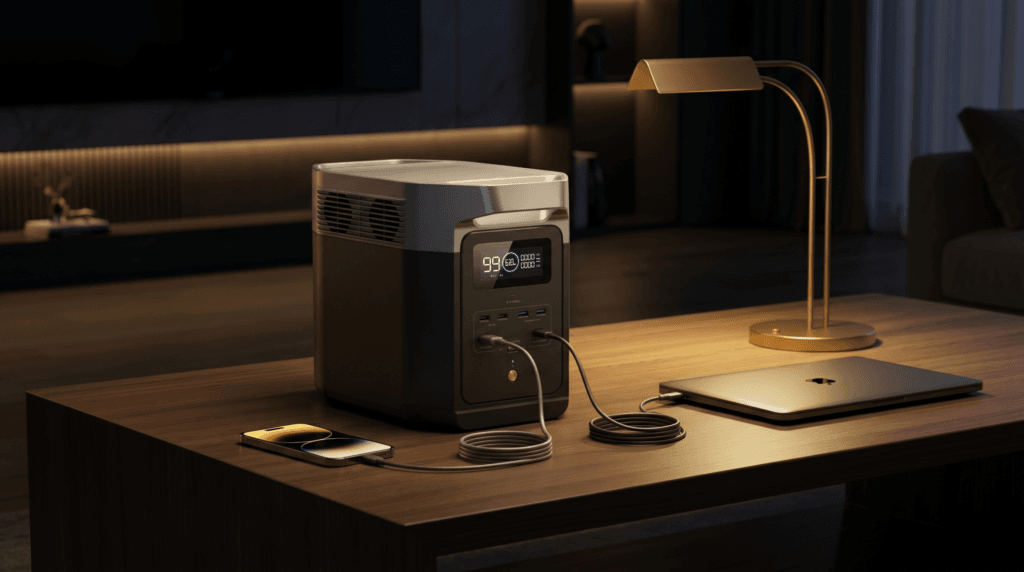
The 1,800W AC rating gives the DELTA 2 more flexibility than small emergency batteries. It can support many common household and travel devices, provided the combined running load stays within the continuous-output limit.
The 2,700W surge rating is there for brief startup demand. It does not mean the station can continuously run a 2,700W appliance. Likewise, X-Boost can help selected resistive loads operate at reduced demand, but it should not be treated as a normal 2,200W output rating.
Plan with watts and watt-hours
The best use of the DELTA 2 is controlled backup. Confirm the appliance running watts, possible startup surge, and the hours you need before buying.
Refrigerator and Apartment Backup Limits
This EcoFlow DELTA 2 review treats refrigerator use as possible but limited. A refrigerator’s compressor cycles, its startup demand can be higher than its normal running draw, and actual runtime changes with appliance age, room temperature, door openings, and the other loads you add.
For a short outage, the DELTA 2 can be useful when the refrigerator is the priority load and other demand stays low. It is less convincing when you expect the same 1,024Wh battery to cover a refrigerator, microwave, coffee maker, space heater, lights, and several devices at the same time.
Use the refrigerator backup guide to choose the right battery class before relying on any fixed runtime claim.
Charging, Solar, and Expansion
EcoFlow lists up to 1,200W X-Stream AC charging and up to 500W solar charging. Fast wall charging is useful when you need to top up the unit before severe weather or between short outage windows.
Solar is a recovery tool, not unlimited power. A 500W maximum input can help in good sunlight, but charge time depends on panel size, compatibility, sun angle, cloud cover, temperature, cable losses, and the total energy you are trying to replace.
The DELTA 2 supports one compatible extra battery. EcoFlow lists a 1–3kWh expandable-capacity range, depending on whether you use the DELTA 2 Smart Extra Battery or the DELTA Max Smart Extra Battery. Confirm the exact compatible battery and bundle before buying. The expansion option is useful, but buyers who already know they need long-outage power should compare the total system cost against a larger base unit.
EcoFlow DELTA 2 Review: Pros and Cons
Pros
- 1,024Wh LiFePO4 battery gives more flexibility than compact electronics-only batteries.
- 1,800W AC output is strong for a portable 1kWh-class station.
- Up to 500W solar input supports practical recovery planning.
- Fast AC charging helps with readiness before short outages.
- One compatible extra-battery path adds capacity flexibility.
- Wi-Fi and Bluetooth app control are useful for monitoring and settings.
- 27 lb weight keeps it more portable than larger home-backup systems.
Cons
- 1,024Wh is limited for long refrigerator backup or multi-day outages.
- X-Boost should not be confused with continuous inverter output.
- Solar recovery depends heavily on conditions and compatible panels.
- Not a replacement for whole-home backup or heavy HVAC power.
- One extra-battery path is less flexible than some larger modular platforms.
- EPS backup should not be treated as a universal UPS guarantee for sensitive or medical equipment.
Alternatives to Compare
| Alternative | Better When You Need | Trade-Off |
|---|---|---|
| EcoFlow DELTA 3 Plus | Newer features, faster charging, stronger solar input, and faster listed UPS behavior | Compare current price and the exact buyer need before treating it as an automatic upgrade |
| Jackery Explorer 1000 v2 | A simple 1kWh-class emergency backup choice | Less output headroom than the DELTA 2 |
| BLUETTI AC180 | More capacity for apartment or short-outage essentials | Heavier and not expandable |
| BLUETTI AC200L | Refrigerator-plus-essentials backup with more battery reserve | Much heavier and less portable |
EcoFlow DELTA 2 Review FAQ
Is the EcoFlow DELTA 2 good for home backup?
This EcoFlow DELTA 2 review finds it useful for short outages and selected essentials. It is not a full whole-home backup solution.
Can the EcoFlow DELTA 2 run a refrigerator?
It can support many refrigerators when the appliance is within the output limit, but runtime depends on the refrigerator’s real draw, compressor cycling, startup surge, room temperature, and other connected loads.
How much solar input does the EcoFlow DELTA 2 support?
EcoFlow lists up to 500W of solar input. Real charging speed depends on the panels, weather, and setup.
Is the EcoFlow DELTA 2 expandable?
Yes. It supports one compatible extra battery. EcoFlow lists a 1–3kWh expandable-capacity range depending on the compatible extra battery used.
Does the EcoFlow DELTA 2 have UPS support?
EcoFlow positions it as an EPS emergency power supply. Do not assume a particular switchover speed or rely on it for sensitive or medical equipment without confirming the current manufacturer guidance and the device’s own requirements.
Is this a hands-on EcoFlow DELTA 2 review?
No. This is a researched buyer-fit review based on manufacturer information and product data. PowerLabPro does not claim hands-on laboratory testing.
Final Verdict
This EcoFlow DELTA 2 review comes down to buyer fit. It is a balanced portable power station for people who want a real emergency backup layer without buying into a much larger 2kWh or 3kWh system.
Choose it for apartment outages, remote-work backup, short home interruptions, camping, light RV support, and a carefully planned refrigerator backup role. Skip it when your real goal is long runtime, whole-home coverage, or high-draw appliance support for hours at a time.
The best purchase decision is simple: calculate the loads first, then decide whether 1,024Wh is enough. For the right essential-load plan, the DELTA 2 remains a capable and practical 1kWh-class option.
Testing Notes
- Researched buyer-fit review
- No hands-on laboratory testing claimed
- Specifications checked against EcoFlow’s current official DELTA 2 product page on 2026-06-23